
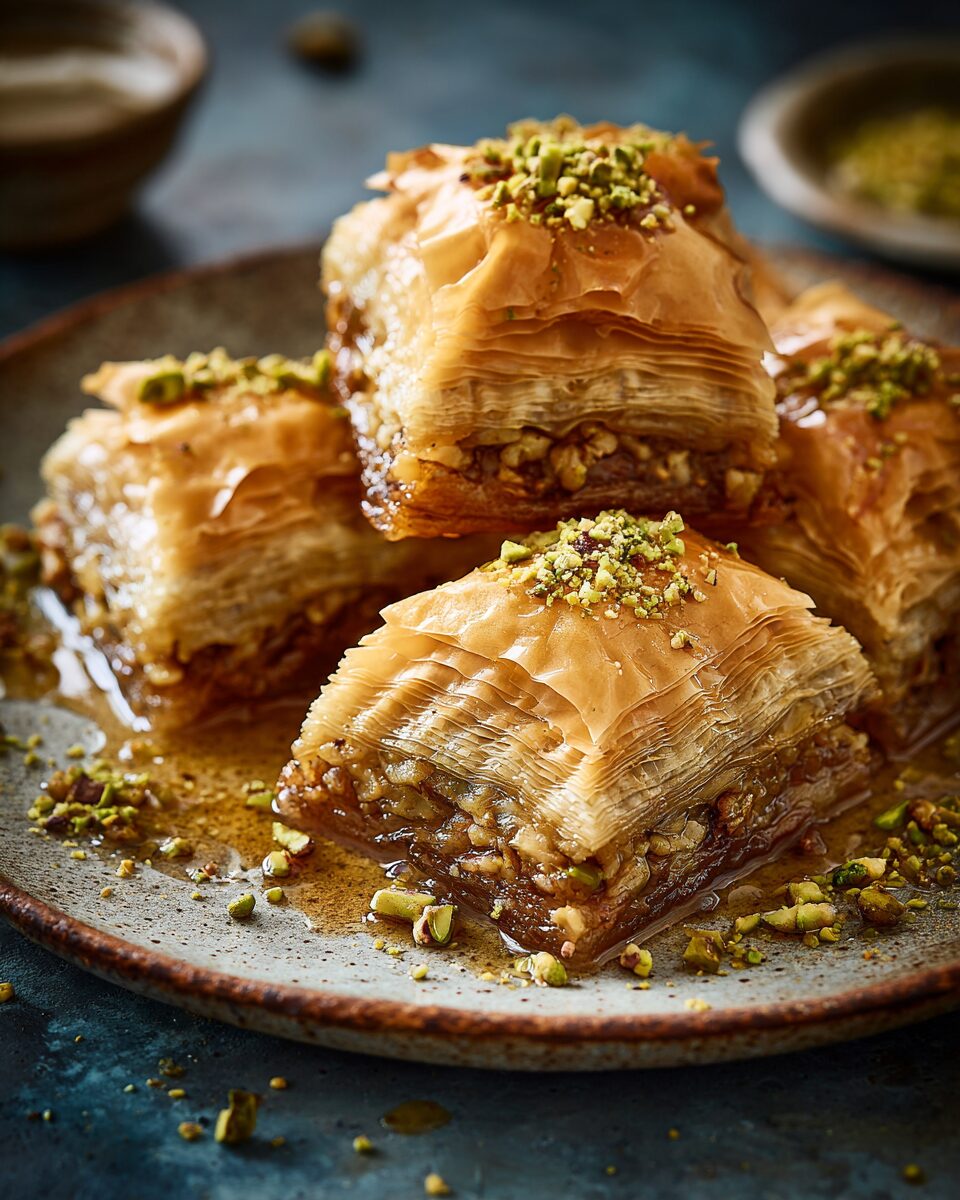
Few desserts are as iconic, rich, and timeless as Baklava. With its delicate, paper-thin layers of phyllo pastry, crunchy nuts, and a sticky-sweet honey syrup, this dessert has stood the test of time across centuries and cultures. Each bite is a perfect combination of flaky, crispy pastry and luscious sweetness, making baklava one of the world’s most loved desserts.
The beauty of baklava is that while it looks incredibly intricate and impressive, it’s surprisingly simple to prepare once you understand the layering process. Whether you’re making it for a festive holiday table, a wedding, or simply to satisfy your sweet tooth, baklava is guaranteed to impress.
In this post, we’ll explore:
- The fascinating history of baklava across cultures.
- Step-by-step instructions for making it at home.
- Pro tips for handling phyllo dough like a pro.
- Different nut and syrup variations.
- Storage, serving, and FAQs.
A Sweet History of Baklava
The origins of baklava are hotly debated. Some historians trace it back to the Ottoman Empire, while others argue it has Greek or Middle Eastern roots. Regardless of its birthplace, baklava has become a staple in countries such as Turkey, Greece, Lebanon, and Armenia.
Every region has its own variation:
- In Turkey, baklava is often made with pistachios and flavored with rosewater or lemon.
- Greek baklava leans heavily on walnuts and honey.
- Middle Eastern versions often include almonds and a hint of orange blossom water.
This diversity makes baklava not just a dessert but a shared cultural treasure.
Ingredients for Authentic Baklava
For a 9×13-inch pan (serves 20+ small squares):
- 1 package (16 oz) phyllo dough, thawed
- 1 ½ cups unsalted butter, melted
- 2 cups walnuts, finely chopped
- 1 cup pistachios, finely chopped
- 1 cup almonds, finely chopped
- 1 tsp ground cinnamon
- 1 cup granulated sugar
For the syrup:
- 1 cup honey
- 1 cup water
- 1 cup sugar
- 1 tsp lemon juice
- 1 cinnamon stick
- 1 tsp rosewater or orange blossom water (optional)
Step-by-Step Instructions
1. Prepare the Nut Filling
- In a bowl, combine walnuts, pistachios, almonds, sugar, and cinnamon.
- Mix well and set aside.
2. Prep the Phyllo Dough
- Keep the thawed phyllo covered with a slightly damp towel while working to prevent it from drying out.
- Brush a 9×13-inch baking pan with melted butter.
3. Layer the Baklava
- Place one sheet of phyllo in the pan and brush lightly with butter.
- Repeat this process for about 8–10 layers.
- Sprinkle a thin, even layer of the nut mixture.
- Continue layering phyllo (5–6 sheets at a time, each brushed with butter), then add more nuts.
- Repeat until nuts are used up, finishing with 10–12 layers of phyllo on top.
4. Cut Before Baking
- Using a sharp knife, cut the baklava into diamond or square shapes. Cutting before baking ensures clean edges later.
5. Bake
- Bake at 350°F (175°C) for 45–55 minutes, until golden brown and crisp.
6. Make the Syrup
- While baklava bakes, combine honey, water, sugar, lemon juice, and cinnamon stick in a saucepan.
- Bring to a boil, then reduce heat and simmer for 10 minutes.
- Stir in rosewater or orange blossom water, if using.
7. Combine
- Remove baklava from the oven and immediately pour hot syrup evenly over the pastry.
- Let baklava cool completely so the syrup soaks in.
Pro Tips for Perfect Baklava
- Work quickly with phyllo dough – It dries out within minutes. Always keep unused sheets covered.
- Butter every layer – Don’t skip brushing with butter; it ensures crispness.
- Cut before baking – Cutting after baking will cause the pastry to shatter.
- Hot meets cold – Always pour hot syrup over cooled baklava or cold syrup over hot baklava. This prevents sogginess.
- Let it rest overnight – Baklava tastes even better the next day as the syrup fully absorbs.
Nut & Syrup Variations
- Nut options: Use hazelnuts, cashews, or pecans for unique flavors.
- Syrup variations: Replace honey with maple syrup or add spices like cardamom or cloves.
- Chocolate baklava: Add a drizzle of melted dark chocolate between layers.
- Vegan baklava: Use vegan butter and agave syrup.
- Mini baklava rolls: Roll small pieces of phyllo with nuts instead of layering.
Serving Suggestions
Baklava is rich, so it’s best served in small squares or diamonds. Pair with:
- Turkish coffee or espresso for a bold contrast.
- Mint tea for a refreshing balance.
- Vanilla ice cream for a modern twist.
It’s a perfect dessert for holidays, weddings, Ramadan, or Easter.
Storage
- Room temperature: Store covered at room temp for up to 5 days.
- Refrigeration: Can be refrigerated for up to 2 weeks, but may lose crispness.
- Freezing: Freeze unbaked baklava for up to 2 months. Bake straight from frozen, adding extra time.
Frequently Asked Questions
1. Can I make baklava ahead of time?
Yes, baklava tastes even better the next day.
2. Why is my baklava soggy?
It’s likely because the syrup and baklava were both hot when combined. Always alternate hot/cold.
3. Can I use store-bought syrup instead of homemade?
Homemade syrup is best for authentic flavor, but store-bought honey syrup works in a pinch.
4. Is baklava gluten-free?
No, phyllo dough is wheat-based. Use gluten-free phyllo alternatives if needed.
Printable Recipe Card
Baklava Recipe
Ingredients:
- 16 oz phyllo dough
- 1 ½ cups butter, melted
- 4 cups mixed nuts (walnuts, pistachios, almonds)
- 1 tsp cinnamon
- 1 cup sugar
Syrup:
- 1 cup honey
- 1 cup sugar
- 1 cup water
- 1 tsp lemon juice
- 1 cinnamon stick
Instructions:
- Preheat oven to 350°F. Butter baking dish.
- Layer 8 phyllo sheets, buttering each. Add nut mixture. Repeat. Finish with 10 phyllo layers.
- Cut into squares/diamonds. Bake 45–55 mins.
- Make syrup: boil honey, sugar, water, lemon, cinnamon. Simmer 10 mins.
- Pour hot syrup over cooled baklava. Let sit overnight.
Conclusion
Baklava is more than a dessert—it’s a culinary masterpiece passed down through generations. With its golden layers, nutty filling, and fragrant syrup, it’s a dessert that tells a story of tradition, celebration, and indulgence.
Whether you serve it at a family gathering, holiday dinner, or simply alongside coffee for yourself, baklava never fails to impress. Once you master it, you’ll see why it has remained one of the most treasured sweets across cultures for centuries.
Make a tray of baklava, and you’ll be sharing not just a dessert, but a piece of history and heritage with every bite.