
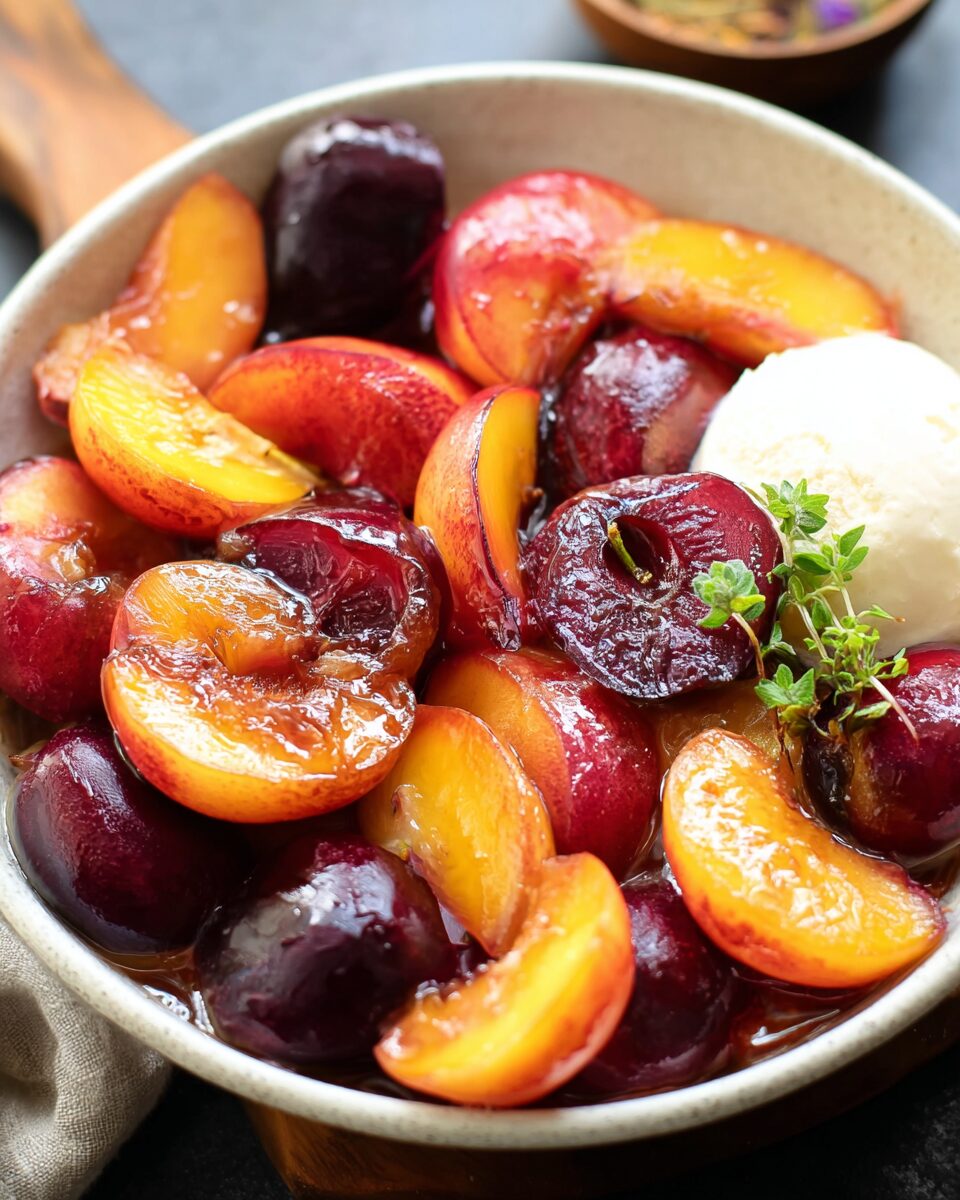
Some desserts don’t need to be elaborate to feel indulgent. They don’t require fancy techniques, pastry bags, or hours in the oven — just good ingredients, a bit of heat, and the patience to let nature’s flavors do the talking. Caramelized Skillet Stone Fruit is one of those desserts.
Imagine golden slices of peaches, plums, or nectarines sizzling in butter and brown sugar, their edges gently crisping while their juices thicken into a glossy caramel. Add a splash of vanilla, a drizzle of honey, maybe a hint of bourbon or cinnamon, and suddenly your kitchen smells like a summer orchard. The fruit softens just enough to melt in your mouth, the caramel deepens into a toffee-like syrup, and each bite feels both rustic and luxurious.
This dish is the kind of recipe that feels like magic — how such simple ingredients transform into something so deeply satisfying. It’s a dessert born out of the rhythm of the seasons: when summer peaches or apricots are at their peak, too ripe to eat by hand but too beautiful to waste. When you gather them in a bowl, heat your skillet, and watch them turn to liquid gold, you understand what “less is more” really means.
The Story Behind the Dish
Caramelized fruit is one of those timeless culinary traditions that exists in some form in nearly every culture. The French have their tarte Tatin, the Italians make pesche al vino (peaches in wine), and in the American South, skillet desserts reign supreme. But what makes this version so special is its simplicity — no crust, no pastry, just fruit, butter, and sugar kissed by heat.
My love affair with caramelized stone fruit began during one summer visit to my grandmother’s kitchen. She had a knack for turning “overripe” fruit — the kind most people might toss — into something extraordinary. With her old cast-iron skillet, she’d melt butter, sprinkle in brown sugar, and toss in halved peaches from her backyard tree. Within minutes, the kitchen would fill with the aroma of bubbling caramel and fruit — a scent that could stop time.
We’d serve it right from the skillet, still warm, with a scoop of vanilla ice cream melting over the top. It was simple, soulful, and unforgettable.
Now, years later, I find myself recreating that same recipe every summer (and often in winter too, using frozen fruit). It’s a dessert that never fails to impress, no matter when or how you serve it. Elegant enough for dinner guests, easy enough for a weeknight treat, and versatile enough to work with whatever fruit you have on hand — Caramelized Skillet Stone Fruit truly is a recipe for all seasons.
Full Recipe
Ingredients
For the Fruit:
- 4 cups (about 700 g) mixed stone fruit, halved or sliced (peaches, plums, nectarines, apricots, or cherries)
- 2 tablespoons (30 g) unsalted butter
- 3 tablespoons (40 g) brown sugar (light or dark, depending on your preference)
- 1 tablespoon (15 ml) honey or maple syrup
- 1 teaspoon pure vanilla extract
- 1/2 teaspoon ground cinnamon (optional, for warmth)
- Pinch of salt
- 1 tablespoon lemon juice (to balance sweetness)
Optional Add-ins:
- 1 tablespoon bourbon or rum (for depth of flavor)
- 1 sprig fresh rosemary or thyme (for a subtle aromatic twist)
- 1/4 teaspoon cardamom or ginger (for a spiced variation)
For Serving (choose your favorite):
- Vanilla ice cream or whipped cream
- Greek yogurt or crème fraîche
- Toasted almonds, pistachios, or granola for crunch
Directions
Step 1: Choose and Prepare Your Fruit
Select a mix of ripe but firm stone fruit — peaches, plums, nectarines, or apricots work beautifully. You can also include cherries or even slices of mango for a tropical twist.
Wash the fruit thoroughly, then halve and pit them. If the fruit is large (like peaches or nectarines), slice them into thick wedges. If it’s smaller (like apricots or plums), halves work perfectly.
Tip: Slightly overripe fruit caramelizes beautifully because of its natural sugars, but avoid fruit that’s mushy — it will break apart too easily in the pan.
Step 2: Heat the Skillet
Place a large, heavy-bottomed skillet (preferably cast iron) over medium heat. Add the butter and let it melt until it begins to foam. Swirl the pan gently to coat the surface evenly.
Once the butter starts to turn golden and gives off a nutty aroma, sprinkle in the brown sugar. Stir until it begins to dissolve and bubble slightly — this is the base of your caramel.
Why cast iron? Cast iron retains heat beautifully, allowing even caramelization without scorching. If you don’t have one, a stainless steel skillet works fine — just keep a close eye on the sugar.
Step 3: Caramelize the Fruit
Add your sliced fruit to the skillet, cut side down if possible. Let it cook undisturbed for 3–5 minutes so the sugar and butter can work their magic. You’ll start to see the edges caramelize and deepen in color.
Gently flip the fruit with tongs or a spatula. Continue to cook for another 3–4 minutes, allowing the fruit to soften and release its juices.
Drizzle in the honey (or maple syrup) and vanilla extract, and sprinkle with a pinch of salt. Stir gently to coat the fruit in the sauce that’s forming at the bottom of the pan.
Chef’s note: The trick here is balance — you want the fruit tender but not mushy, the caramel dark but not burnt. Medium heat and patience are your friends.
Step 4: Add Flavor Enhancements (Optional)
If you’re feeling adventurous, this is the moment to infuse extra flavor. Add a splash of bourbon or rum for a grown-up twist, or throw in a sprig of rosemary for a subtle herbal aroma.
If you prefer spice, dust in a touch of cinnamon, cardamom, or ginger. Stir gently to let the flavors blend without breaking down the fruit.
Aromatic trick: Alcohol evaporates quickly, leaving behind depth of flavor without harshness — and herbs like rosemary balance sweetness with earthiness.
Step 5: Deglaze and Reduce
As the fruit cooks, it will release juices that mix with the sugar and butter, forming a glossy caramel sauce. If the sauce looks too thick, add 1–2 tablespoons of water or lemon juice to loosen it slightly.
Let the mixture simmer for 1–2 minutes more, stirring gently until the sauce coats the back of your spoon.
Taste and adjust — add more lemon juice if it’s too sweet, or a drizzle of honey if it needs more richness.
Step 6: Serve Warm (and Watch It Disappear!)
Remove the skillet from the heat and let the fruit rest for a minute before serving. The caramel will continue to thicken slightly as it cools.
Spoon the warm fruit into bowls, drizzle with some of the sauce, and top with your choice of accompaniment: a scoop of vanilla ice cream for indulgence, a dollop of Greek yogurt for tang, or whipped cream for pure comfort.
Sprinkle with toasted nuts or granola for crunch, and serve immediately.
Serving trick: For a dinner-party presentation, serve directly from the skillet — rustic, dramatic, and irresistibly aromatic.
Serving Suggestions & Variations
1. Classic Summer Skillet
Use peaches, nectarines, and plums with a touch of vanilla and cinnamon. Serve over vanilla ice cream for a comforting, nostalgic dessert reminiscent of peach cobbler — but easier and faster.
2. Spiced Winter Version
In cooler months, use frozen peaches or canned apricots. Add cinnamon, cardamom, and a splash of dark rum. Serve warm over pancakes, waffles, or even oatmeal for a luxurious breakfast treat.
3. Vegan Delight
Substitute butter with coconut oil or vegan margarine and use maple syrup instead of honey. The coconut oil adds a subtle tropical note that pairs beautifully with pineapple or mango.
4. Savory Twist
Use slightly less sugar and add a pinch of black pepper or balsamic glaze. Serve alongside grilled meats or roasted chicken as a sweet-savory side dish — a stunning addition to any dinner spread.
5. Boozy Dessert Version
Flambé the fruit with a splash of brandy or Grand Marnier for a restaurant-style flourish. Just be sure to remove the pan from direct heat before adding alcohol to avoid flare-ups.
6. Breakfast Bowl Topping
Cool the caramelized fruit slightly, then spoon over yogurt, oatmeal, or chia pudding. Add granola and a drizzle of nut butter for a wholesome, café-style breakfast.
Tips & Tricks
- Don’t overcrowd the pan: Give the fruit space to caramelize. If your skillet is small, cook in batches for even browning.
- Work with the season: In summer, use peaches, plums, or cherries. In fall, try figs or pears. Even winter citrus works when lightly caramelized with honey.
- Watch your heat: Medium heat is ideal — too high and the sugar burns before the fruit softens, too low and you’ll steam rather than caramelize.
- Balance is key: Caramelization is about contrast — the sweetness of sugar, the acidity of fruit, and the hint of salt or lemon that makes it sing.
- Storage: Store leftovers (if you have any!) in an airtight container in the refrigerator for up to 3 days. Reheat gently on the stovetop.
- Make ahead: You can prep the fruit and make the sauce separately, then combine and reheat when ready to serve.
- Serving idea: Spoon caramelized fruit over pound cake, cheesecake, or pavlova for an elegant, effortless dessert.
Nutritional Info (per serving, based on 4 servings)
- Calories: ~220
- Total Fat: 8 g
- Saturated Fat: 4 g
- Cholesterol: 15 mg
- Sodium: 50 mg
- Total Carbohydrates: 36 g
- Fiber: 3 g
- Sugar: 32 g
- Protein: 2 g
Note: Values vary depending on the type of fruit and toppings used.
Additional Info
- Prep Time: 10 minutes
- Cooking Time: 10 minutes
- Total Time: 20 minutes
- Calories per Serving: 220
- Servings: 4
Final Thoughts
Caramelized Skillet Stone Fruit is proof that elegance doesn’t need to be complicated. With just a few humble ingredients, you can create a dessert that feels both homey and sophisticated — one that highlights the beauty of seasonal produce while filling your kitchen with warmth and sweetness.
Every time I make this dish, I’m reminded of the beauty of slow, simple cooking — the kind that engages all your senses. The gentle sizzle of fruit meeting hot butter, the smell of sugar turning to caramel, the jewel-toned colors glistening in the pan — it’s a celebration of nature’s abundance and of life’s small luxuries.
This recipe invites you to be creative. Use what’s fresh, what’s in season, or even what’s sitting on your counter waiting to be rescued. It’s forgiving, flexible, and always delicious — a recipe that adapts to your mood, your pantry, and your imagination.
So next time you find yourself with a handful of peaches or plums and a craving for something sweet, skip the oven and reach for your skillet. In less than 20 minutes, you’ll have a dish that tastes like summer sunshine, caramel dreams, and pure comfort all in one.
Serve it warm, share it generously, and watch it disappear — spoonful by spoonful.