
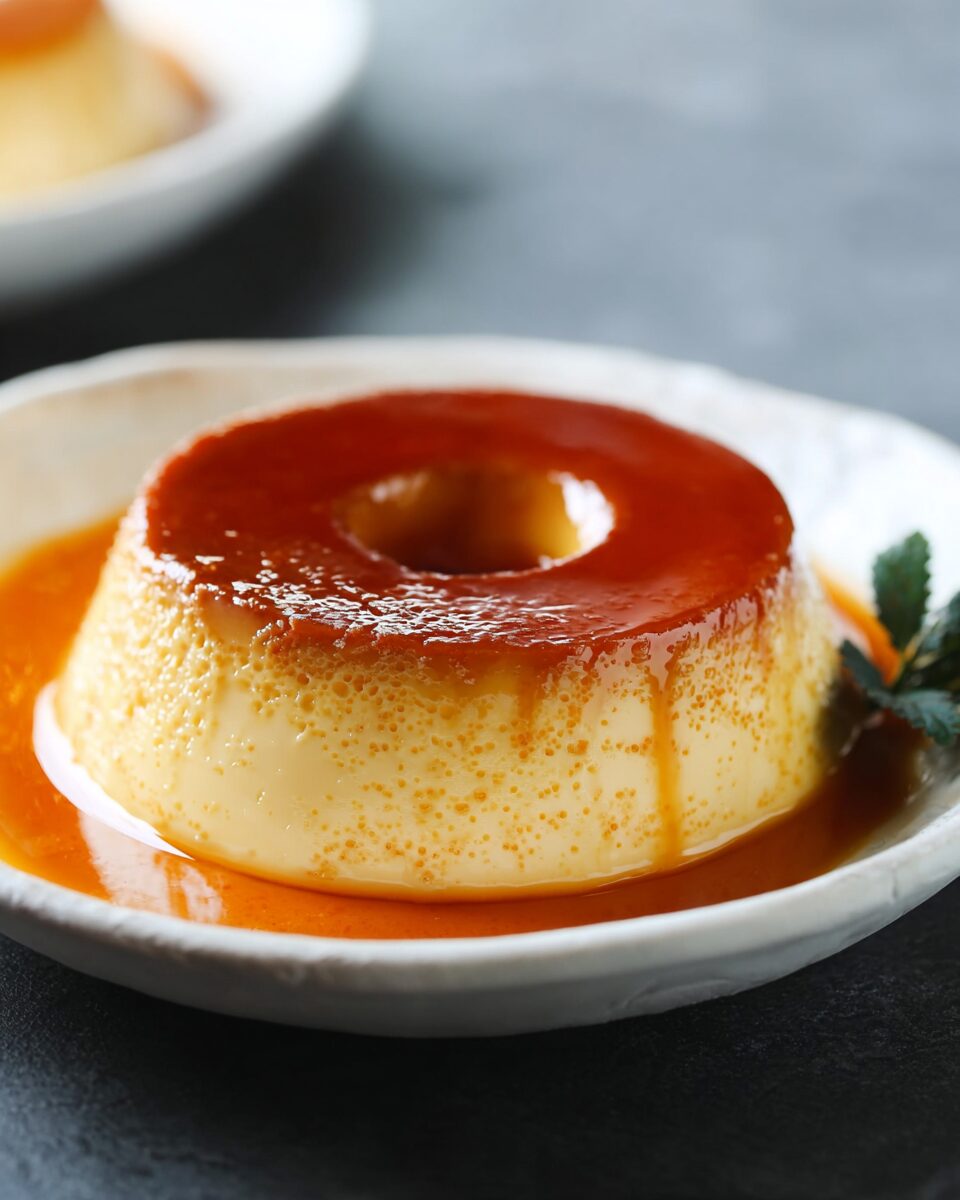
If you’ve ever had a bite of creamy, silky flan and thought, This is perfection, then you’re going to fall in love with Brazilian Pudim de Leite — a dessert that’s somehow even more luscious, smoother, and richer than its cousins from other corners of the world.
Pudim de Leite, often translated simply as Brazilian Caramel Flan, is one of the country’s most beloved desserts. It’s the grand finale of countless family dinners, Sunday lunches, and holiday feasts across Brazil. With its glossy caramel top, velvety custard, and the satisfying “schlop” sound it makes when unmolded, pudim isn’t just dessert — it’s an event.
What makes this dessert truly special is its simplicity. You only need a handful of ingredients — eggs, sweetened condensed milk, whole milk, and sugar — yet somehow they come together to create a dessert that feels sophisticated and indulgent. The magic lies in the texture: incredibly smooth, melt-in-your-mouth, and beautifully contrasted by the rich bitterness of the caramel.
A Sweet Slice of Brazilian Culture
Every culture has its version of a caramel custard — the French have crème caramel, the Spanish and Latin Americans have flan, and the Portuguese have pudim. But Brazil’s version, like so many Brazilian foods, carries the warmth, sweetness, and generosity of the country itself.
Pudim de leite was originally brought to Brazil by the Portuguese, who had a deep love for egg-based desserts. But over the years, Brazilians made it their own by adding a distinct local ingredient — leite condensado (sweetened condensed milk). This addition, introduced to Brazilian households in the early 20th century, completely transformed the dessert. Condensed milk gave the pudim a creamier texture and made the recipe simpler and more reliable — no need to fuss with separating egg whites or tempering delicate custards.
Today, pudim de leite is a national treasure. It’s found in every home, bakery, and restaurant across Brazil, from the bustling streets of São Paulo to the sun-drenched beaches of Bahia. It’s a dessert that brings generations together — grandmothers teach their grandkids to make it, families share it after a meal, and no celebration feels complete without it on the table.
My Story with Pudim
The first time I made pudim de leite, I was visiting a friend’s family in Rio de Janeiro. Her mother, Dona Maria, was the queen of the kitchen — she made feijoada that simmered all day, pão de queijo that puffed up like golden clouds, and pudim so perfect it gleamed like glass.
When I asked her for the secret, she smiled and said, “O segredo é o amor… e paciência.” (“The secret is love… and patience.”)
At first, I laughed — but as I watched her caramelize sugar to just the right shade of amber, carefully whisk eggs without adding bubbles, and slowly bake the custard in a water bath, I understood exactly what she meant. Pudim de leite is not a dessert you rush; it rewards care and attention with the silkiest texture you can imagine.
That day, we sat around the table after dinner, the pudim gleaming in the center like a jewel. She sliced it into perfect wedges, the caramel sauce cascading over each slice, and with the first bite, I was hooked forever.
This recipe honors her — simple, classic, and made the traditional way, with love and patience.
Full Recipe
Ingredients
For the Caramel:
- 1 cup (200 g) granulated sugar
- 1/4 cup (60 ml) water
For the Custard:
- 1 can (14 oz / 395 g) sweetened condensed milk
- 2 cups (480 ml) whole milk
- 3 large eggs
- 1 teaspoon pure vanilla extract (optional, traditionalists often skip it)
Optional Add-ins (for creative twists):
- Zest of 1 orange or lemon (for a citrusy aroma)
- 1 tablespoon rum or brandy (for extra depth)
- Pinch of salt (to balance the sweetness)
Directions
Step 1: Prepare the Caramel
Start by making the caramel, which will form the glossy topping and sauce once the pudim is inverted.
In a medium heavy-bottomed saucepan, combine the sugar and water over medium heat. Stir gently until the sugar dissolves completely, then stop stirring — swirl the pan instead.
Continue cooking until the syrup turns a deep amber color, about 8–10 minutes. Watch carefully — caramel can burn quickly once it starts to darken.
Once the caramel reaches the perfect shade (deep golden but not burnt), immediately pour it into a 10-inch (25 cm) round cake pan or bundt pan. Carefully tilt and swirl the pan to coat the bottom and sides evenly before the caramel sets.
Tip: Use oven mitts and work quickly — the caramel hardens fast once off the heat.
Set the pan aside while you prepare the custard.
Step 2: Make the Custard
In a blender, combine the sweetened condensed milk, whole milk, and eggs. Blend for 20–30 seconds, just until smooth and combined.
Avoid over-blending — too much air in the mixture can create bubbles, leading to a less silky texture. If you’d like, strain the mixture through a fine mesh sieve into a large bowl to ensure an extra-smooth custard.
If using, stir in the vanilla extract or any additional flavorings (like citrus zest or rum).
Pro Tip: Traditional Brazilian pudim is blended by hand or with a whisk, not aggressively whipped, to preserve its velvety texture. Less air = creamier custard.
Step 3: Combine and Prepare for Baking
Pour the custard mixture into the caramel-lined pan.
Place the pan inside a larger baking dish or roasting pan to create a bain-marie (water bath). Carefully pour hot water into the larger pan until it reaches halfway up the sides of your pudding mold.
This gentle, even heat ensures the custard cooks without curdling or cracking.
Cover the top of the pudding pan loosely with aluminum foil — this prevents the top from browning too much.
Step 4: Bake the Pudim
Preheat your oven to 350°F (175°C).
Carefully transfer the water bath setup to the oven and bake for 60–75 minutes, or until the custard is just set. You’ll know it’s ready when the center jiggles slightly but the edges are firm.
Testing Tip: Insert a knife or skewer near the center — it should come out mostly clean, with a few moist crumbs clinging to it.
Turn off the oven and let the pudim cool in the water bath for about 30 minutes.
Step 5: Chill Completely
Once cool, remove the pan from the water bath and let it come to room temperature. Then cover and refrigerate for at least 4 hours, ideally overnight.
Chilling is what transforms the custard into that signature smooth, creamy texture — don’t rush this step!
Step 6: Unmold the Pudim
When you’re ready to serve, run a thin knife around the edges of the pan to loosen the pudding.
Place a large serving plate upside down on top of the pan. In one swift motion, flip both together, then gently lift the pan away.
If the caramel has thickened too much, briefly set the bottom of the pan in warm water to loosen it before unmolding.
The pudim should slide out beautifully, the caramel cascading down the sides in glossy ribbons.
Step 7: Serve and Enjoy
Slice into generous wedges, spooning extra caramel sauce over each serving.
Serve chilled or slightly cool — never frozen or warm — to fully appreciate its velvety smoothness and deep caramel flavor.
Pairing idea: Pudim pairs perfectly with a strong espresso or a small cup of cafézinho, the sweet, rich Brazilian coffee served after meals.
Serving Suggestions & Variations
1. Classic Pudim de Leite Condensado
Stick to the traditional recipe — no vanilla, no zest — just condensed milk, eggs, and whole milk. This is the authentic flavor most Brazilians grew up with, nostalgic and comforting.
2. Coconut Pudim (Pudim de Coco)
Add 1/2 cup (120 ml) coconut milk and 1/4 cup (20 g) shredded coconut to the custard mixture. The result is tropical, fragrant, and pairs beautifully with the caramel.
3. Chocolate Pudim
Mix in 1/4 cup (25 g) cocoa powder or 3 oz (85 g) melted dark chocolate for a rich, chocolatey variation that’s indulgent and modern.
4. Orange Pudim
Replace half the milk with fresh orange juice and add orange zest for a citrus-forward version that’s bright and refreshing — a great choice for spring or summer.
5. Vegan Pudim (No Eggs or Dairy)
Use coconut milk, oat milk, and sweetened condensed coconut milk (now widely available). Set with agar-agar instead of eggs. The texture is slightly different but still deliciously smooth.
6. Mini Pudins
Pour the caramel and custard mixture into individual ramekins for single-serving portions. Bake for 35–40 minutes, then chill and unmold. Perfect for dinner parties or special occasions.
Tips & Tricks
- Don’t overheat the caramel: Burnt caramel tastes bitter and can overpower the custard’s sweetness. Aim for a deep golden amber color, not dark brown.
- Avoid bubbles: Blend gently and strain the mixture to prevent air pockets that can affect the pudding’s texture.
- Perfect water bath: Keep the water hot but not boiling — around 160–170°F (70–75°C). Add more hot water mid-bake if needed.
- Cooling time is key: Allowing the pudding to rest and chill ensures the texture sets properly and the flavors develop fully.
- Storage: Store in the refrigerator, covered, for up to 4–5 days. The caramel sauce will continue to soak into the custard, making it even more delicious over time.
- Make ahead: This dessert actually tastes better the next day, making it a great choice for entertaining.
- Unmolding tip: If the caramel seems stuck, place the pan in a shallow dish of hot water for 10–15 seconds — the caramel will loosen instantly.
Nutritional Info (per serving, based on 10 servings)
- Calories: 270
- Total Fat: 8 g
- Saturated Fat: 5 g
- Cholesterol: 100 mg
- Sodium: 80 mg
- Total Carbohydrates: 40 g
- Sugar: 36 g
- Protein: 7 g
Note: Values vary depending on milk type and portion size.
Additional Info
- Prep Time: 15 minutes
- Cooking Time: 1 hour 10 minutes
- Cooling + Chilling Time: 6 hours
- Total Time: 7 hours 25 minutes
- Calories per Serving: 270
- Servings: 10
Final Thoughts
There’s a reason Brazilian Pudim de Leite has stood the test of time. It’s a dessert that embodies the heart of Brazilian cooking — simple ingredients transformed into something extraordinary through care, patience, and a touch of love.
Every bite is a symphony of contrasts: the bittersweet caramel that wakes your palate, the custard that melts like silk, and the sweetness that lingers just long enough. It’s comfort food dressed in elegance — a dessert that feels equally at home on a festive holiday table or an ordinary Sunday lunch.
Making pudim is also an act of mindfulness. It teaches you to slow down, to trust the process, and to find beauty in simplicity. There’s no rush — only the quiet joy of watching sugar turn to gold, milk turn to custard, and patience turn to perfection.
Serve it to friends, share it with family, or make it for yourself on a day when you need something soothing. However you enjoy it, Pudim de Leite will always bring a little taste of Brazil’s warmth and sweetness into your kitchen.
So grab your blender, a pan, and a handful of simple ingredients — and make something that will impress your guests, comfort your soul, and perhaps even become your new signature dessert.
Because once you’ve tasted that first spoonful of caramel-draped custard, you’ll understand why Brazilians say:
“Pudim é amor em forma de sobremesa.”
(Pudding is love in dessert form.)