
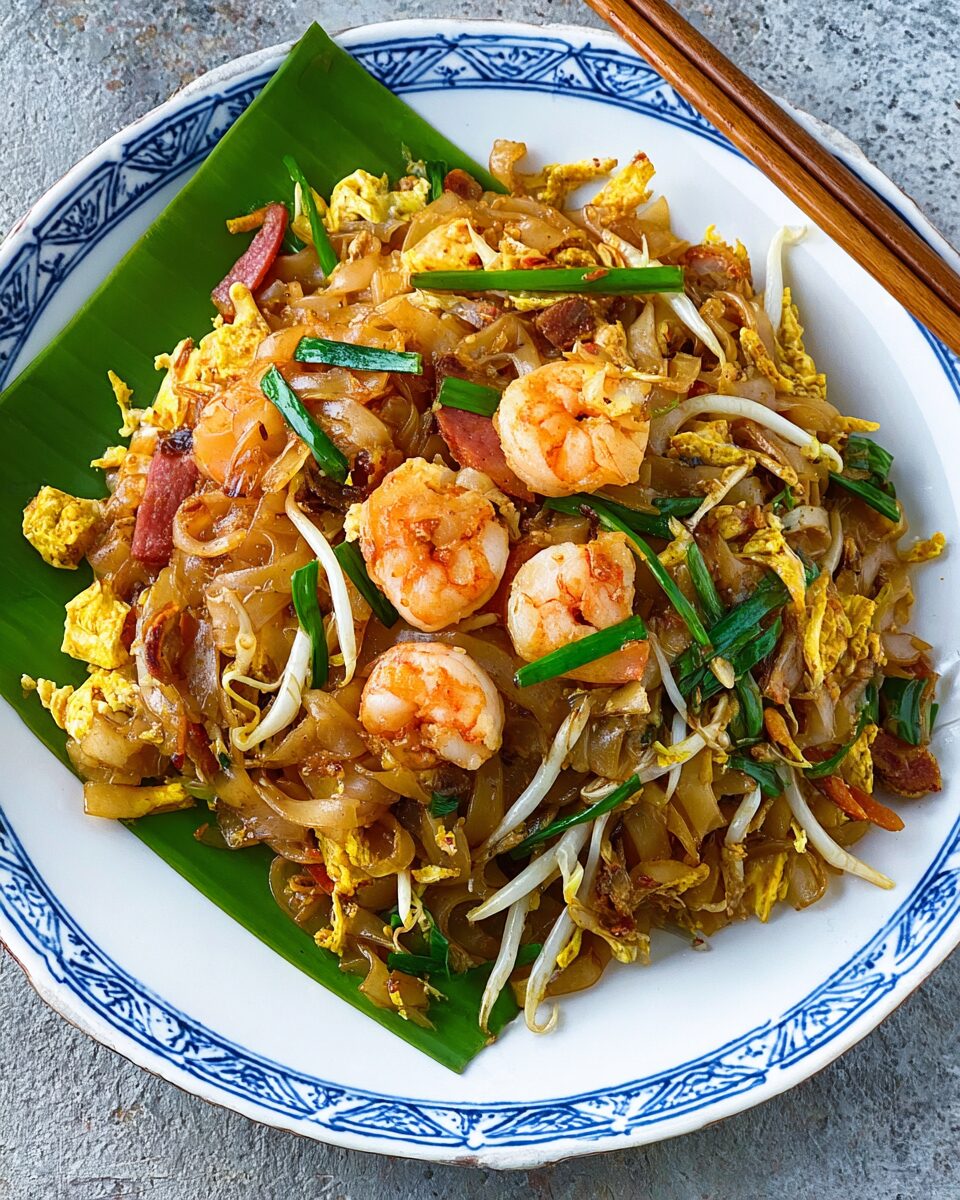
There’s something purely irresistible about the aroma of a wok crackling away at dusk, plumes of steam rising, the sound of noodles swishing, shrimp sizzling, dark soy sauce caramelizing, and rice-noodles turning glossy and slightly charred at the edges. That’s the magic of Char Kway Teow — a dish that isn’t just about sustenance, but about culture, memory, and the joy of street-food craftsmanship.
Originating from southern China but coming into its own in the hawker centres of Malaysia and Singapore, Char Kway Teow is more than just a stir-fried noodle dish. It is a reflection of migration, adaptation, community and flavour. The name tells a story: char means “stir-fried” in Hokkien, and kway teow (or kuay tiao) refers to flat rice noodles. (Wikipedia)
Imagine early morning fishermen and labourers in Penang or the Straits Settlements — modest means, but big appetites. They needed a hearty, cheap, quick meal. So rice cakes or strips of rice-noodles were stir-fried with pork fat or lard, dark soy sauce, garlic, sprouts, Chinese sausage, blood cockles, and shrimp. The high fat content gave energy for long days; the simple ingredients were cheap; the technique of wok-frying on high heat gave the signature smoky taste (wok hei) that defines great CKT. (merlion.org.au)
Over time, Char Kway Teow moved from mobile street stalls to hawker centres, and eventually fine-dining hawker-style stall recognitions. The variations proliferated: Penang style, Singapore style, halal versions, vegetarian swaps — yet the soul remains the same. Intense heat. Flat rice noodles. Garlic. Soy. A little bit of smoky char. The batches are cooked fast, precise, and when served piping hot on banana leaf or a simple plate, you know you’ve hit something special.
For me, every time I attempt to make Char Kway Teow at home, I’m trying to chase that aroma memory: the smell of pork lard (or substitute oil), chopped garlic hitting hot metal, noodles sliding into the wok, the swirl of sauces, the last flick of green chives, bean sprouts tossed in, shrimp turning pink, cockles popping open. I remember a hawker stall in Penang where the stallholder kept flipping the pile of noodles in the same hot wok, sometimes adding a dash of stock, sometimes cracking an egg on top to quickly scramble it into the noodles. To replicate it at home requires intention: high heat, good noodles, decent ingredients, speed.
In a world of plated, slow-cooked, Instagram-styled dishes, Char Kway Teow remains gloriously simple — but deceptively difficult to master. The primary challenge is getting the oil and heat right, managing the timing of each ingredient, and achieving that glossy, slightly singed coating on each noodle strand. One might even call it artisanal, in its own way.
And yet, once you taste it – that combination of sweet dark soy, savory garlic, briny cockles (optional), springy rice-noodles, the pop of shrimp, the crisp of bean-sprouts, the unpredictability of the wok char – you deeply understand why this dish is beloved across Malaysia, Singapore, and beyond. So let’s dive into how to bring this hawker-style delight into your own kitchen — and how to make it shine.
Full Recipe
Ingredients
For the Stir-Fry
- 400 g (14 oz) fresh flat rice noodles (kway teow) – loosened, separated
- 200 g (7 oz) yellow wheat egg noodles (optional mix)
- 200 g (7 oz) raw shrimp (medium-size), peeled (tails on if you like), deveined
- 100 g (3.5 oz) fresh blood cockles (or small clams) – cleaned optional
- 3 slices Chinese sausage (lap cheong), thinly sliced
- 2 eggs, lightly beaten
- 150 g (5.3 oz) bean sprouts, tails removed
- 2 stalks Chinese chives (garlic chives), cut into 5-6 cm lengths
- 3 cloves garlic, finely chopped
- 3 tablespoons pork lard OR 2 tablespoons vegetable oil + 1 tablespoon pork fat (or use oil if you want leaner)
- 2 tablespoons light soy sauce
- 2 tablespoons dark soy sauce
- 1 tablespoon oyster sauce
- 1 teaspoon fish sauce
- 1 teaspoon sugar
- ¼ teaspoon white pepper
- Lime wedges, for serving
Optional Halal / Vegetarian Substitutions
- Replace pork lard with vegetable oil or chicken fat
- Replace Chinese sausage & cockles with firm tofu cubes or sliced mushrooms
- Use halal soy sauce and skip fish sauce for a fully halal version
Directions
Step 1: Prepare ingredients and heat equipment
First thing: get everything pre-pped and ready. This dish moves fast — once the wok is hot and you start, you need to keep up. So: peel and devein the shrimp, rinse and drain the cockles, slice the Chinese sausage, chop garlic, wash and drain bean sprouts, cut chives. Separate the rice noodles gently — if they are stuck in clumps, loosen with your fingers or quickly blanch them in hot water then drain.
Meanwhile, place a large wok over very high heat (this is crucial). For best results, the pan should be smoking hot when you start cooking. Have everything within reach.
Step 2: Start with fat and garlic
Once the wok is hot, add the pork lard (or oil/fat). Let it melt and heat until shimmering. Toss in the chopped garlic and stir-fry for about 10–15 seconds until fragrant and slightly golden — be careful not to burn it. The garlic gives base flavour and a hint of aroma that will infuse the whole dish.
Step 3: Add Chinese sausage, shrimp, cockles
Immediately add the sliced Chinese sausage – it releases oils and flavour. Stir for about 30 seconds. Then add the shrimp; stir-fry for about 1 minute until they just begin to turn pink. Add the cockles and stir quickly for another minute or so until the shells open (discard any that don’t). The idea is to cook this seafood layer just enough so it will finish with the noodles.
Step 4: Add noodles, sauces and eggs
Push the sausage/seafood to one side of the wok, then add a little more fat if needed. Add the rice noodles (and egg noodles, if using) and give them a quick stir to coat with the fat. Then pour in the light soy, dark soy, oyster sauce, fish sauce, sugar and sprinkle white pepper. Toss vigorously so the noodles are evenly coated.
Pour the beaten eggs over the noodles, stir quickly so the egg coats the noodles and cooks through in the heat of the wok. This step adds texture and richness. At this stage you should also aim to get a little of the smoky char (wok hei) on the noodles — a single flick of the wrist, a quick toss, and the noodles touching the hot metal will go slightly crisp at the edges — that’s good.
Step 5: Add bean-sprouts and chives
Once the noodles are coated and moving freely, add the bean-sprouts and the chives. Stir-fry for about 30–45 seconds — the sprouts should still have crunch; you don’t want them soggy. The chives should soften lightly but stay vibrant green. At this point, check the seasoning: if you want a darker colour, add a little more dark soy; if you want a brighter flavour, squeeze a bit of lime.
Step 6: Final toss and serve hot
Give one final intense stir for about 10-15 seconds, to combine everything. Immediately transfer to serving plates — the dish is best enjoyed straight out of the wok while piping hot and slightly smoky. Serve with lime wedges on the side (a squeeze of lime lifts the flavour beautifully).
Step 7: Enjoy the moment
The ideal bite: a strand of slightly charred rice-noodle, the salty sweetness of dark soy, the briny pop of cockle or shrimp, a crisp bean-sprout, a flick of chilli (if you added), and the tang of lime. That’s Char Kway Teow at its finest.
Serving Suggestions & Variations
1. Halal or Lean Version
Replace pork lard with vegetable oil or chicken fat. Skip Chinese sausage and cockles, and use sliced chicken breast or firm tofu. Use light soy sauce and omit fish sauce. Still stir-fry on high heat for the same effect.
2. Seafood-Heavy Version
Instead of Chinese sausage, use a mix of shrimp, scallops, squid rings and fresh clams. This variation elevates the dish into something treat-worthy. Add spring onion, baby spinach, or even crab meat for extra indulgence.
3. Vegetarian / Vegan Version
Use vegetable oil, skip animal proteins, add sliced mushrooms (shiitake or oyster), tofu chunks, and a vegan fish-sauce substitute (or omitted). Use bean sprout and chives plus your sauces. Keep the technique identical.
4. Spicy Char Kway Teow
Add 1-2 teaspoons of chilli paste or sambal at the same time you add the garlic, or sprinkle chilli flakes at the end. You could also stir in a little smoked chilli oil for heat plus smoky aroma.
5. Morning / Grab-and-Go Version
Stir-fry early in the day, portion into containers, and top each with a soft-poached egg before reheating (egg will melt into the noodles). Great for busy breakfasts or lunches.
6. Minimalist Home Version
If you don’t have flat rice noodles, you can substitute with wide rice-stick noodles or substitute with spaghetti in a pinch — though you’ll miss some authenticity, but the flavour technique still holds.
Tips & Tricks
- High heat is essential: The signature wok hei (wok breath) is what makes Char Kway Teow stand out. Without sufficient heat, you’ll end up steaming rather than stir-frying, and lose that smoky flavour.
- Pre-prep everything: Because things move fast in the wok, have every ingredient chopped, weighed and ready before you turn on the heat.
- Noodle selection matters: Try to use fresh flat rice-noodles (kway teow) if you can. Dry ones work, but you’ll need to rehydrate. Avoid using them cold from the fridge in tightly packed lumps.
- Don’t over-crowd the wok: If you add too many ingredients at once, the temperature drops and you get soggy noodles. Better to cook in two batches if needed.
- Loosen the noodles: Stick-free noodles ensure you can toss them freely in the wok. Even a quick rinse with hot water helps.
- Balance your sauces: The interplay of light soy, dark soy, oyster sauce, fish sauce (optional) and sugar is what gives depth — taste as you go.
- Crunch matters: Bean-sprouts and chives should go in towards the end so they retain texture.
- Serve immediately: This dish is best hot. The longer it sits, the softer the noodles become and the less char flavour you’ll have.
- Leftovers eat differently: If you must keep leftovers, store separately and reheat in a hot pan or wok to revive some of the crispness; add a splash of soy and oil when reheating.
- Experiment with fats: Traditional versions use pork lard for flavour; you can replicate some of that by adding a small knob of butter or smoked pork fat if you’re not vegetarian.
- Dial the brine & umami: If you skip cockles, consider adding a splash of fish sauce or small dried shrimp for extra umami.
- Say no to soggy: Avoid covering the dish after cooking; letting it steam will soften the crisp.
- Make it your own: Once you’ve mastered the base technique, feel free to add your twist: extra greens, different seafood, or a garnish of crispy shallots.
Nutritional Info (Approximate per Serving)
- Calories: ~620 kcal
- Protein: ~30 g
- Fat: ~28 g
- Carbohydrates: ~65 g
- Fibre: ~4 g
- Sodium: ~950 mg
(Note: These values are estimates and will vary depending on ingredients, amounts of oil/lard and portion size.)
Additional Info
- Prep Time: 15 minutes
- Cooking Time: 10 minutes
- Total Time: ~25 minutes
- Calories per Serving: ~620 kcal
- Number of Servings: 3–4
Final Thoughts
Cooking Char Kway Teow at home is more than just making a delicious meal — it’s an act of homage to street-side hawker culture, to sizzling woks, to generations of cooks who mastered timing, heat and flavour in a small kitchen. When you serve it, you’ll see how a simple plate of noodles can carry so much flavour, technique, history and joy.
Invite friends around, open a chilled drink, toss a big wok of noodles, and let the aroma fill your kitchen. Encourage seconds. Encourage creativity — maybe add those extra prawns, or mushrooms, or make it spicy, or keep it lean. And most of all, enjoy that moment when the noodles sizzle, the garlic hits the oil, the sauce creeps in, and you lift a forkful that’s smoky, sweet, savoury, crisp, and utterly satisfying.
So the next time you crave something bold, comforting and stirring, skip the take-out queue and step into your own kitchen. With a hot wok, good ingredients, and a little bit of know-how, you’ll have a plate of Char Kway Teow that honours its heritage — and creates your new favourite version.