
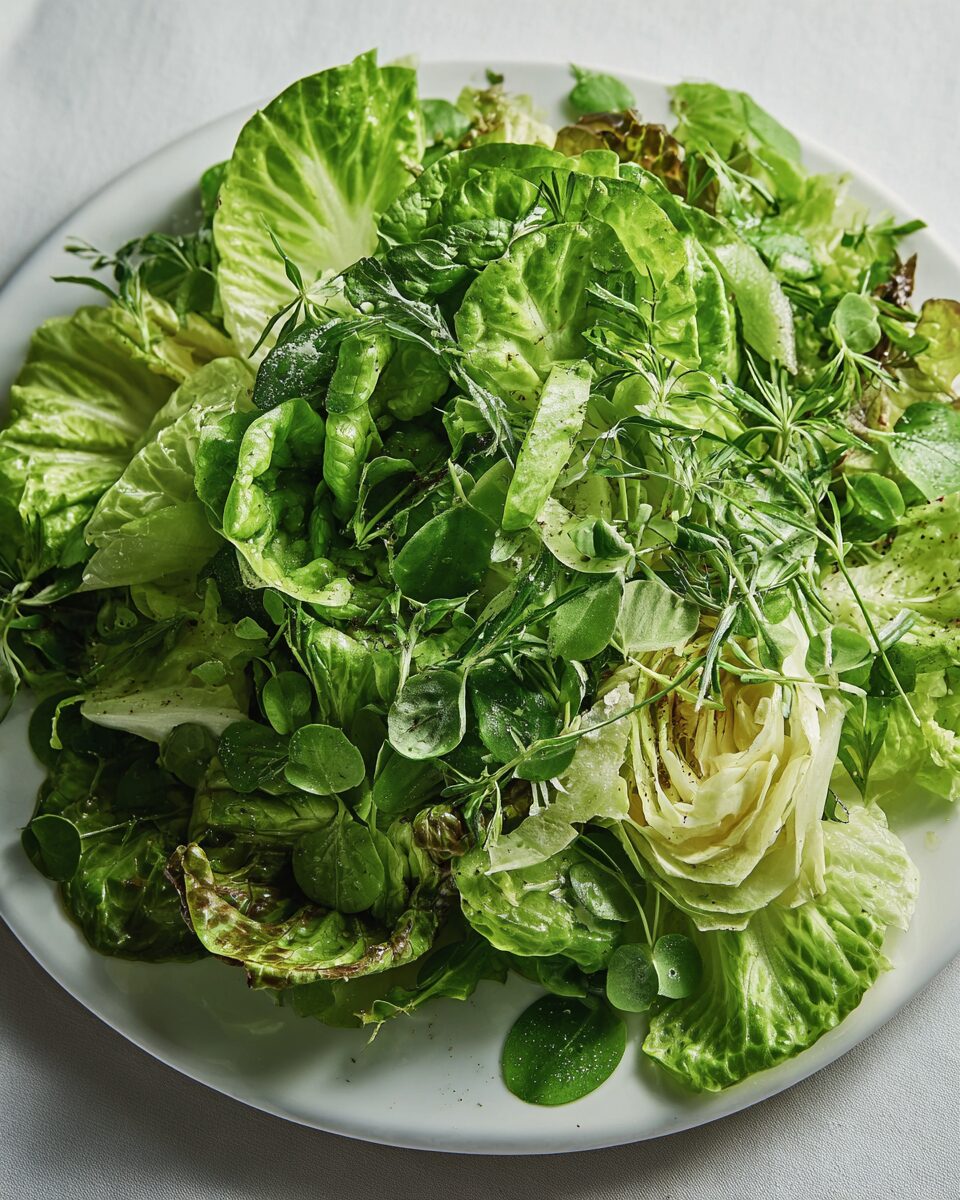
In a cozy corner of the West Village, nestled between cobblestone sidewalks and the hum of city life, sits the now-iconic restaurant Via Carota. Founded by chefs Jody Williams and Rita Sodi, it’s a place where rustic Italian cooking meets seasonal produce and uncomplicated elegance. Among the dishes that stand out, one has earned almost cult-status: the famed Insalata Verde. This dish, deceptively simple yet radiant in its flavor, is the kind of salad that changes your expectations of greens forever. (Eater)
I remember the first time I tried it — it was an unplanned evening. I stopped by Via Carota for a late weekday dinner, expecting something comfortable and familiar. When the salad arrived, it was a tower of leaves — luminous butter lettuce, peppery watercress, crisp little gem lettuce, frisée that curled like delicate lace. It looked like a green sculpture. Then I tasted it. The vinaigrette was a revelation: bright sherry vinegar, finely minced shallot, olive oil streaming in a slow stream, thyme whispering through the mix. The greens were crisp yet tender, layered with texture and nuance. It felt fresh, vibrant, seasonal — and deeply satisfying.
What I love about the Insalata Verde is how it honors vegetables in their purest form. In a world where salads can become overloaded with toppings, heavy dressings, and extraneous ingredients, this dish reminds you that greens themselves can carry the moment. The mixture of lettuces offers a collage of textures: soft, crunchy, bitter, sweet. The greens are washed, spun, dried carefully — treated with the same respect you might give to a prized cut of fish or a fine wine. The dressing is simple yet precise. This is a restaurant dish that feels special, yet it doesn’t feel pretentious. It makes you appreciate what good produce can do — given time, good seasoning, a touch of technique.
This salad is special because it works in any season. In spring, you might lean into delicate little gem lettuce and tender endive. In summer, crisp romaine and vibrant watercress. In fall or winter, hardy lettuces and even chicories. Williams and Sodi note that the recipe “works in every season, with a little finagling.” (Eater)
The way I serve it at home has become ritual. I pull out multiple types of greens, rinse them gently, spin them dry, slice the lettuce leaves so they fall into gentle ribbons, then toss them in that vinaigrette and build a mound on the plate. My guests always comment: “It looks so…simple and yet so good.” That’s because the brilliance lies in the ingredients and the method, not in gimmicks.
If you’re looking for a salad that’s elevated yet humble, fresh yet deeply satisfying, beautiful yet forgiving — this Insalata Verde is it. Whether you’re planning a dinner party, a simple weeknight meal, or want a dish that proves vegetables can be the highlight, this is the recipe you’ll return to again and again.
Full Recipe
Ingredients
For the salad greens:
- 1 head butter lettuce (such as Bibb or Boston) — approximately 6 to 8 leaves
- 1 small head frisée, torn into bite-sized pieces
- 2 handfuls little gem lettuce (or substitute: romaine hearts)
- 1 small handful watercress or peppercress
- 3 spears Belgian endive (optional for accent)
- Kosher salt and freshly-ground black pepper, to taste
- ¼ cup (60 ml) vinaigrette (see below)
For the vinaigrette (makes about 1 cup / 240 ml — enough for multiple salads):
- 1 shallot, very finely chopped (~¼ cup / 40 g)
- 1 garlic clove, finely grated or minced (~1 teaspoon / 5 g)
- ¾ teaspoon (3 g) granulated sugar
- ½ teaspoon (3 g) kosher salt
- 6 sprigs fresh thyme, leaves removed (~1 teaspoon / 2 g)
- ¼ cup (60 ml) aged sherry vinegar
- 2 teaspoons (10 ml) warm water (~40 °C)
- ¾ cup (180 ml) extra-virgin olive oil
Directions
Step 1: Wash and prepare the greens
Begin with the butter lettuce. Remove any limp or discolored outer leaves and set aside for another use (such as chopped into soups or sautéed). Take the pale inner leaves and wash them gently in a large basin of lukewarm water, swishing them with your hands to free any grit. Lift the leaves out and place them in a colander. Then wash again in cold water for one more rinse. Repeat similarly for frisée, little gem lettuce (halved or quartered if hearts), and watercress — removing any tough stems.
Place all the rinsed greens in a salad spinner; spin until nearly dry. Then spread them out on a large, lint-free kitchen towel. Gently roll the leaves in the towel to remove excess water. Having dry leaves is critical — dressing adheres better, and greens stay crisp.
Why this matters: Greens that are too wet will dilute the vinaigrette and may cause the salad to become soggy. Equal care is often reserved for delicate proteins — treating the greens with the same attention makes a major difference in texture.
Step 2: Make the vinaigrette
While the greens are drying, prepare the dressing. Place the finely chopped shallot in a fine-mesh strainer and rinse under cold water, then drain (this step helps mellow the shallot’s sharpness). Transfer shallot and minced garlic to a small mixing bowl. Add rubber-measured sugar, salt, and chopped thyme leaves; stir to combine. Pour in the sherry vinegar and warm water, stirring to dissolve sugar and salt. Then, in a slow steady stream, whisk in the olive oil until the mixture is emulsified — the oil and vinegar bind together into a smooth, slightly thickened dressing.
Tip: Emulsification ensures each leaf is evenly coated and avoids separation of the dressing (“oil sitting on top”). The warm water helps open the flavor of shallots and thyme — a subtle trick Williams & Sodi highlight. (Eater)
Step 3: Dress the greens and assemble
Take a large, wide shallow bowl (or individual wide salad plates). Place a few butter lettuce leaves on the bottom, drizzle a bit of vinaigrette (~1-2 tablespoons) and gently toss by hand so leaves begin to glisten. Add a handful of frisée and little gem lettuce, drizzle another portion of vinaigrette, continue layering watercress and endive (if using), and finishing with remaining butter lettuce. Season with a pinch of kosher salt and some black pepper.
Why layering matters: Layering and drizzling each time ensures the dressing penetrates inside rather than simply coating the top — resulting in leaves that are tender, flavored, and textured throughout not just at the surface.
Step 4: Final touches
Once assembled, stand the salad tall if desired (this is part of the presentation charm). Serve immediately — the crispness of leaves is at its peak and the texture is best. If you need to hold it for a few minutes, place it in a cool area and skip adding extra vinaigrette until then.
Serving Suggestions & Variations
This salad is versatile — elegantly minimal, yet adaptable. Here are ways to serve or tweak it to suit different moods:
Serving ideas:
- Serve as a crisp starter before pasta or risotto.
- Pair it with roasted chicken or grilled fish for a light but satisfying main.
- At brunch: present it as part of a spread with charcuterie, olives, crusty bread, and this salad to lighten the table.
Variations:
- Seasonal greens version – In cooler months, swap butter lettuce for chicory, escarole, or radicchio to bring faint bitterness. Use the same vinaigrette.
- Add nuts or seeds for crunch – Sprinkle toasted pine nuts or chopped walnuts on top, or add baby pea shoots for freshness.
- Cheese upgrade – Dot with shards of Parmesan or pecorino, or small bocconcini mozzarella for creaminess.
- Protein boost – Add warm grilled shrimp or sliced grilled chicken to turn it into a main course.
- Vegan adaptation – Omit cheese, keep the beans (if you add them), and ensure the vinaigrette uses maple syrup instead of sugar if desired.
- Herb-driven twist – Beyond thyme, stir in chopped fresh basil or chervil just prior to serving for extra aroma.
Tips & Tricks
- Greens selection: Choose a mix of textures — soft butter lettuce, crisp little gem, curly frisée, peppery watercress. Mixed textures keep the salad interesting.
- Dry thoroughly: After washing, make sure greens are as dry as possible. Use a salad spinner then towel-dry. Wet leaves ruin the crispness and dilute the dressing.
- Make the vinaigrette ahead: It keeps well for up to 3 days in the fridge. Whisk again before use. (Eater)
- Season well: Salt and pepper after dressing to bring out the flavor — greens alone benefit from seasoning just like cooked vegetables.
- Dress just before serving: This salad tastes best when served immediately after dressing. While it can hold a few minutes, prolonged sitting will wilt the tender leaves.
- Storage: If you have leftovers (rare, but possible), store undressed greens separately and dressing in a small jar. When ready to eat, toss together.
- Avoid heavy toppings: The essence of this salad is the greens and the vinaigrette. Overloading with heavy toppings — heavy cheese, too many chunks — takes away from its airy elegance.
- Presentation counts: This salad shines when leaves are piled high; serve in a shallow, wide bowl and allow some pieces to rise above the rim.
- Vinegar quality: Using a good aged sherry vinegar (or fine substitute) makes a difference. The vinegar’s gentle complexity lifts the entire salad.
- Temperature: Serve greens at near-room temperature; very cold leaves mute flavor, slightly chilled is fine but not ice-cold.
Nutritional Info (Approximate per Serving – serving size ~2 cups)
- Calories: ~180 kcal
- Fat: ~14 g (most from olive oil)
- Saturated Fat: ~2 g
- Carbohydrates: ~8 g
- Protein: ~2 g
- Fiber: ~2 g
- Sugar: ~2 g
- Sodium: ~220 mg (depends on salt added)
Note: These are approximate values and don’t include optional add-ons such as cheese, nuts or added proteins.
Additional Info
- Prep Time: 10 minutes (plus washing and drying greens)
- Cooking Time: 0 minutes (no actual cooking)
- Total Time: ~15 minutes
- Calories per Serving: ~180 kcal
- Number of Servings: 4
Final Thoughts
In our busy kitchens, where meals can often be hurried or complicated, there’s something calming and joyful about returning to simplicity. This Via Carota Insalata Verde reminds us that the best dishes often require the most clarity — clear ingredients, careful technique, and respectful handling of produce. When you make it, you’re not just tossing greens and dressing; you’re creating a moment of quiet elegance on a plate.
I encourage you to try this salad on a weekend when you have a few extra minutes. Wash the greens thoroughly, make that vinaigrette carefully, and then pile the leaves tall. Serve it alongside something rich — pasta, grilled fish, roasted vegetables — and let the salad brighten the meal. Or enjoy it all on its own, with nothing more than crusty bread to mop up the vinaigrette.
And once you’ve made it once, I suspect it will become a staple. A salad you return to, modify slightly with seasonal greens, present proudly, and serve when you want something fresh and beautiful. Share it with friends, let them marvel that a salad can be the highlight of the table. Because in this case, it really can.
Here’s to greens that deserve attention, vinaigrettes that make hearts beat faster, and kitchen moments where simplicity meets excellence. May your next salad feel like more than a side dish—it may feel like a celebration. Buon appetito.