
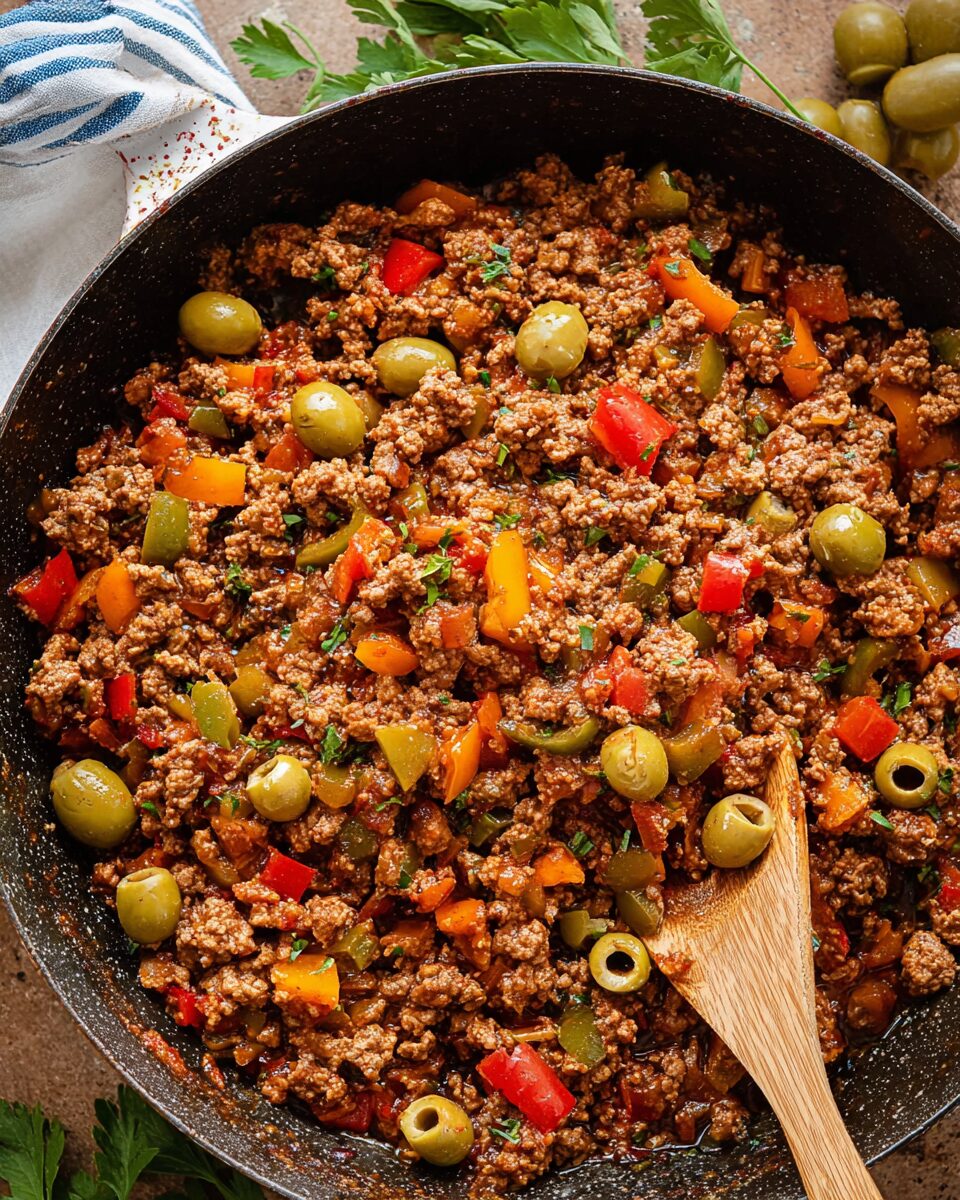
Few dishes embody warmth, culture, and comfort the way Picadillo does. Pronounced pee-kah-DEE-yo, this beloved dish is more than just food — it’s a story told through aroma, color, and memory. A staple in many Latin American and Spanish kitchens, Picadillo (from the Spanish picar, meaning “to mince” or “to chop”) is a hearty, savory ground beef stew simmered with tomatoes, onions, peppers, garlic, and warm spices. It’s often sweetened with raisins and dotted with briny olives or capers — a flavor combination that perfectly captures the balance of salty, sweet, and savory that defines traditional Latin cooking.
Every culture that embraces Picadillo has its own take on it. In Cuba, it’s often served over fluffy white rice with fried plantains or black beans. In Puerto Rico, it finds its way into pastelillos (empanadas) and alcapurrias (fritters made from green bananas and yuca). In Mexico, Picadillo might include diced potatoes, carrots, and sometimes peas, transforming it into a comforting family stew served with tortillas. Even the Philippines, with its Spanish influence, has its own sweet-and-savory version flavored with soy sauce and sugar.
For me, Stovetop Picadillo is more than a meal — it’s a bridge between cultures and generations. It’s the dish that reminds you of home, even if home is thousands of miles away. It’s quick enough for weeknights but special enough for Sunday gatherings. Every time you make it, the scent of garlic sizzling in olive oil and the gentle simmer of tomatoes feels like a comforting hug from the kitchen.
What makes this dish so special is its simplicity. A few humble ingredients — ground beef, tomatoes, onions, and spices — come together to create a dish bursting with flavor and character. It’s economical, adaptable, and deeply satisfying, making it a go-to for families across Latin America and beyond.
And while there are countless variations, this stovetop version celebrates the Cuban-style Picadillo, where tender ground beef mingles with sweet raisins, briny green olives, and a rich tomato-based sauce. It’s a dish that hits every note — salty, sweet, tangy, and savory — in perfect harmony.
So grab your skillet, your favorite wooden spoon, and maybe a little salsa music in the background. Tonight, we’re making Stovetop Picadillo — a comforting, flavor-packed classic that turns simple ingredients into a masterpiece of tradition and taste.
Full Recipe
Ingredients
For the Picadillo:
- 1 ½ lbs (680 g) ground beef (85% lean for best flavor)
- 2 tablespoons olive oil
- 1 medium yellow onion, finely chopped
- 1 green bell pepper, finely chopped
- 3 garlic cloves, minced
- 1 teaspoon ground cumin
- 1 teaspoon dried oregano
- ½ teaspoon smoked paprika
- ½ teaspoon ground cinnamon (optional but adds depth)
- 1 teaspoon salt (adjust to taste)
- ½ teaspoon black pepper
- ½ cup (120 ml) tomato sauce
- 1 tablespoon tomato paste
- 1 ½ cups (360 ml) beef broth or water
- ½ cup (75 g) diced tomatoes (fresh or canned)
- ⅓ cup (50 g) green olives, sliced
- 2 tablespoons raisins
- 1 tablespoon capers (optional but authentic)
- 1 bay leaf
Optional Add-ins:
- 1 medium potato, peeled and diced (for heartier texture)
- ½ cup frozen peas or diced carrots
- 1–2 tablespoons red wine or dry sherry for depth
Directions
Step 1: Prepare the Base
Heat olive oil in a large skillet or sauté pan over medium heat. Once hot, add the chopped onion and bell pepper. Sauté for about 5–7 minutes, stirring occasionally, until softened and fragrant. Add the minced garlic and cook for 30 seconds, just until aromatic.
Why this step matters: This is your flavor foundation. Sautéing the onions and peppers gently releases their sweetness and builds a rich, savory base for the beef.
Step 2: Brown the Ground Beef
Add the ground beef to the skillet, breaking it up with a wooden spoon. Cook until browned and no longer pink, about 6–8 minutes. Drain excess grease if needed, leaving just enough fat to keep the mixture moist and flavorful.
As the beef cooks, season with cumin, oregano, paprika, cinnamon (if using), salt, and pepper. Stir well so the spices coat every bit of meat.
Chef’s note: Browning the meat properly is essential — don’t rush this step. Allowing the beef to develop a deep brown color creates the rich umami flavor that gives Picadillo its heartwarming depth.
Step 3: Add Tomato Base
Stir in the tomato paste and cook for 1 minute to concentrate its flavor. Then add the tomato sauce, diced tomatoes, and beef broth (or water). Mix well, scraping up any browned bits from the bottom of the pan — they’re pure flavor gold.
Bring the mixture to a simmer. Reduce the heat to low and let it gently bubble for 10 minutes, stirring occasionally.
This slow simmer allows the sauce to thicken slightly and the spices to bloom, giving the dish its characteristic richness.
Step 4: Add Sweet & Savory Touches
Now, stir in the raisins, olives, and capers (if using). Add the bay leaf.
At first glance, this mix might sound unusual — but the combination of sweet, salty, and briny flavors is what makes traditional Cuban Picadillo unforgettable. The raisins plump up in the sauce, the olives lend a salty bite, and the capers add brightness that cuts through the richness of the beef.
Simmer for another 10–15 minutes, uncovered, until the sauce thickens to your desired consistency. If you’re adding diced potatoes or peas, now’s the time to stir them in.
Pro tip: For an even richer flavor, splash in a bit of red wine or dry sherry while simmering. It deepens the sauce and adds a subtle sophistication to the dish.
Step 5: Taste and Adjust
Remove the bay leaf, then taste your Picadillo. Adjust salt and pepper as needed, or add a pinch of sugar if your tomatoes are too acidic.
You’re looking for a perfect balance — meaty, slightly tangy, a little sweet, and warmly spiced.
Step 6: Serve and Garnish
Serve your Stovetop Picadillo hot, traditionally over a bed of white rice, and garnish with fresh cilantro or parsley if you like. It also pairs beautifully with black beans, fried plantains (tostones or maduros), or warm tortillas.
For a Cuban-style presentation, serve with rice and beans on one side and fried plantains on the other — a comforting, colorful, and balanced plate.
Serving Suggestions & Variations
1. Classic Cuban-Style Picadillo
Stick with the traditional mix of raisins, olives, and capers, and serve it with white rice and fried sweet plantains. Add a side of black beans for a true comida completa (complete meal).
2. Mexican-Inspired Picadillo
Add diced potatoes, carrots, and peas. Replace the green olives with jalapeños for a little heat. Serve with corn tortillas and avocado slices for a comforting, earthy meal.
3. Filipino-Style Picadillo (Giniling)
Use soy sauce instead of tomato paste, skip the raisins, and add diced bell peppers and potatoes. It’s typically served over rice with a fried egg on top — a perfect breakfast or quick lunch option.
4. Vegetarian Picadillo
Replace the beef with cooked lentils, quinoa, or a plant-based ground meat alternative. Use vegetable broth instead of beef broth, and add extra diced vegetables for texture. The flavor remains deep and comforting without the meat.
5. Sweet & Spicy Version
Add a pinch of red pepper flakes or diced chipotle pepper in adobo sauce for heat. Balance with a touch more raisins or even a tablespoon of pineapple chunks for a tropical twist.
6. Picadillo-Stuffed Peppers
Spoon the mixture into halved bell peppers, sprinkle with cheese, and bake until bubbly. It’s a stunning way to repurpose leftovers into an entirely new meal.
Tips & Tricks
- Choose the Right Beef: 85% lean ground beef provides the perfect balance between flavor and juiciness. Too lean, and the Picadillo may turn dry; too fatty, and it becomes greasy.
- Don’t Skip the Sauté: The onions and peppers must be softened before adding beef — they’re the backbone of the dish’s flavor.
- Simmer Slowly: Picadillo tastes better the longer it simmers. The extra time helps meld the flavors and thicken the sauce.
- 🫒 Balance Sweet & Salty: The magic lies in the harmony between the raisins and olives. Adjust quantities to suit your taste.
- Make It Ahead: Picadillo tastes even better the next day as the flavors deepen overnight. Store in an airtight container in the refrigerator for up to 4 days.
- Freezer-Friendly: Freeze cooled Picadillo in portions for up to 3 months. Reheat gently on the stovetop with a splash of water or broth.
- Texture Control: If you prefer a saucier Picadillo, add a little extra broth. For thicker consistency, simmer uncovered for a few more minutes.
- Add Brightness: A small squeeze of lime at the end lifts all the flavors and adds freshness.
Nutritional Info (per serving)
(Based on 6 servings)
- Calories: 380 kcal
- Protein: 27 g
- Carbohydrates: 14 g
- Fat: 22 g
- Fiber: 2 g
- Sugar: 6 g
- Sodium: 780 mg
This dish is nutrient-dense, rich in protein, and full of healthy fats from olive oil and natural ingredients. For a lighter version, you can substitute leaner meat or turkey.
Additional Info
- Prep Time: 15 minutes
- Cooking Time: 30–35 minutes
- Total Time: 45–50 minutes
- Servings: 6
- Calories per Serving: ~380 kcal
Final Thoughts
Stovetop Picadillo is more than a recipe — it’s a story shared across continents, from the kitchens of Havana to the dining tables of Mexico City and Manila. It’s humble, hearty, and infinitely adaptable — the kind of dish that connects families, generations, and cultures.
What makes it so wonderful is how it transforms simple ingredients into something rich, complex, and deeply comforting. The first bite brings a burst of savory beef, the sweet surprise of raisins, and the salty pop of olives — all tied together in a silky tomato sauce. It’s a symphony of flavors that somehow feels both exciting and familiar.
This dish is proof that comfort food doesn’t have to be complicated. With just one pan, a handful of pantry staples, and a little patience, you can create a meal that feels like a celebration of home. It’s perfect for busy weeknights, family dinners, or cozy weekends when you want something hearty and soul-satisfying.
So, the next time you crave something warm, flavorful, and full of heart, give Stovetop Picadillo a try. Play with the flavors, make it your own, and don’t forget to share it with someone you love — because food like this is meant to be shared.