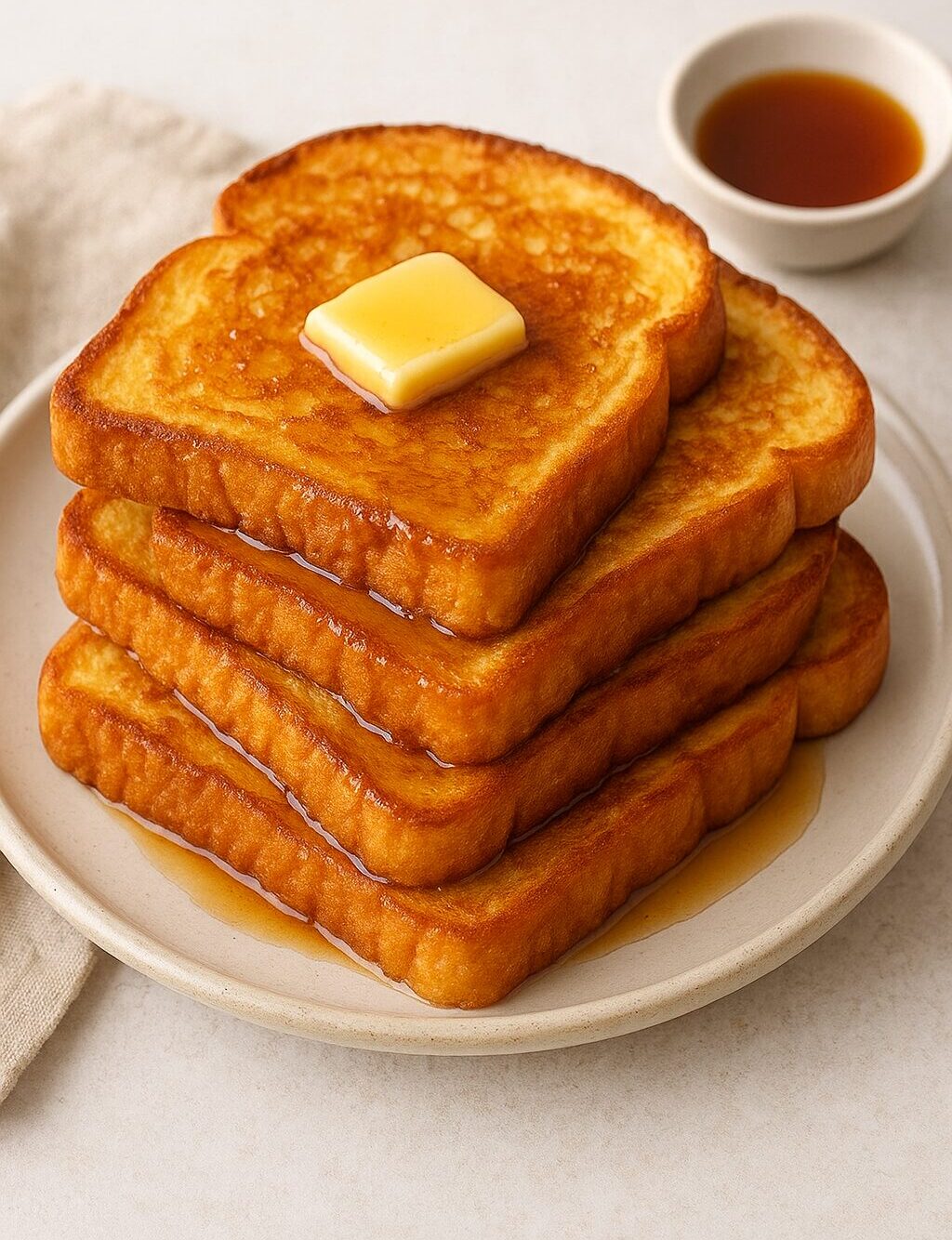
French toast is one of those rare dishes that feels like pure comfort yet looks elegant enough for a brunch spread. With its golden-brown exterior, custardy interior, and endless topping possibilities, it transforms humble bread into something indulgent and satisfying.
But here’s the beauty of French toast: it’s both simple and versatile. You can make it in under 20 minutes on a weekday morning or turn it into a showstopping centerpiece for a holiday breakfast. This expanded guide will walk you through the classic recipe, expert tips, global variations, serving suggestions, troubleshooting advice, and a detailed FAQ. By the end, you’ll have everything you need to master the art of French toast.
The History of French Toast
Despite its name, French toast didn’t start in France. The roots go back to ancient Rome, where cooks created pan dulcis — bread soaked in milk and egg, fried in oil or butter, and sweetened with honey.
The French perfected it during the Middle Ages, naming it pain perdu, or “lost bread.” It was a way to use up stale loaves so nothing went to waste. This thrifty recipe spread across Europe and eventually the world, adapting to local tastes.
- Spain: Torrijas, often flavored with wine and sugar, traditionally served during Easter.
- United Kingdom: Known as “eggy bread,” often eaten savory with ketchup or Worcestershire sauce.
- Hong Kong: A decadent deep-fried version stuffed with peanut butter or jam.
- India: Bombay toast, sweet or savory, with cardamom or chili.
- Mexico: Pan dulce–style French toast with cinnamon and piloncillo syrup.
Today, French toast has become a universal comfort food, recognized everywhere but always customized to reflect culture and seasonality.
Why You’ll Love This Recipe
- Quick – Ready in less than 20 minutes.
- Flexible – Works with many bread types, toppings, and flavors.
- Budget-friendly – Uses simple pantry staples.
- Family-friendly – Kids love it, adults crave it.
- Impressive – Easy enough for weekdays, fancy enough for brunch.
Ingredients (Serves 4)
- 8 slices thick bread (brioche, challah, or Texas toast)
- 4 large eggs
- 1 cup whole milk or half-and-half
- 2 tablespoons sugar
- 1 teaspoon vanilla extract
- ½ teaspoon ground cinnamon
- Pinch of salt
- 2 tablespoons butter, for cooking
- Maple syrup, powdered sugar, and berries for topping
Step-by-Step Instructions
Step 1: Prepare the custard
Whisk together eggs, milk, sugar, vanilla, cinnamon, and salt until smooth. This mixture should be rich but not too thick.
Step 2: Heat the skillet
Preheat a non-stick skillet or griddle over medium heat. Melt butter until foamy, coating the surface.
Step 3: Dip the bread
Quickly dip each slice into the custard, coating both sides. Don’t let the bread soak too long — a few seconds is enough.
Step 4: Cook to golden perfection
Place dipped bread on the skillet. Cook 2–3 minutes per side, until golden-brown and crispy at the edges.
Step 5: Serve warm
Stack slices on a plate, dust with powdered sugar, drizzle maple syrup, and top with fresh fruit.
Pro Tips for the Best French Toast
- Choose the right bread – Brioche and challah give rich results, but day-old sandwich bread also works.
- Slightly stale bread works best – It absorbs custard without falling apart.
- Balance the heat – Medium heat ensures crisp outsides and soft insides.
- Use butter + oil – A mix prevents burning while still giving buttery flavor.
- Flavor your custard – Try nutmeg, almond extract, or citrus zest.
Common Mistakes to Avoid
- Thin bread → falls apart when dipped.
- Oversoaking → mushy centers.
- Cooking too fast → burnt outside, raw inside.
- No salt → flavor becomes flat and overly sweet.
Variations You’ll Love
- Savory French Toast: Skip sugar and vanilla; add herbs, black pepper, and cheese. Top with ham or mushrooms.
- Stuffed French Toast: Spread cream cheese, Nutella, or jam between slices before dipping.
- Overnight Baked French Toast: Assemble in a casserole dish with custard the night before; bake in the morning.
- Vegan French Toast: Use oat milk, cornstarch, and a pinch of turmeric for color.
- Global Twists: Torrijas from Spain, Hong Kong peanut butter French toast, or Indian Bombay toast.
Seasonal & Holiday French Toast Ideas
- Christmas Morning: Add eggnog instead of milk, top with cranberry-orange compote.
- Valentine’s Day: Cut bread into heart shapes, serve with chocolate drizzle and strawberries.
- Autumn Brunch: Pumpkin spice custard with roasted pecans and apple slices.
- Easter Sunday: Lemon-zest custard with pastel-colored toppings or berry sauce.
Troubleshooting Guide
- Too soggy? Use day-old bread, dip quickly, and avoid thin slices.
- Burning too fast? Lower the heat; French toast cooks best over medium flame.
- Lacking flavor? Increase vanilla or add zest/spices.
- Not crispy enough? Add a touch of oil with butter, and don’t overcrowd the pan.
- Too eggy? Increase milk-to-egg ratio slightly for lighter custard.
Serving Suggestions
- Classic: Maple syrup, powdered sugar, and fresh berries.
- Indulgent: Caramel drizzle, whipped cream, bananas.
- Brunch platter: Pair with scrambled eggs, sausage, and fruit salad.
- Kids’ favorite: Cut into sticks, serve with a small dipping bowl of syrup.
FAQs
1. What’s the best bread?
Brioche, challah, or Texas toast. Thick slices work best.
2. Can I freeze French toast?
Yes! Freeze slices between parchment paper and reheat in a toaster or oven.
3. Can I make it ahead of time?
Yes — try an overnight casserole version or keep cooked slices warm in the oven.
4. How do I make it healthier?
Use whole-grain bread, almond milk, and reduce sugar.
5. Can French toast be savory?
Absolutely! Skip sweeteners and top with cheese, herbs, or avocado.
6. What toppings work best?
Anything from syrup and fruit to nut butters, yogurt, or chocolate.
Nutrition (per serving, without toppings)
- Calories: ~250
- Protein: 8g
- Fat: 9g
- Carbohydrates: 32g
- Fiber: 2g
- Sugar: 7g
Conclusion
French toast is more than a recipe — it’s a tradition, a way to revive bread, and a canvas for creativity. From its Roman roots to its place at modern brunch tables, it has proven itself as one of the most versatile breakfast dishes ever.
By mastering this classic golden French toast, and experimenting with variations — from stuffed to savory to seasonal twists — you’ll have a go-to dish for any occasion. So grab your skillet, whisk your custard, and let the aroma of warm, golden toast fill your kitchen.