
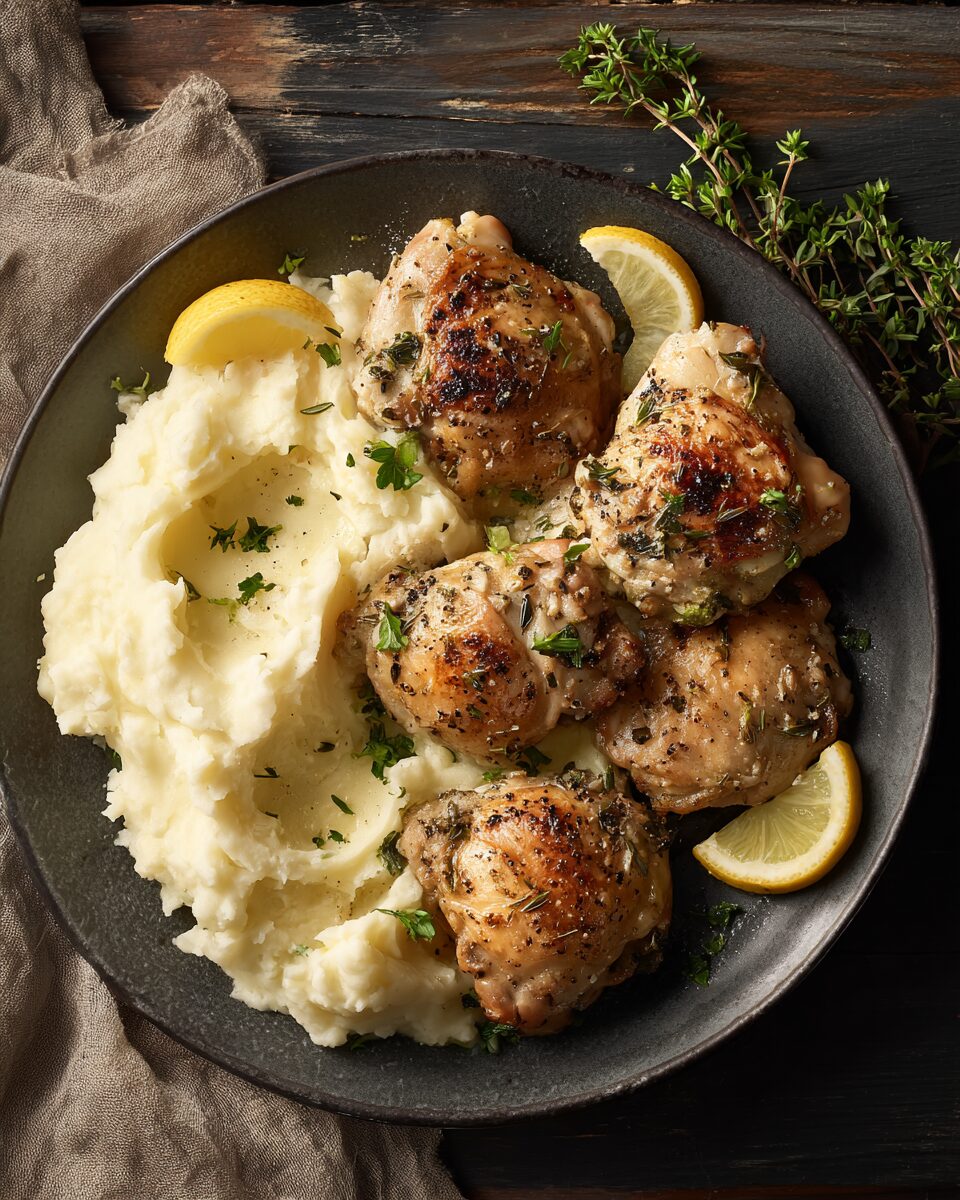
There are few dishes more universally comforting than roasted chicken served alongside creamy mashed potatoes. It’s a pairing that transcends cultures, seasons, and cooking styles. At its core, this meal embodies balance: crispy, golden-brown chicken skin encasing juicy meat, matched with silky mashed potatoes that feel like a hug in a bowl.
This particular recipe focuses on chicken thighs, a cut often overlooked in favor of breasts. Yet thighs are arguably superior for roasting — they remain juicy, flavorful, and forgiving even if slightly overcooked. When rubbed with a blend of herbs, garlic, and olive oil, the thighs roast into perfection: crispy on the outside, tender within.
Mashed potatoes, meanwhile, provide the ideal backdrop. Fluffy, buttery, and creamy, they balance the savory richness of the chicken. Together, they form a timeless dinner that works for both casual weeknights and special occasions.
In this expanded guide, we’ll cover not just how to make the recipe, but why it works, how to customize it, and how to serve it in ways that keep it exciting meal after meal.
Ingredients (Serves 4–6)
For the chicken thighs:
- 6 bone-in, skin-on chicken thighs
- 2 tablespoons olive oil
- 1 teaspoon salt
- ½ teaspoon black pepper
- 1 teaspoon garlic powder
- 1 teaspoon onion powder
- 1 teaspoon dried thyme
- 1 teaspoon dried rosemary
- 1 teaspoon smoked paprika
- 1 lemon, cut into wedges
For the mashed potatoes:
- 1.5 kg Yukon Gold or Russet potatoes, peeled and chopped into chunks
- ½ cup unsalted butter (room temperature)
- 1 cup whole milk (warm)
- ½ cup heavy cream (warm)
- 1 teaspoon salt
- ½ teaspoon black pepper
- 2 cloves garlic, roasted or sautéed (optional for garlic mash)
For garnish (optional):
- Fresh parsley, chopped
- Extra olive oil or butter drizzle
Instructions
Step 1: Prepare the chicken
- Pat chicken thighs dry with paper towels; dry skin means crispier roasting.
- In a small bowl, combine salt, pepper, garlic powder, onion powder, thyme, rosemary, and smoked paprika.
- Rub chicken thighs with olive oil, then coat evenly with seasoning mix.
- Arrange thighs skin-side up on a baking sheet lined with parchment.
Step 2: Roast the chicken
- Preheat oven to 200°C (400°F).
- Roast chicken for 35–40 minutes, or until skin is golden and internal temperature reads 75°C (165°F).
- Optional: Broil for 2–3 minutes at the end for extra crisp skin.
- Let rest 5 minutes before serving.
Step 3: Make the mashed potatoes
- Place potatoes in a large pot, cover with cold salted water. Bring to boil.
- Reduce to simmer and cook 15–20 minutes until fork-tender.
- Drain thoroughly. Pass through a potato ricer or mash with a masher.
- Add butter, warm milk, and cream gradually. Mix until smooth and fluffy.
- Season with salt and pepper. Add roasted garlic if desired.
Step 4: Serve
- Spoon mashed potatoes onto plates.
- Place roasted chicken thigh on top or beside potatoes.
- Garnish with parsley and lemon wedges.
Why This Recipe Works
- Chicken thighs = flavor + moisture. They contain more fat than breasts, which renders during roasting to keep the meat succulent.
- Herb rub = depth of flavor. Dried herbs intensify in the oven, creating a fragrant crust.
- High oven temperature = crispy skin. Dry heat at 200°C ensures a golden crust without drying meat.
- Yukon Gold potatoes = creamy mash. Their balance of starch and moisture creates the ideal texture.
- Adding warm dairy = smooth consistency. Cold butter or milk causes gumminess; warm ingredients blend seamlessly.
Cooking Science: The Secrets Behind Crispy Chicken and Creamy Potatoes
Why dry chicken skin matters:
Moisture is the enemy of crispiness. Patting chicken thighs dry removes surface water, allowing fat to render properly. During roasting, the Maillard reaction (a form of browning) occurs, producing hundreds of flavor compounds that give roasted chicken its savory depth.
Why Yukon Golds make superior mash:
These potatoes are “medium-starch,” meaning they don’t absorb as much water as Russets but still break down easily. They create mash that’s creamy yet fluffy, without becoming gluey. Using a ricer helps eliminate lumps for a restaurant-quality finish.
Why butter first, then milk:
Fat coats the starch molecules in potatoes, preventing them from becoming gluey when liquid is added. Always add butter before milk or cream.
Variations
- Mediterranean style: Add olives, cherry tomatoes, and oregano to the chicken pan before roasting.
- Garlic herb mash: Roast garlic cloves until caramelized and mash into potatoes for rich sweetness.
- Cheesy twist: Stir grated Parmesan or cheddar into mashed potatoes.
- Healthier option: Replace half the potatoes with cauliflower for lighter mash.
- Gravy addition: Make a quick pan gravy with chicken drippings, broth, and flour for extra indulgence.
What to Serve Alongside
- Green vegetables: Steamed green beans, roasted asparagus, or sautéed spinach.
- Fresh salad: A lemony arugula salad balances richness.
- Cranberry relish: Adds tartness and color.
- Warm bread: For soaking up leftover potato and chicken juices.
Nutritional Information (Per Serving, Approx.)
- Calories: 620
- Protein: 32g
- Fat: 32g
- Carbohydrates: 54g
- Fiber: 5g
- Sugar: 4g
Storage & Make-Ahead Tips
- Refrigeration: Store chicken and potatoes separately up to 4 days.
- Freezing: Chicken freezes well for 2 months; mashed potatoes freeze if made with extra butter/cream.
- Reheating: Warm chicken in oven at 180°C (350°F) to preserve crisp skin. Reheat potatoes gently with extra milk.
- Meal prep: Roast a double batch of chicken thighs for easy lunches.
Common Questions
Can I use boneless thighs?
Yes, but reduce cooking time to 25 minutes. Bone-in adds more flavor.
Can I use skinless chicken?
You can, but you’ll miss the crispy skin. Cooking time also decreases.
Can I use milk only in mash?
Yes, but cream adds extra richness. For lighter mash, skip cream.
Can I make this in advance?
Yes. Potatoes can be held warm over a double boiler; chicken can be roasted ahead and reheated.
What wine pairs best?
A Chardonnay with buttery notes or a light Pinot Noir both complement this meal.
Chef’s Notes
When I think of comfort food, this dish is at the top of the list. Chicken thighs are underrated — inexpensive, flavorful, and perfect for roasting. Pairing them with mashed potatoes feels almost nostalgic, reminding many of Sunday dinners or holiday meals.
The flexibility is another highlight. The herb rub can be swapped with Cajun spices, Moroccan blends, or even curry powder. The mashed potatoes can carry cheese, garlic, or herbs. It’s a foundation recipe — once you master it, the possibilities are endless.
Expanded Storytelling & Food Culture
Across cultures, roasted poultry paired with starchy sides has always been a staple. In Europe, roast chicken with potatoes is considered a Sunday tradition. In the U.S., fried or baked chicken with mashed potatoes is a hallmark of Southern cooking. Even in Asia, chicken dishes often pair with rice or root vegetables, proving the universal appeal of this combination.
The practice of roasting chicken goes back centuries, with medieval cooks skewering birds on open fires. Today’s oven-roasting is more controlled but still honors the same principle: transform a humble cut into something memorable.
Mashed potatoes, meanwhile, emerged in the 1700s in Europe. They became popular in America during the 18th century and have since been associated with comfort and celebration. Together, roasted chicken and mashed potatoes are not just food — they’re culinary heritage.
Conclusion
Herb-roasted chicken thighs with mashed potatoes is more than just dinner — it’s a symbol of comfort, tradition, and versatility. With crispy golden chicken, fluffy mash, and endless variations, it satisfies every craving while remaining accessible to cooks of all levels.
This recipe is straightforward but delivers results worthy of any occasion. It’s budget-friendly, nutritious, and adaptable, yet feels indulgent and celebratory. Whether you’re cooking for family, friends, or just yourself, this pairing will never go out of style.
Make it once, and it may just become your signature meal — the one everyone requests again and again.