
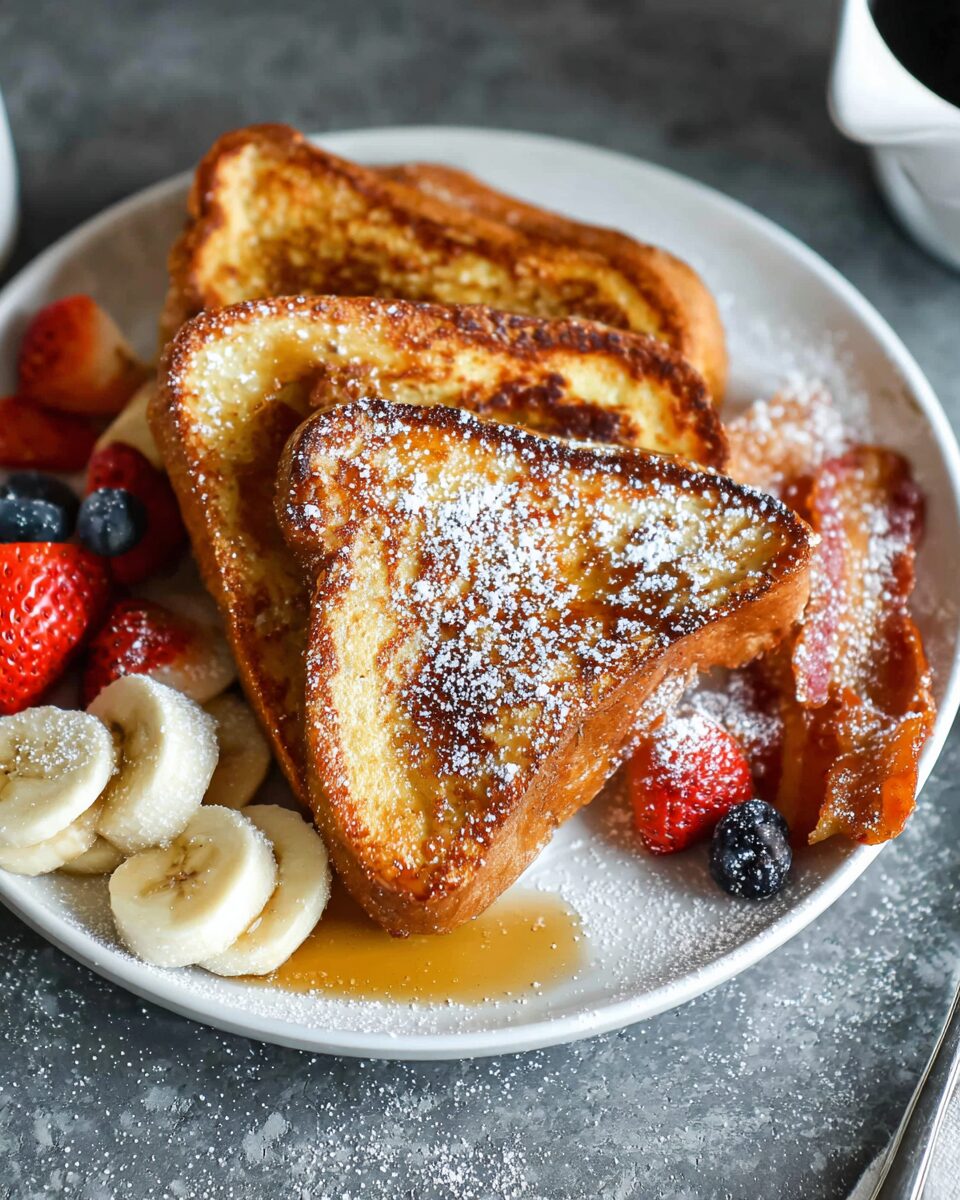
Few breakfast dishes evoke as much nostalgia, comfort, and universal love as French Toast. Golden, crisp on the outside yet soft and custardy inside — it’s a dish that feels indulgent, elegant, and heartwarming all at once. Whether served with a dusting of powdered sugar and a drizzle of maple syrup or piled high with fruit and whipped cream, French toast has a way of turning even an ordinary morning into something truly special.
At its core, French toast is simple: bread soaked in a mixture of eggs and milk, then fried until golden. But simplicity is what makes it beautiful. It’s a recipe that has been cherished across cultures for centuries — an ingenious way to transform stale bread into a luxurious meal.
A Bit of History
Despite its name, French toast didn’t actually originate in France. Versions of it can be traced all the way back to ancient Rome. The earliest known recipe appeared in a 4th-century Latin cookbook called Apicius, where it was referred to as Pan Dulcis — bread soaked in milk and eggs, fried in oil, and drizzled with honey.
In France, the dish evolved into Pain Perdu, meaning “lost bread,” referring to bread that would otherwise be discarded. It was a clever way to give new life to leftover loaves. The French perfected the art of turning humble ingredients into something decadent — and when this recipe crossed the Atlantic, Americans made it their own by adding spices, sugar, and toppings like butter and syrup.
Today, French toast is loved around the world: from the custard-soaked brioche pain perdu in Parisian cafés to the Hawaiian-style version topped with coconut and pineapple, or the American diner classic drenched in syrup. No matter where you go, this dish remains a testament to comfort, creativity, and culinary resourcefulness.
Why It’s So Special
French toast isn’t just breakfast — it’s an experience. It’s that lazy Sunday morning feeling when you can take your time in the kitchen, whisking eggs and milk while coffee brews in the background. It’s the joy of serving something that feels fancy but comes together with pantry staples. It’s the satisfying sound of butter sizzling in the pan and the sight of golden bread caramelizing to perfection.
What makes French toast special is its balance of texture and flavor: a slightly crisp crust giving way to a creamy, custardy center. The sweetness is gentle, never overwhelming, leaving room for creative toppings — fruit, nuts, syrups, or even a touch of savory flair.
I still remember the first time I made French toast by myself. I was a teenager experimenting in the kitchen, trying to recreate what my grandmother used to make on weekends. Her secret? Letting the bread soak just long enough to absorb the custard without falling apart, and always using a thick slice — preferably slightly stale. The result was perfection: soft, rich, buttery, and comforting in every bite.
Over the years, I’ve made countless versions — from classic cinnamon-spiced slices to stuffed French toast filled with cream cheese and berries. And every single time, it feels like the kind of breakfast that deserves a quiet moment of appreciation before that first bite.
So, whether you’re making it for a cozy family breakfast, a brunch with friends, or a treat-yourself kind of morning, this French Toast recipe will show you how to master the perfect balance of simplicity and indulgence — a timeless dish that never goes out of style.
Full Recipe
Ingredients
For the French Toast (serves 4):
- 8 slices of thick bread (brioche, challah, or Texas toast recommended)
- 4 large eggs
- 1 cup (240ml) whole milk or half-and-half
- ¼ cup (60ml) heavy cream (optional, for extra richness)
- 2 tablespoons granulated sugar
- 1 teaspoon pure vanilla extract
- 1 teaspoon ground cinnamon
- ¼ teaspoon nutmeg (optional)
- Pinch of salt
- 2 tablespoons unsalted butter (for cooking)
Optional Toppings:
- Maple syrup or honey
- Powdered sugar
- Fresh berries (strawberries, blueberries, raspberries)
- Banana slices
- Whipped cream
- Toasted nuts (pecans, almonds, walnuts)
Directions
Step 1: Choose the Right Bread
The foundation of great French toast is the bread. While you can technically use any kind, the best versions use thick, slightly stale slices that can absorb the custard without turning mushy.
- Best options: Brioche, challah, or Texas toast. These breads are soft yet sturdy, with a bit of natural sweetness that complements the custard beautifully.
- Why stale bread works: Slightly dry bread absorbs the egg mixture better than fresh, preventing sogginess. If your bread is fresh, lightly toast it in the oven at 300°F (150°C) for 5–7 minutes before soaking.
Step 2: Make the Custard Mixture
In a large mixing bowl, whisk together:
- Eggs, milk, cream, sugar, vanilla, cinnamon, nutmeg, and salt.
Whisk until smooth and well blended. You want to make sure the sugar and spices are fully dissolved and evenly distributed.
Pro Tip: Use room-temperature eggs and milk — it helps them combine more evenly and prevents the custard from being lumpy.
This custard base is the heart of your French toast. The balance of fat, sugar, and spices determines the flavor and texture. If you want a lighter version, you can replace half the milk with a non-dairy option like almond or oat milk.
Step 3: Soak the Bread
Pour the custard mixture into a shallow dish — something wide enough to fit a slice of bread flat.
- Place one or two slices of bread into the mixture.
- Let each side soak for 20–30 seconds, depending on the bread’s thickness and freshness.
- Flip gently to ensure both sides are evenly coated.
The goal is for the bread to absorb the custard but still hold its shape. Too short, and your French toast will be dry; too long, and it’ll fall apart during cooking.
Step 4: Preheat the Pan
Heat a large non-stick skillet or griddle over medium heat. Add 1 tablespoon of butter, letting it melt and sizzle gently. The butter should foam but not brown too quickly — that’s your signal it’s hot enough.
- Tip: To prevent burning, you can mix a bit of neutral oil (like canola or avocado oil) with the butter. This raises its smoke point and helps maintain an even golden color.
Step 5: Cook the French Toast
- Place the soaked bread slices on the skillet, being careful not to overcrowd the pan.
- Cook for 2–3 minutes per side, or until each side is golden brown and slightly crisp.
- Adjust the heat as necessary — if it’s browning too fast, lower it slightly.
The scent of caramelizing butter, sugar, and cinnamon will fill your kitchen — that’s when you know you’re doing it right.
Transfer cooked slices to a baking sheet and keep warm in a low oven (about 200°F / 95°C) while you finish the rest.
Step 6: Serve and Enjoy
Once all your slices are ready, plate them up beautifully. Stack two or three slices, dust with powdered sugar, drizzle with maple syrup, and top with fresh fruit or a dollop of whipped cream.
For a restaurant-style presentation, add a few mint leaves and a sprinkle of crushed nuts for texture.
Serving Suggestions & Variations
French toast is one of those dishes that welcomes endless creativity. Here are a few ways to customize it:
1. Classic French Toast
Keep it simple with just butter, syrup, and powdered sugar. Sometimes, less really is more.
2. Berry Bliss French Toast
Top with fresh strawberries, raspberries, blueberries, and a drizzle of honey. The tartness of the berries contrasts beautifully with the sweetness of the toast.
3. Stuffed French Toast
Make it extra indulgent by spreading cream cheese (or mascarpone) and fruit preserves between two slices before soaking them. When cooked, the inside becomes creamy and sweet — a brunch showstopper.
4. Savory French Toast
Skip the sugar and spices in the custard. Add salt, pepper, and herbs like thyme or chives. Serve with smoked salmon, cream cheese, or avocado slices for a sophisticated twist.
5. Bananas Foster French Toast
Sauté banana slices in butter, brown sugar, and a splash of rum (or vanilla extract). Spoon the warm caramelized mixture over your French toast. It’s pure decadence.
6. Vegan French Toast
Replace eggs with a mix of 1 cup non-dairy milk, 2 tablespoons cornstarch, and 1 tablespoon nutritional yeast. Cook as usual for a golden, crisp texture without animal products.
7. Overnight Baked French Toast Casserole
Perfect for feeding a crowd. Layer cubes of bread in a baking dish, pour custard over, refrigerate overnight, then bake the next morning. No flipping, no frying — just golden perfection from the oven.
Tips & Tricks
- Choose your bread wisely: Thick, sturdy slices like brioche or challah yield the best texture. Avoid thin sandwich bread unless slightly stale.
- Balance the soak: Soak just long enough to saturate the bread but not so long that it disintegrates.
- Mind the heat: Medium heat is your friend. Too high, and the outside burns before the inside cooks; too low, and it turns soggy.
- Make it ahead: French toast can be reheated beautifully in a toaster oven. You can also freeze slices between sheets of parchment paper for up to a month.
- Flavor boost: Add orange zest, almond extract, or even a splash of bourbon to the custard for a gourmet touch.
- Healthier version: Use whole-grain bread, low-fat milk, and a touch of honey instead of sugar.
- Crispier edges: Sprinkle a bit of sugar directly on the bread before cooking — it caramelizes and gives a lovely crunch.
- Serving for a crowd: Keep cooked slices warm in the oven while making more. Or turn the recipe into baked French toast so everyone eats together.
Nutritional Info (per serving – 2 slices)
- Calories: 390
- Protein: 12g
- Carbohydrates: 35g
- Fat: 20g
- Fiber: 2g
- Sugar: 12g
- Sodium: 310mg
(Nutritional values will vary depending on bread type, toppings, and cooking fats.)
Additional Info
- Prep Time: 10 minutes
- Cooking Time: 15 minutes
- Total Time: 25 minutes
- Calories per Serving: ~390
- Servings: 4
Final Thoughts
There’s something magical about French Toast — a dish that takes simple, humble ingredients and turns them into something extraordinary. Every bite feels like a celebration of comfort, nostalgia, and creativity. It’s proof that breakfast doesn’t have to be complicated to be memorable.
Whether you’re making it for a weekend brunch, a cozy holiday morning, or just to spoil yourself on a weekday, French toast never disappoints. It’s versatile enough to suit any mood — sweet or savory, classic or experimental.
As the golden slices sizzle in the pan and the scent of cinnamon fills your kitchen, you’ll realize that you’re not just making breakfast — you’re creating a moment. And when you sit down to that first forkful, warm and soft and dripping with syrup, you’ll taste the reason this dish has stood the test of time.