
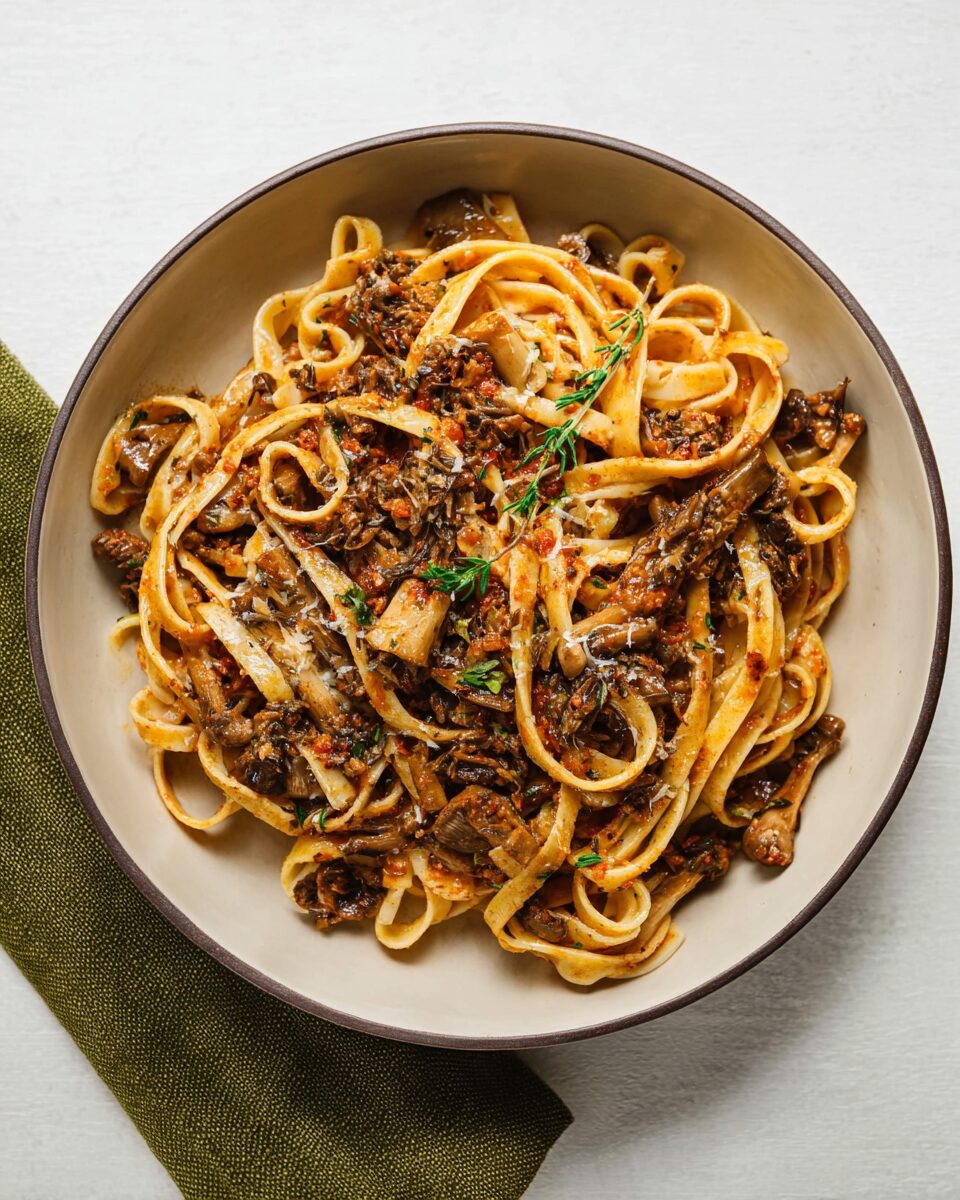
There are certain dishes that instantly transport you to another place — a single bite that evokes a story, a season, a landscape. Porcini Ragù is one of those dishes. Deeply aromatic, earthy, and comforting, it’s a meal that feels like wrapping yourself in a warm blanket on a cool autumn evening in Tuscany.
Ragù, in its most classic form, is Italy’s slow-cooked meat sauce — hearty, rich, and deeply flavored, the kind of dish that’s been simmering in Italian kitchens for centuries. But this porcini version is a revelation: a vegetarian twist that rivals any meat-based ragù in both complexity and satisfaction. The secret lies in the mushrooms — specifically, porcini, the king of the forest.
Porcini mushrooms have long held a special place in Italian cuisine. Their name means “little pigs,” a nod to their plump, meaty texture and rich flavor. Found growing wild under chestnut and pine trees, they are prized for their deep umami essence — earthy, nutty, and slightly smoky. When dried and rehydrated, their aroma intensifies, adding depth and soul to whatever dish they touch.
This Porcini Ragù celebrates everything beautiful about rustic Italian cooking: respect for seasonal ingredients, slow preparation, and layering of flavors until every bite feels both simple and profound. It’s the kind of sauce that takes its time, simmering gently as your kitchen fills with the irresistible perfume of garlic, wine, and herbs.
My first encounter with this dish was during a trip through northern Italy, in a small mountain trattoria nestled among the Apennines. The chef, an older woman with a bright smile and hands that moved like poetry, brought out a steaming plate of pappardelle covered in this deep brown sauce. She told me that the recipe had been passed down from her grandmother — a dish meant to celebrate the autumn harvest and the bounty of wild mushrooms gathered by hand. One bite, and I understood why it was so treasured: the depth of flavor was incredible, with the porcini lending an almost meaty savoriness that lingered long after the last forkful.
Back home, I set out to recreate that same magic — a sauce that feels both comforting and sophisticated, one that pairs beautifully with pasta, polenta, or even crusty bread. Over time, I found that a blend of fresh mushrooms and dried porcini creates the perfect balance: the fresh add tenderness, while the dried bring intensity and depth. A little tomato paste, a splash of red wine, and a slow simmer complete the alchemy.
Porcini Ragù is a dish that rewards patience. It’s not fast food — it’s slow, soulful cooking at its best. But the result is so worth it: a sauce that’s rich and hearty enough to please meat lovers, yet elegant and light enough to fit any table. Whether you serve it for a quiet dinner or a festive gathering, it’s a dish that feels like it was made with love — because it was.
Full Recipe
Ingredients
For the Ragù:
- 1 oz (30 g) dried porcini mushrooms
- 2 cups boiling water (for soaking the porcini)
- 2 tablespoons olive oil
- 1 small onion, finely diced
- 1 medium carrot, finely diced
- 1 celery stalk, finely diced
- 2 cloves garlic, minced
- 10 oz (300 g) mixed fresh mushrooms (cremini, shiitake, oyster, or button), finely chopped
- 2 tablespoons tomato paste
- ½ cup red wine (Chianti or other dry red wine)
- 1 (14 oz / 400 g) can crushed tomatoes
- ½ teaspoon salt, plus more to taste
- ¼ teaspoon freshly ground black pepper
- ½ teaspoon dried thyme (or 1 teaspoon fresh thyme leaves)
- ½ teaspoon dried oregano
- 1 bay leaf
- ½ cup whole milk or plant-based milk (optional, for creaminess)
- 1 tablespoon soy sauce or tamari (optional, for extra umami)
- ¼ teaspoon crushed red pepper flakes (optional, for heat)
- 1 tablespoon butter (optional, for richness)
For Serving:
- 12 oz (340 g) pasta of your choice (pappardelle, tagliatelle, rigatoni, or even gnocchi)
- Freshly grated Parmesan or Pecorino Romano cheese (or vegan alternative)
- Chopped fresh parsley or basil, for garnish
Directions
Step 1: Rehydrate the Porcini
- Soak the dried porcini mushrooms.
Place the porcini in a heatproof bowl and pour 2 cups of boiling water over them. Let them soak for 20–30 minutes until softened and fragrant. - Reserve the soaking liquid.
Once soft, remove the porcini with a slotted spoon and finely chop them. Strain the soaking liquid through a fine sieve or coffee filter to remove any grit — this liquid is liquid gold, full of mushroom flavor, and will be used later in the sauce.Tip: The soaking water adds incredible depth. Don’t skip it — it’s what turns a good ragù into a great one.
Step 2: Build the Flavor Base (Soffritto)
- Warm the olive oil.
In a large, heavy-bottomed pan (a Dutch oven works perfectly), heat 2 tablespoons of olive oil over medium heat. - Add the aromatics.
Add the diced onion, carrot, and celery — this classic Italian trio is known as the soffritto, the foundation of many Italian sauces. Sauté for 8–10 minutes, stirring occasionally, until the vegetables are soft and lightly golden. - Add the garlic.
Stir in the minced garlic and cook for another minute, until fragrant but not browned. Garlic burns easily, so keep the heat moderate.
Step 3: Add the Mushrooms
- Add fresh mushrooms first.
Add your chopped fresh mushrooms to the pot. Sauté for 10–12 minutes, stirring often, until they release their moisture and start to brown. This step is crucial — it concentrates their flavor and gives the sauce that signature umami richness.Tip: Avoid overcrowding the pan. If your mushrooms don’t fit comfortably, cook them in two batches. Mushrooms release water as they cook; too many at once will steam instead of brown.
- Add the chopped porcini.
Once the fresh mushrooms are golden, stir in the chopped porcini. Let them cook for another 2–3 minutes, allowing their flavor to mingle with the rest.
Step 4: Layer the Depth with Tomato and Wine
- Add tomato paste.
Stir in 2 tablespoons of tomato paste and cook for 2–3 minutes, letting it caramelize slightly. This deepens the color and adds a subtle sweetness to the sauce. - Deglaze with red wine.
Pour in the ½ cup of red wine, scraping the bottom of the pan to release all those flavorful browned bits. Let it simmer for about 3 minutes until the wine has mostly evaporated. - Add crushed tomatoes.
Pour in the canned tomatoes, followed by the reserved porcini soaking liquid (about 1 ½ cups). Stir well to combine.
Step 5: Season and Simmer
- Add herbs and seasoning.
Stir in salt, pepper, thyme, oregano, bay leaf, and red pepper flakes (if using). - Simmer slowly.
Bring the mixture to a gentle simmer, then reduce the heat to low. Cover partially and let it cook for 45–60 minutes, stirring occasionally. The sauce should thicken and develop a deep, rich flavor as it reduces.Tip: The longer it simmers, the better it tastes. If it gets too thick, add a splash of water or broth.
- Add finishing touches.
Remove the bay leaf, then stir in milk or butter (if using) to mellow and enrich the sauce. Taste and adjust seasoning — sometimes an extra pinch of salt or a dash of soy sauce can make the flavors pop.
Step 6: Serve and Enjoy
- Cook your pasta.
Bring a large pot of salted water to a boil. Cook your pasta until al dente according to package instructions. Reserve about ½ cup of pasta water before draining. - Combine with the ragù.
Add the cooked pasta directly to the sauce and toss to coat, adding a splash of pasta water if needed to loosen. Let it cook together for 1–2 minutes so the pasta absorbs the sauce. - Plate beautifully.
Divide the pasta among bowls, top with a generous spoonful of extra sauce, sprinkle with Parmesan, and garnish with parsley or basil. - Serve hot.
Enjoy immediately with a glass of red wine and crusty bread to mop up every last bit of sauce.
Serving Suggestions & Variations
1. Classic with Pasta
Porcini Ragù is most often served with pappardelle — those wide, silky ribbons of pasta that cradle the sauce perfectly. Tagliatelle, fettuccine, or even rigatoni work just as well.
2. Over Creamy Polenta
For a rustic northern Italian feel, spoon the ragù over creamy polenta. The smooth cornmeal provides a wonderful contrast to the chunky, savory sauce.
3. Layered in Lasagna
Use the ragù in place of a traditional meat sauce in lasagna. Layer it with béchamel, pasta sheets, and cheese for a rich vegetarian twist.
4. Served on Toast
For a lighter option, pile the ragù onto thick slices of toasted sourdough or ciabatta and top with shaved Parmesan — a sophisticated take on bruschetta.
5. Low-Carb / Keto Version
Serve over roasted spaghetti squash or zucchini noodles for a lower-carb alternative that still soaks up the sauce’s bold flavors.
6. Protein-Boosted Variation
For a heartier ragù, add ½ cup of cooked lentils or finely chopped walnuts — they blend seamlessly with the mushrooms for added texture and nutrition.
Tips & Tricks
Choosing and Handling Mushrooms
- Dried porcini: Always buy high-quality dried porcini; cheap ones can be gritty or lack aroma. Soaking them properly is key — never discard the soaking liquid.
- Fresh mushrooms: Use a mix of varieties for a deeper flavor. Cremini add meatiness, shiitake add intensity, and oyster mushrooms bring a delicate touch.
- Don’t wash mushrooms under running water. Instead, wipe them clean with a damp towel to avoid sogginess.
Cooking Techniques
- Caramelize, don’t rush. Take time with each stage — sautéing the soffritto, browning the mushrooms, and reducing the sauce. Each step builds flavor.
- Use good wine. If you wouldn’t drink it, don’t cook with it. A medium-bodied red like Chianti, Sangiovese, or Merlot complements the earthy flavors beautifully.
- Simmer gently. High heat can make the sauce too sharp or bitter; low and slow is the secret.
Storage & Make-Ahead
- Refrigerate: Store in an airtight container for up to 4 days.
- Freeze: This ragù freezes beautifully. Portion into containers and freeze for up to 3 months. Thaw overnight in the fridge before reheating.
- Reheat gently: Warm over low heat, adding a splash of water or broth if it thickens too much.
Flavor Boosters
- Add a splash of balsamic vinegar or a teaspoon of miso paste for an umami kick.
- Stir in a spoonful of butter at the end for a luxurious finish.
- Top with truffle oil or shaved truffle for an indulgent touch.
Common Mistakes to Avoid
- Overcrowding mushrooms: This causes steaming instead of browning. Cook in batches if needed.
- Skipping the wine or porcini soaking liquid: These are essential flavor components.
- Rushing the simmer: The magic happens in that last half hour when everything melds together.
Nutritional Info (per serving)
(Based on 4 servings, without pasta)
- Calories: 280 kcal
- Protein: 8 g
- Carbohydrates: 20 g
- Fat: 18 g
- Fiber: 4 g
- Sugar: 8 g
- Sodium: 520 mg
This Porcini Ragù is hearty yet balanced — packed with plant-based protein, fiber, and antioxidants from mushrooms and vegetables. It’s satisfying without being heavy, making it perfect for weeknights or special dinners alike.
Additional Info
- Prep Time: 20 minutes
- Cooking Time: 1 hour
- Total Time: 1 hour 20 minutes
- Calories per Serving: 280 kcal
- Servings: 4
Final Thoughts
There’s a certain magic to Porcini Ragù — the way a handful of simple, earthy ingredients can transform into something so rich and comforting. It’s a dish that speaks to everything wonderful about Italian cuisine: patience, respect for ingredients, and the joy of sharing food made with love.
Every time I make this recipe, it feels like more than just cooking — it’s a ritual. The gentle bubbling of the sauce, the aroma of garlic and wine filling the air, the satisfaction of stirring something that will bring people together at the table. Whether served over pasta, polenta, or a slice of rustic bread, it’s a meal that warms both the body and the heart.
So slow down, pour yourself a glass of wine, and let your kitchen fill with the scent of Italy’s forests and hearth. This is food meant to be savored, shared, and remembered. ❤️