
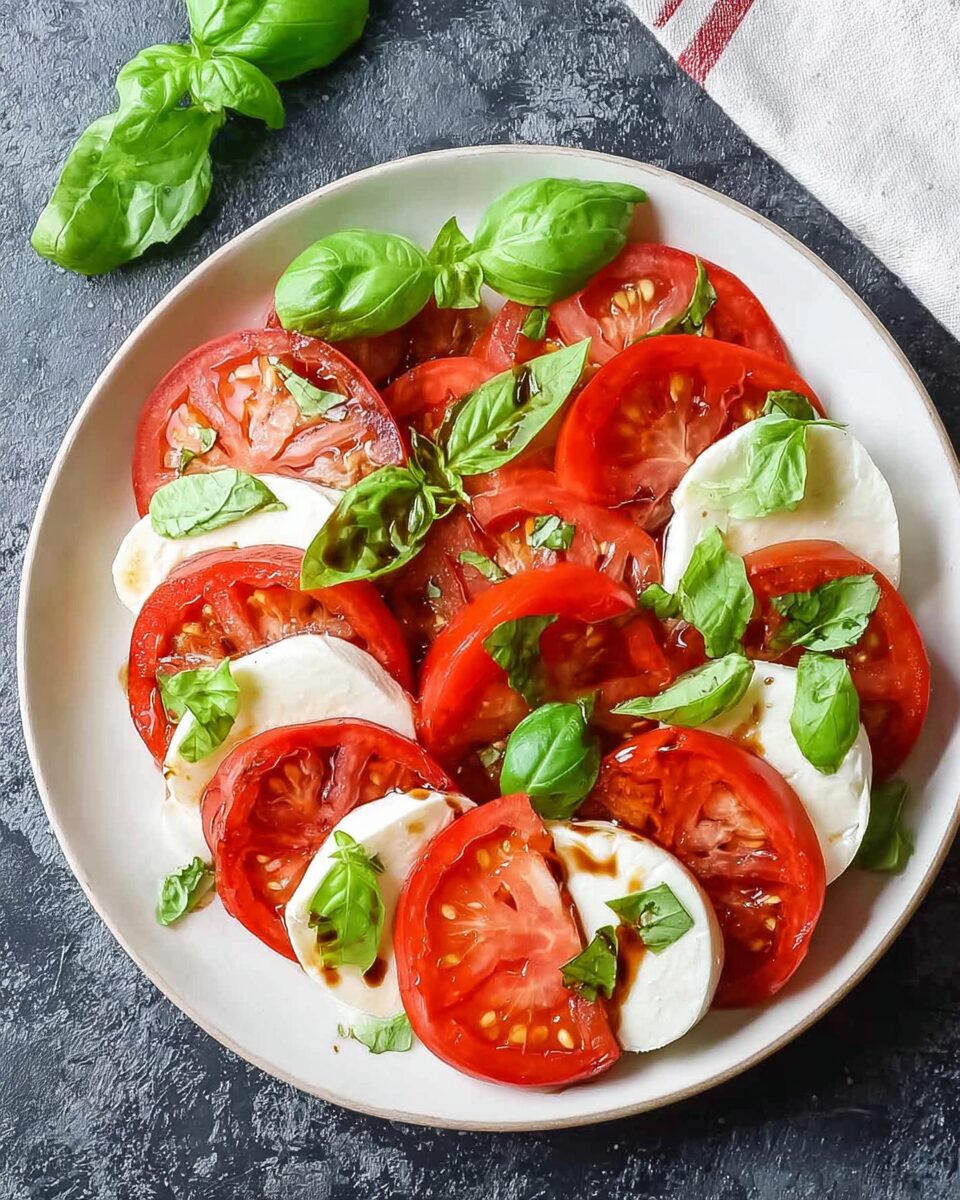
Some dishes are timeless not because they’re complicated, but because they master the art of simplicity — and few recipes illustrate that better than the Caprese Salad. Named after the picturesque island of Capri off the coast of Italy, this dish is a celebration of color, freshness, and balance. With just a handful of ingredients — ripe tomatoes, creamy mozzarella, fragrant basil, olive oil, and a drizzle of balsamic — the Caprese Salad proves that when ingredients are of exceptional quality, less truly is more.
This salad is more than just a recipe; it’s a philosophy — a reflection of Italian cooking itself. Italians have long believed that food should honor nature’s bounty rather than overpower it. The Caprese Salad perfectly embodies this belief, letting each component shine on its own while working harmoniously together. Every element serves a purpose: the sweetness and acidity of the tomato, the richness of mozzarella, the aromatic freshness of basil, and the smooth, peppery depth of extra virgin olive oil.
The dish is as much about presentation as it is about flavor. Traditionally arranged in alternating slices of red, white, and green — the colors of the Italian flag — a Caprese Salad feels like edible art. Its simplicity and visual beauty make it a favorite not just in Italy but around the world.
The origins of this beloved salad trace back to the early 20th century. According to popular lore, it first appeared on menus in Capri after World War I, during a time when Italian nationalism was strong. The use of ingredients representing the flag’s colors was a subtle yet proud expression of identity. Over time, the Caprese Salad became a symbol of summer dining — light, refreshing, and bursting with the essence of the Mediterranean.
I remember the first time I had a true Caprese Salad — not the store-bought version with bland tomatoes and rubbery cheese, but one made the Italian way. It was a hot afternoon in a seaside café in Sorrento. The tomatoes were sun-warmed and juicy, the mozzarella was soft and creamy, the basil leaves still glistening from the morning dew, and the olive oil was so fragrant it could have been perfume. With one bite, I understood why Italians hold this dish so dear. It wasn’t just a salad — it was summer on a plate.
The beauty of Caprese is that it can be both rustic and elegant, served as a casual antipasto before a meal or as the star of a dinner party. It can be eaten as a light lunch, tucked between slices of crusty bread for a sandwich, or layered into skewers for a modern appetizer. And when you finish it with a drizzle of rich balsamic glaze, you add a touch of indulgence that elevates it from simple to sublime.
Let’s dive into how to make the perfect Caprese Salad, the kind that would make any Italian nonna proud — one that captures the sunshine, flavors, and spirit of southern Italy in every bite.
Full Recipe
Ingredients
For the Salad:
- 4 medium ripe tomatoes (about 1½ lbs or 680 g), preferably heirloom or Roma
- 12 ounces (340 g) fresh mozzarella cheese (sliced or small balls like bocconcini)
- 1 cup fresh basil leaves (about 30 large leaves)
- 3 tablespoons extra virgin olive oil
- 1 tablespoon balsamic glaze (store-bought or homemade, see below)
- Sea salt, to taste (preferably flaky salt)
- Freshly cracked black pepper, to taste
For the Homemade Balsamic Glaze (optional):
- ½ cup (120 ml) balsamic vinegar
- 1 tablespoon honey or brown sugar (optional, for sweetness)
Directions
Step 1: Select and Prepare the Tomatoes
The key to a perfect Caprese Salad lies in the quality of the ingredients, starting with the tomatoes. Choose tomatoes that are ripe, fragrant, and heavy for their size — this indicates juiciness. Heirloom tomatoes are ideal for their deep flavor and beautiful marbling, but Roma or vine-ripened tomatoes also work well.
Wash them gently under cold water and pat dry. Using a sharp serrated knife (to avoid crushing the flesh), slice the tomatoes into ¼-inch (6 mm) thick rounds. Uniform slices ensure an even layering and a balanced bite every time.
Pro Tip: If your tomatoes are extra juicy, lightly sprinkle them with salt and let them sit on a paper towel for 10 minutes. This draws out excess moisture, preventing a soggy salad later.
Step 2: Slice the Mozzarella
Next comes the cheese. Authentic Caprese Salad calls for fresh mozzarella di bufala — mozzarella made from the milk of water buffaloes raised in southern Italy, especially in the Campania region. It’s creamier, richer, and slightly tangier than cow’s milk mozzarella. If buffalo mozzarella isn’t available, high-quality cow’s milk mozzarella (known as fior di latte) or mozzarella pearls (bocconcini) make excellent substitutes.
Remove the mozzarella from its brine and pat it dry with paper towels. Slice it into rounds roughly the same thickness as your tomato slices. Keeping the sizes similar makes for beautiful layering and even distribution of flavor.
Step 3: Arrange the Salad
On a large serving platter, begin layering your ingredients: one tomato slice, one mozzarella slice, and one basil leaf. Continue this alternating pattern in a circular or linear arrangement until all ingredients are used.
The presentation is part of what makes Caprese special. Take a moment to overlap the slices neatly so the colors — red, white, and green — shine through beautifully.
Alternative Presentation: If you’re using cherry or grape tomatoes, slice them in half and toss them with small mozzarella balls and torn basil leaves for a rustic “chopped” Caprese salad.
Step 4: Make the Balsamic Glaze (if homemade)
If you prefer to make your own balsamic glaze, it’s easy and adds an irresistible touch. Pour the balsamic vinegar into a small saucepan and bring it to a gentle boil over medium heat. Reduce to a simmer and cook for about 10–15 minutes, stirring occasionally, until the liquid reduces by half and becomes syrupy.
If desired, stir in a tablespoon of honey or brown sugar to balance the acidity and add gloss. Let the glaze cool before drizzling over your salad.
Pro Tip: Don’t over-reduce the vinegar. It should coat the back of a spoon but still pour easily — too thick, and it can harden as it cools.
Step 5: Season and Dress the Salad
Once your salad is arranged, drizzle the olive oil evenly over the top. Use a high-quality extra virgin olive oil — its fruitiness and peppery notes will enhance the flavor of every ingredient. Then, add a delicate drizzle of balsamic glaze.
Finish by sprinkling sea salt and freshly cracked black pepper over the entire salad. These simple seasonings are what tie everything together.
Optional Additions:
- A light squeeze of fresh lemon juice for extra brightness.
- A pinch of flaky salt like Maldon for texture.
- Crushed red pepper flakes for a subtle kick.
Step 6: Serve Immediately
Caprese Salad is best served fresh, at room temperature. The tomatoes will release their natural juices, mingling with the olive oil and balsamic to create a luscious dressing at the bottom of the plate. Serve it with crusty bread to soak up those delicious juices.
If you must refrigerate it, do so for no more than 30 minutes — cold temperatures can dull the flavors and alter the texture of the cheese.
Serving Suggestions & Variations
The classic Caprese Salad is perfect as is, but it’s also endlessly versatile. Here are a few creative twists to suit different occasions and tastes:
1. Caprese Pasta Salad
Turn your salad into a hearty meal by tossing the ingredients with cooked pasta (penne or rotini work great) and extra dressing. Add grilled chicken or shrimp for protein. It’s perfect for picnics or potlucks since it holds up well at room temperature.
2. Avocado Caprese Salad
Add sliced avocado for extra creaminess. The buttery texture of avocado complements the freshness of the tomatoes and the tang of the mozzarella, creating a luscious, modern take on the classic.
3. Caprese Skewers (Party Appetizer)
Thread cherry tomatoes, mozzarella balls, and basil leaves onto small skewers or toothpicks. Drizzle with olive oil and balsamic glaze for bite-sized appetizers that look elegant and taste divine.
4. Grilled Caprese Salad
Give your salad a smoky upgrade by grilling the tomatoes and mozzarella briefly. The heat caramelizes the tomato sugars and gives the cheese a soft, melty texture. Top with basil and glaze for a warm, comforting version.
5. Burrata Caprese
Replace mozzarella with burrata cheese — a decadent Italian cheese that’s firm on the outside and creamy on the inside. When you cut into it, the creamy center spills out and mingles with the tomatoes and olive oil beautifully.
6. Caprese Sandwich or Panini
Layer tomatoes, mozzarella, basil, and a drizzle of balsamic on crusty ciabatta or sourdough bread. Toast it lightly for a warm, melty sandwich that’s perfect for lunch.
7. Winter Caprese
When fresh tomatoes aren’t in season, use roasted cherry tomatoes instead. Their concentrated sweetness mimics the flavor of ripe summer produce and makes the salad suitable year-round.
Tips & Tricks
1. Choose Seasonal Ingredients
The success of Caprese Salad depends on ingredient quality. Make this dish only when tomatoes are at their peak — typically summer through early fall. In winter, opt for cherry tomatoes or ones grown locally in greenhouses.
2. Use Room-Temperature Ingredients
Cold mozzarella and tomatoes can mute the flavors. Let them sit at room temperature for at least 15 minutes before assembling the salad.
3. Don’t Over-Dress
Caprese is meant to be delicate. Resist the urge to drown it in oil or balsamic; a light drizzle is all you need. The goal is harmony, not overpowering any one flavor.
4. Make It Ahead (Sort Of)
You can slice and prep your ingredients ahead of time, but assemble and season the salad just before serving to maintain freshness.
5. Storing Leftovers
If you do have leftovers, store them in an airtight container in the fridge for up to one day. Keep in mind that the tomatoes may release juice and the basil may wilt — it’s best enjoyed fresh.
6. Elevate the Olive Oil
This is one of those recipes where using premium extra virgin olive oil makes a noticeable difference. Look for oils labeled “cold-pressed” and “first pressing” for the most flavor.
7. Basil Care
Never cut basil with a knife — it bruises easily and turns black. Instead, tear the leaves gently by hand to preserve their aroma and bright color.
Nutritional Info (Per Serving)
(Based on 4 servings)
- Calories: 270 kcal
- Protein: 12 g
- Fat: 21 g
- Carbohydrates: 8 g
- Fiber: 2 g
- Sugar: 5 g
- Cholesterol: 35 mg
- Sodium: 320 mg
(Values may vary depending on ingredients and portion size.)
Additional Info
- Prep Time: 15 minutes
- Cooking Time: 10 minutes (if making balsamic glaze)
- Total Time: 25 minutes
- Calories per Serving: Approx. 270 kcal
- Servings: 4
Final Thoughts
The Caprese Salad is proof that simplicity can be extraordinary. It’s a dish that reminds us that cooking doesn’t always need to be complicated to be delicious. With the right ingredients and care in preparation, something as humble as tomatoes, cheese, and basil can become a meal that feels luxurious and full of soul.
It’s a salad that speaks of summer — of sunlit afternoons, al fresco dining, and the joy of slowing down to savor each bite. But more than that, it’s a dish that celebrates the essence of Italian cooking: love, balance, and respect for ingredients.
So the next time you find yourself with ripe tomatoes and fragrant basil, take a moment to make this salad. Arrange it slowly, drizzle it thoughtfully, and serve it proudly. Pair it with a crisp white wine, a loaf of warm bread, and good company — because food like this isn’t meant to be rushed or eaten alone.
In every bite of this Classic Caprese Salad with Balsamic Glaze, you taste not just flavor, but the simplicity and beauty of life itself — pure, fresh, and timeless.