
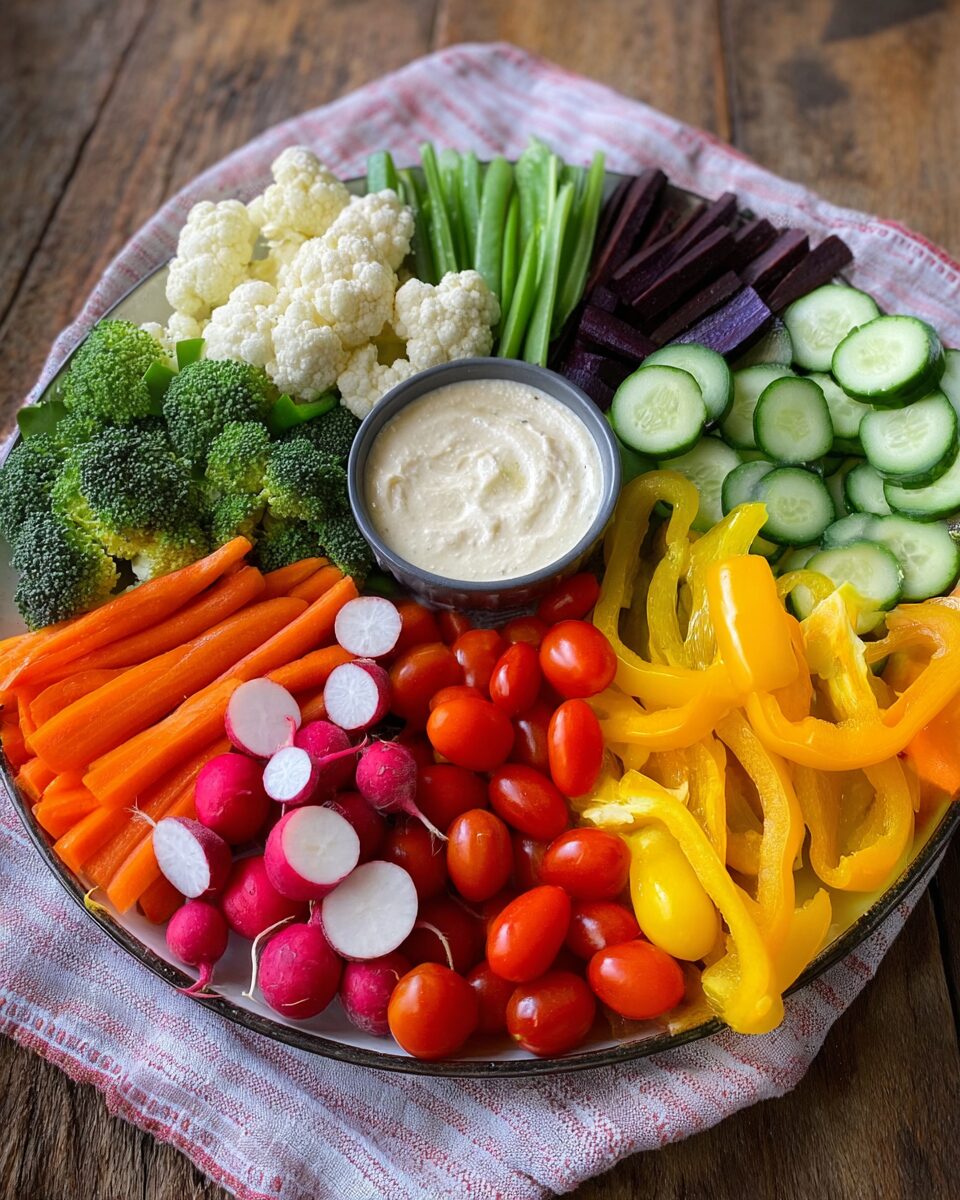
There’s something undeniably inviting about a well-arranged veggie tray. Bright, crisp vegetables — reds, oranges, greens, and purples — beautifully organized around a creamy dip, ready to be enjoyed. It’s fresh, vibrant, and wholesome — the kind of dish that feels equally at home at a holiday gathering, a summer picnic, or a casual family get-together.
A good veggie tray isn’t just about vegetables — it’s about presentation, color, and balance. It’s about turning simple, everyday produce into something festive and irresistible. When done right, a veggie tray can steal the spotlight from even the most indulgent dishes on the table.
I still remember the first time I brought a homemade veggie platter to a party. Everyone expected the usual store-bought version — you know the one: pre-cut veggies in a plastic tray with a dip in the center. But when I walked in with a large wooden board layered with vibrant carrots, cherry tomatoes, rainbow bell peppers, and clusters of broccoli and cauliflower, it was like unveiling a piece of edible art. People gathered around, complimenting the colors and freshness — and by the end of the evening, the tray was completely empty.
That’s the beauty of a thoughtfully made veggie tray: it feels special, even though it’s built from the simplest ingredients. It’s proof that healthy food doesn’t have to be boring — and that a little creativity can turn everyday vegetables into something truly extraordinary.
The Timeless Appeal of a Veggie Tray
Veggie trays have been a staple at parties for decades, loved for their simplicity and versatility. They trace their roots back to the mid-20th century when “relish trays” were a classic feature at dinner parties. Those early versions often included olives, pickles, celery sticks, and radishes — all arranged neatly for guests to nibble on before the main meal.
As food culture evolved, so did the tray. In the 1970s and 80s, with the rise of health-conscious entertaining, the modern veggie platter emerged — featuring fresh, colorful vegetables served with creamy dips like ranch, hummus, or French onion.
Today, veggie trays have become a canvas for creativity. They’re no longer just a side dish — they’re centerpieces. Whether it’s a rustic grazing board filled with seasonal produce or an elegant holiday wreath made from broccoli florets and cherry tomatoes, veggie trays are about both taste and presentation.
They can be themed, seasonal, or minimalist. They can cater to vegan, keto, paleo, or gluten-free diets. They can be as simple as a few carrots and cucumbers — or as elaborate as a rainbow masterpiece that doubles as décor.
The possibilities are endless — and that’s exactly what makes them so fun to create.
Why You’ll Love This Guide
This post isn’t just about throwing some vegetables on a plate. It’s about transforming the humble veggie tray into a showstopper. Here’s what you’ll discover:
- How to choose and prepare the freshest, most colorful vegetables.
- Creative arrangements that make your tray look beautiful and appetizing.
- Delicious homemade dips and dressings that complement every veggie.
- Fun variations for different occasions — from game day to holidays.
- Tips for making your tray ahead of time and keeping everything crisp.
Whether you’re hosting a big event or prepping snacks for movie night, you’ll find all the inspiration you need right here.
Full Recipe (Base Veggie Tray + Dips)
Ingredients
Vegetables (Choose a Variety of Colors & Textures):
(Makes one large tray for 8–10 servings)
- 2 cups (250 g) baby carrots or sliced heirloom carrots
- 1½ cups (200 g) broccoli florets
- 1½ cups (200 g) cauliflower florets (try both white and purple varieties for color)
- 2 cups (300 g) cherry tomatoes (red, yellow, or mixed)
- 1 large red bell pepper, sliced into strips
- 1 large yellow bell pepper, sliced into strips
- 1 large cucumber, sliced into rounds or sticks
- 1 cup (150 g) snap peas or green beans, trimmed
- 1 cup (150 g) celery sticks
- 1 cup (150 g) radishes, halved or sliced
- ½ cup (75 g) black olives or green olives for garnish
- Fresh parsley or dill sprigs for decoration
Optional Additions:
- Sliced jicama or kohlrabi (for crunch)
- Steamed asparagus (chilled)
- Small pickles or gherkins
- Mini bell peppers
- Sliced zucchini or yellow squash
Dips
1. Classic Ranch Dip
- ½ cup (120 ml) mayonnaise
- ½ cup (120 ml) sour cream or Greek yogurt
- 1 teaspoon garlic powder
- 1 teaspoon onion powder
- 1 teaspoon dried dill
- ½ teaspoon salt
- ¼ teaspoon black pepper
- 1 tablespoon lemon juice or white vinegar
- 1 tablespoon fresh parsley, chopped
Mix all ingredients in a bowl until smooth. Chill for at least 30 minutes before serving to allow flavors to blend.
2. Creamy Hummus Dip
- 1 can (15 oz / 425 g) chickpeas, drained and rinsed
- ¼ cup (60 ml) tahini
- 2 tablespoons olive oil
- 2 tablespoons lemon juice
- 1 small clove garlic, minced
- ½ teaspoon salt
- 2–3 tablespoons water (for desired consistency)
Blend all ingredients in a food processor until creamy. Garnish with olive oil drizzle and a sprinkle of paprika.
3. Greek Yogurt Herb Dip
- 1 cup (240 ml) plain Greek yogurt
- 1 tablespoon olive oil
- 1 tablespoon lemon juice
- 2 tablespoons fresh dill (or parsley), chopped
- 1 teaspoon honey (optional)
- Salt and pepper, to taste
Whisk together and refrigerate until ready to serve.
Optional Add-On Dip: Spicy Southwest Dip
- ½ cup (120 ml) sour cream
- ½ cup (120 ml) Greek yogurt
- 1 tablespoon taco seasoning
- 1 tablespoon lime juice
- 2 teaspoons hot sauce (optional)
Mix well and chill. This one pairs perfectly with carrots, peppers, and snap peas!
Directions
Step 1: Choose Your Base
Start with a large platter, wooden board, or serving tray. Depending on your event, you can go rustic (wooden board), elegant (porcelain platter), or casual (colorful tray).
Pro Tip: For big gatherings, use a large round or rectangular cutting board. For smaller events, a pie dish or lazy Susan works beautifully.
Line the tray with parchment paper or a bed of lettuce leaves to create a fresh base and prevent slipping.
Step 2: Prep the Vegetables
Wash all your vegetables thoroughly under cool water. Pat dry with paper towels or use a salad spinner — moisture can make veggies limp quickly.
Trim stems, remove seeds, and slice each vegetable into easy-to-grab pieces.
- Carrots: Slice lengthwise into sticks for dipping.
- Cucumbers: Use a crinkle cutter for a fun texture.
- Bell peppers: Cut into long strips.
- Broccoli & Cauliflower: Cut into small florets (bite-sized but not too tiny).
- Radishes: Slice thinly for crisp color pops.
If you’re including denser vegetables like green beans or asparagus, blanch them (boil for 1–2 minutes, then shock in ice water). This brightens their color and makes them tender-crisp — perfect for snacking.
Preparation Tip: Keep vegetables chilled until right before serving to maintain that fresh crunch.
Step 3: Arrange the Tray
Now comes the fun — turning your ingredients into a visual masterpiece.
Start by placing your dips in small bowls or ramekins. Position them evenly across the tray — one in the center and others near the edges.
Next, build around the dips:
- Begin with larger vegetables like broccoli and cauliflower to anchor the layout.
- Add medium vegetables like peppers, carrots, and celery, arranging them in sections or fan shapes.
- Fill in with smaller veggies like cherry tomatoes, radishes, and olives for color accents.
Alternate colors to create contrast — for example, red peppers next to green cucumbers, or orange carrots beside white cauliflower.
Design Tip: Think of your tray like a painting — balance colors, shapes, and sizes. Use odd numbers of items for a more natural look.
For a festive occasion, you can even shape your tray into:
- A wreath (for holidays — circular pattern with broccoli “foliage” and tomato “ornaments”).
- A rainbow (rows of colorful vegetables).
- A flag (red, white, and blue for patriotic events).
Step 4: Add Final Touches
Garnish with fresh herbs like parsley, dill, or basil for a pop of green and fragrance.
Drizzle a touch of olive oil over hummus or sprinkle a pinch of paprika on top of ranch dip for color.
Keep everything chilled until ready to serve — a cool tray keeps vegetables crisp and dips fresh.
Pro Tip: For outdoor events, nestle your tray over a shallow pan filled with ice to keep everything cool and safe.
Serving Suggestions & Variations
The beauty of a veggie tray is its adaptability. Here are several creative variations to fit different occasions or dietary needs:
1. Classic Party Veggie Tray (Traditional Version)
Perfect for holidays, birthdays, or family gatherings. Serve with ranch and hummus dips. Include traditional vegetables like carrots, celery, broccoli, and tomatoes for a crowd-pleasing spread.
2. Rainbow Veggie Tray
Create a visually stunning rainbow pattern using red peppers, carrots, yellow squash, cucumbers, broccoli, and purple cauliflower. Serve with Greek yogurt herb dip for a light, refreshing flavor.
3. Holiday Wreath Tray
Arrange broccoli florets in a circle shape on a round tray. Add cherry tomatoes as ornaments, with a small bowl of dip in the center. Garnish with red pepper strips shaped like a ribbon bow — festive and fun!
4. Mediterranean-Inspired Veggie Tray
Swap out ranch for hummus and tzatziki. Include veggies like cherry tomatoes, cucumber slices, roasted red peppers, olives, and artichoke hearts. Add pita bread or baked chickpea chips on the side for a Mediterranean touch.
5. Tex-Mex Veggie Board
Pair your vegetables with a southwest dip or guacamole. Include colorful peppers, jicama sticks, cherry tomatoes, and mini corn cobs (cut into rounds). Add a sprinkle of chili powder over the dip for flavor.
6. Vegan & Dairy-Free Tray
Use dairy-free yogurt or cashew-based dips. Load the tray with hearty vegetables like roasted mushrooms, marinated artichokes, or zucchini slices.
7. Kids’ Veggie Tray
Cut vegetables into fun shapes using cookie cutters — stars, hearts, flowers. Serve with mild ranch or honey mustard dip to encourage little ones to snack healthily.
8. Keto or Low-Carb Tray
Focus on low-carb vegetables like celery, cucumbers, peppers, and broccoli. Skip carrots and corn. Serve with avocado dip or full-fat ranch for a satisfying, keto-friendly version.
Tips & Tricks
Selecting Vegetables
- Choose the freshest vegetables you can find — crisp and brightly colored.
- Avoid overripe or wilted produce; it will lose crunch quickly.
- For color variety, aim for at least 5 different colors on your tray.
Make-Ahead Tips
- Prep vegetables up to 24 hours in advance and store in airtight containers or zip-top bags in the fridge.
- Keep wet vegetables (like cucumbers or tomatoes) separate until just before assembling.
- Dips can be made 1–2 days ahead; refrigerate and stir before serving.
Flavor Enhancements
- Toss vegetables lightly with lemon juice to keep them vibrant and prevent browning (especially for cauliflower).
- Add a sprinkle of sea salt or chili flakes right before serving for extra flavor.
Storage & Leftovers
- Leftover vegetables can be repurposed into stir-fries, omelets, or salads.
- Store any remaining dip separately in sealed containers for up to 3 days.
What to Avoid
- Avoid freezing fresh vegetables — they’ll lose their texture.
- Don’t leave the tray at room temperature for more than 2 hours (especially if dips contain dairy).
- Skip watery dips like vinaigrettes — they can make vegetables soggy.
Nutritional Info (per serving, approx. 1 cup of mixed veggies + 2 tbsp dip)
- Calories: 110
- Fat: 7 g
- Carbohydrates: 9 g
- Fiber: 3 g
- Protein: 3 g
- Sugar: 5 g
- Sodium: 150 mg
Note: Nutritional values vary based on vegetables and dip used.
Additional Info
- Prep Time: 30 minutes
- Cooking Time: 0 minutes
- Total Time: 30 minutes
- Servings: 8–10
- Calories per Serving: ~110
Final Thoughts
A veggie tray is more than just a healthy snack — it’s a celebration of color, texture, and freshness. It’s proof that the simplest foods can be the most beautiful and satisfying when given a little love and creativity.
Whether you’re hosting a summer barbecue, planning a holiday spread, or just looking for a way to get more veggies into your day, these ideas offer endless possibilities. With vibrant vegetables, flavorful dips, and thoughtful presentation, your tray can easily become the highlight of the table.
The best part? You can make it your own — seasonal, themed, elegant, or rustic. Add your favorite dips, swap ingredients, or shape it into something whimsical. There’s no wrong way to do it, as long as it’s fresh, colorful, and made with care.
So grab your cutting board, pick your produce, and start building your masterpiece. Because when you serve a veggie tray this good, it’s not just a side dish — it’s a statement of joy, health, and creativity.