
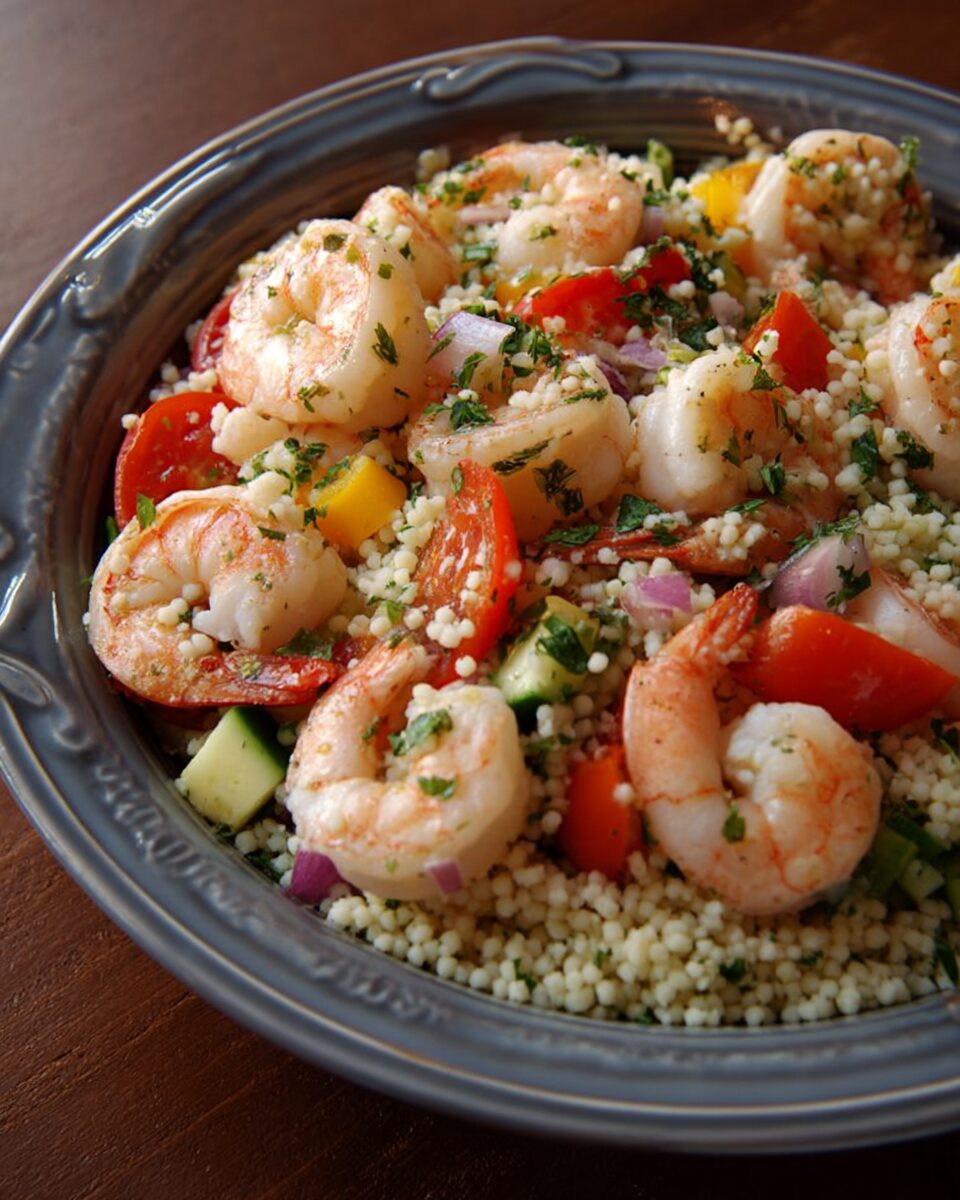
There are moments in the kitchen where you’re not just cooking — you’re capturing a feeling. For me, this recipe for Chilled Shrimp and Couscous embodies one of those moments. Imagine a warm summer evening, the sun inching toward the horizon, a light breeze carrying the faint tang of salt from a nearby bay or lake. You’ve brought home fresh shrimp from the market — plump, pink-tinged, still carrying a whisper of the sea. You’ve cooked them and chilled them. You’ve prepared a bed of couscous, light and pillowy, and you’re about to dress the whole dish with crisp vegetables, bright herbs, a little lemon, and olive oil. With each bite you taste the meeting of sea and grain, of warm day turned into cool dusk.
Couscous itself comes from the Maghreb region of North Africa, made from tiny semolina granules that roll into delicate pellets. (Wikipedia) In its traditional form, couscous is steamed and served with stews and lamb; but here we’re turning it into a modern, chilled salad base — a light canvas for seafood, herbs, and a vinaigrette that sings of summer and ease. Meanwhile, shrimp carry their own cultural weight in many coastal regions, especially in the U.S. The smell of shrimp cooking on a grill, or gently poached and chilled, signals gathering, relaxation, and sharing.
I recall a lunch on a patio at a beachside café, the kind where the clatter of dishes and the laughter of friends mix with the hum of passing boats. We had a chilled seafood salad, shrimp and tiny pasta, cucumber and herbs, lemon and olive oil. The combination stuck with me: light but substantial, cool but hearty, refined yet unfussy. I went home and wanted to re-create that feeling in my own kitchen — to build something you can prep ahead, bring to the table chilled, and still feel like you’ve done something special.
This dish is special for several reasons. First: texture. The couscous offers tiny grains that hold a bite, not mush; the shrimp give chew and sweetness; the chopped vegetables and herbs add crunch and freshness. Second: temperature. It’s chilled, which is perfect for warmer days, but the flavors are full-bodied, not diminished by cold. Third: versatility. Serve it for a summer lunch on the deck, or as part of a buffet. It’s elegant enough for entertaining, casual enough for weeknight enjoyment.
What I love most is that this salad bridges seasons and occasions. You can make it ahead (always a plus) and it tastes better after resting, the flavors whispering into each other. Use high-quality olive oil and fresh lemon juice; use shrimp you trust; treat the couscous gently. The result is a dish that feels composed yet effortless.
So if you’re looking for a recipe that brings summer flavors to your table, that feels light but nourishing, that can be prepped ahead and served with ease and elegance, this Chilled Shrimp and Couscous is one to keep in your rotation. Let’s dive into the full recipe, walk through each step with care, and then explore variations, tips and the full serving story.
Full Recipe
Ingredients
For the salad base:
- 1 lb (about 450 g) large raw shrimp (31–35 count per pound recommended), peeled and deveined
- 1 ½ cups (270 g) dry couscous (regular or pearl/Israeli if you prefer chewier bite)
- 3 cups (720 ml) low-sodium vegetable or chicken broth (or water)
- 1 cup (150 g) cherry tomatoes, halved
- 1 yellow bell pepper, finely diced (about 1 cup / 150 g)
- ½ medium red onion, finely diced (about ¾ cup / 110 g)
- 1 cup (100 g) cucumber, diced (seeded if very watery)
- ½ cup (15 g) fresh parsley, chopped
- ¼ cup (10 g) fresh mint leaves, chopped
- 2 tablespoons (30 ml) extra-virgin olive oil (for tossing couscous)
- Kosher salt and freshly ground black pepper, to taste
For the vinaigrette:
- ¼ cup (60 ml) extra-virgin olive oil
- 2 tablespoons (30 ml) fresh lemon juice (about 1 lemon)
- 1 tablespoon (15 ml) white wine vinegar (optional for brightness)
- 1 garlic clove, minced
- ½ teaspoon (2.5 g) Dijon mustard
- ¼ teaspoon (1 g) ground cumin (optional, adds mild warmth)
- ¼ teaspoon (1 g) smoked paprika or sweet paprika
- ½ teaspoon (2.5 g) kosher salt
- ¼ teaspoon (1 g) freshly ground black pepper
Directions
Step 1: Cook the Couscous
Begin by bringing the 3 cups (720 ml) of low-sodium broth or water to a boil in a medium saucepan over high heat. While it heats, measure the dry couscous. Once the liquid reaches a rolling boil, remove from heat, stir in the couscous, cover the pot with a tight-fitting lid, and let it stand for about 8–10 minutes (or according to package instructions) until the couscous has absorbed all the liquid. Then remove the lid and fluff the couscous with a fork immediately to separate the grains and prevent clumping. Transfer the couscous to a large shallow baking sheet or rimmed dish to cool quickly, drizzle 2 tablespoons olive oil over the top, and toss gently to coat. Spread it out so it cools faster at room temperature.
Why this matters: Proper cooking and fluffing prevents mushy, clumped-together couscous. The step of spreading and oiling helps each grain remain separate — critical in a chilled salad context where texture matters.
Step 2: Cook and Chill the Shrimp
While the couscous is cooking or cooling, prepare the shrimp. If fully raw, bring a large pot of salted water (about 6 cups / 1.4 L) to a gentle boil. Add the shrimp and cook until just opaque and pink throughout — about 2–3 minutes, depending on size. It’s key to monitor the shrimp closely — overcooked shrimp become rubbery and lose sweetness. Once done, immediately transfer the shrimp with a slotted spoon or sieve into a bowl of ice water (ice bath) to stop cooking. Let them chill for 5 minutes, then drain and pat dry with paper towels. For best results, toss them with a pinch of salt, a drizzle of olive oil, and refrigerate until fully cooled.
Tip: Cooking shrimp and immediately chilling helps preserve texture and flavor. If you’re short on time, you can use high-quality pre-cooked shrimp — just ensure they’re thawed, patted dry, and cold.
Step 3: Prepare the Vegetables and Herbs
While the couscous cools and the shrimp chills, chop the vegetables and herbs. Halve the cherry tomatoes. Dice the yellow bell pepper finely. Finely dice the red onion. Dice the cucumber after removing any excess watery seeds. Chop the fresh parsley and mint. Place all of these into a large mixing bowl. Season lightly with a pinch of salt and pepper, and set aside. The reason for seasoning vegetables ahead is that the salt draws out a touch of moisture — which becomes internal seasoning rather than top-dressing later.
Step 4: Make the Vinaigrette
In a small mixing bowl (or a jar with a lid for easy shaking), combine ¼ cup extra-virgin olive oil, 2 tablespoons lemon juice, 1 tablespoon white wine vinegar (if using), minced garlic, Dijon mustard, ground cumin, smoked paprika, ½ teaspoon salt, and ¼ teaspoon pepper. Whisk or shake vigorously until the dressing is emulsified — the oil and acid combine into a smooth dressing. Taste and adjust: if the lemon is too bright, add a touch more olive oil; if it’s too mild, increase the mustard or paprika slightly.
Why this step is important: A well-balanced vinaigrette ties all components together and ensures that when combined, each bite of couscous, shrimp, and vegetables carries flavor.
Step 5: Assemble the Salad
By now the couscous is cooled (or nearly so), shrimp chilled, and vegetables prepped. In a large serving bowl, add the cooled couscous. Top with the chopped vegetable mixture. Add the chilled shrimp. Pour the vinaigrette over the salad, reserving a small amount for later. Use two large spoons or salad tongs to gently toss everything until well combined and coated — you want the shrimp distributed evenly throughout, not all in one corner. Add the chopped parsley and mint, and toss lightly again.
Allow the salad to rest in the refrigerator for 30 minutes to 1 hour before serving; this resting time allows flavors to meld — the lemon and vinegar will gently soften the vegetables, the couscous will absorb a little of the dressing, and the shrimp will settle. After resting, taste again and adjust seasoning if needed: add more salt, pepper, or lemon juice to brighten.
Step 6: Serve Chilled
For best presentation and flavor, serve the salad chilled but not ice-cold — about 5 minutes at room temperature before serving helps to release aroma from the herbs and dressing. Transfer to a large shallow bowl or platter. Garnish with a few whole mint or parsley sprigs, a drizzle of olive oil, and a few lemon wedges on the side for guests who like extra brightness. Serve with chilled white wine, sparkling water, or lemonade for a perfect warm-weather meal.
Serving Suggestions & Variations
One of the greatest strengths of this dish is its adaptability. You can enjoy it as a complete meal, a side dish, or a component in a larger spread.
Serving ideas:
- Light main course: Serve about 1½ cups of salad per person with a side of grilled asparagus, lemon wedges, and crusty bread.
- Side dish: Pair with grilled chicken, fish, or vegetarian kabobs for a balanced BBQ plate.
- Potluck or buffet: Make the salad in a large bowl, place serving utensils, and let guests help themselves. The chilled nature makes it ideal for outdoor gatherings.
- Meal-prep lunch: Portion into airtight containers, refrigerate, and enjoy within 2-3 days. The chilled salad holds up well and is refreshing on hot afternoons.
Flavor and ingredient variations:
- Mediterranean Twist: Add ¼ cup (35 g) crumbled feta cheese, ½ cup (75 g) chopped kalamata olives, 1 tablespoon capers drained. Skip the mint and include a handful of chopped basil instead. This variation draws inspiration from recipes like Mediterranean Couscous with Shrimp. (Feel Good Foodie)
- Spicy & Citrus Kick: Increase lemon juice to 3 tablespoons and add ½ teaspoon (2 g) chili flakes or 1 finely minced jalapeño. Add 1 tablespoon chopped cilantro instead of mint for a southwestern edge.
- Vegetarian/Plant-Based Version: Omit shrimp and substitute with 1½ cups (225 g) roasted chickpeas or grilled tofu cubes. Ensure you use vegetable broth for couscous.
- Whole-Grain Alternative: Swap regular couscous for whole-wheat or bulgur wheat (cook according to package instructions). The rest of the recipe remains unchanged.
- Warm Salad Option: Serve warm by tossing freshly cooked (not chilled) shrimp into hot couscous just after cooking, add lightly wilted vegetables, and serve immediately. Great for spring evenings when you want something slightly warm.
- Nut + Herb Boost: Stir in ½ cup (50 g) toasted pine nuts or sliced almonds for extra crunch and richness. Use ¼ cup (10 g) chopped fresh dill alongside or in place of mint.
Tips & Tricks
Quality of shrimp matters: Choose fresh or frozen shrimp that are high quality — peeled, deveined, and sized around 31–35 per lb for best texture. If frozen, thaw properly overnight in the fridge or under cold water. Pat dry thoroughly before cooking to ensure proper sear or boil.
Don’t overcook shrimp: Overcooked shrimp become rubbery. Cook just until opaque and chop the tails if you prefer easier eating.
Couscous texture control: Follow the liquid ratio and cooking time exactly (as in Step 1). Fluff immediately after cooking to keep grains separate.
Cooling is key: Spread cooked couscous on a tray to cool quickly and avoid steam retaining warmth under the lid. Chilling shrimp too helps preserve texture.
Best herbs: Fresh parsley and mint offer brightness. Mint can sometimes be strong — chop finely and taste to ensure balance.
Vegetable prep: Dice uniformly for consistent texture. Remove excess cucumber seeds to avoid watery salad.
Make ahead: Both the couscous and shrimp can be prepared ahead (couscous a few hours ahead, shrimp a day ahead). Store separately, then mix with vegetables and dressing just before your rest period (30–60 minutes) for best flavor.
Storage: Store in an airtight container in the refrigerator for up to 2–3 days. Beyond that, couscous can absorb dressing and become dense; shrimp texture may degrade.
Avoid overdressing: Use just enough vinaigrette to coat — you want lightness. Start with most of the dressing in Step 5 and reserve a bit for adjustments after resting.
Balance temperature for service: Serve the salad slightly cool—not straight out of the fridge—to allow flavors to bloom. Extremely cold temperatures can mute herb and dressing aromas.
Presentation matters: Use a wide shallow bowl and garnish with fresh mint, parsley, and lemon wedges. Visible color contrast (yellow pepper, red onion, green herbs) enhances appeal.
Accompaniments: A crisp white wine, chilled rosé, or sparkling water with citrus pairs beautifully. Use a bread like baguette or focaccia to accompany if desired.
Nutritional Info
Per Serving (approximate, assuming 6 servings):
- Calories: ~340 kcal
- Fat: ~14 g (mostly from olive oil)
- Saturated Fat: ~2 g
- Carbohydrates: ~32 g
- Protein: ~20 g
- Fiber: ~3 g
- Sugar: ~4 g
- Sodium: ~380 mg
Note: Values vary based on exact shrimp size, couscous brand, amount of dressing, and vegetables used.
Additional Info
- Prep Time: ~20 minutes (includes chopping vegetables)
- Cooking Time: ~15 minutes (couscous + shrimp)
- Total Time: ~35 minutes (plus resting time of 30–60 minutes)
- Calories per Serving: ~340 kcal
- Number of Servings: 6
Final Thoughts
This Chilled Shrimp and Couscous salad is a delightful blend of seaside freshness and grain-based comfort. It’s that kind of dish you bring out when the weather warms, when you want something light yet satisfying, when you want flavors that speak of herbs and lemon and sea breeze. It doesn’t demand hours of labor, but it rewards with nuance and layers.
I encourage you to make it part of your next gathering — a casual lunch on the patio, a potluck that needs something showy but simple, a leftover-friendly lunch-box staple. Adjust it to suit your mood: toss in different veggies, switch herbs, add heat or nuts. Let it reflect your kitchen and your company.
And when you serve it, take a moment. Notice the lemon glint on the shrimp, the couscous flecked with herbs, the sparkle of fresh mint. Hear the crunch of pepper and onion, the silk of olive oil, the gentle chew of couscous. Food is memory, and I hope this salad becomes one of yours — a moment of ease, color, flavor, and connection.
Here’s to summer plates, shared meals, and bowls filled with joy.