
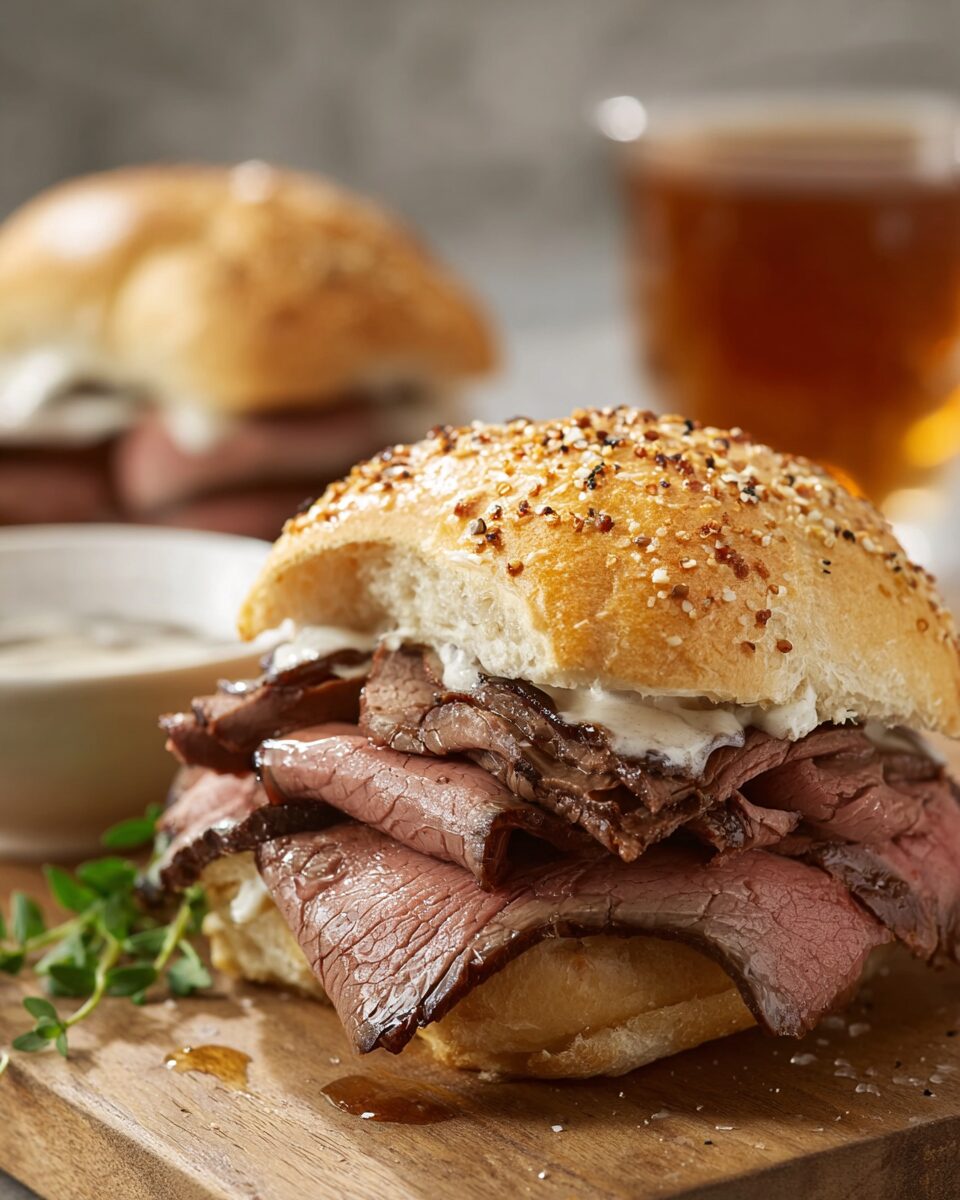
There are few sandwiches in American culinary history as beloved, distinct, and deeply tied to local pride as Beef on Weck — a regional masterpiece hailing from Buffalo, New York. For those unfamiliar, this sandwich may sound curious at first, but one bite and you’ll understand why it’s earned legendary status among sandwich lovers and food historians alike.
At its heart, Beef on Weck is simplicity perfected: thinly sliced, juicy roast beef piled high on a kummelweck roll (a Kaiser-style roll topped with coarse salt and caraway seeds), served with freshly grated horseradish and a side of au jus for dipping. Every component plays an important role. The tender roast beef brings the savory depth, the salty-crusted roll adds a satisfying crunch and flavor contrast, the horseradish wakes up your taste buds, and the dipping jus ties it all together in an explosion of umami and warmth.
The story of Beef on Weck begins in the mid-19th century with German immigrants who settled in western New York. The kummelweck roll itself is a German creation — “kümmel” meaning caraway and “weck” meaning roll. When combined with freshly roasted beef and served in taverns, the sandwich became a hit. It was practical, hearty, and flavorful — the perfect meal for hungry laborers and beer drinkers alike.
Local lore credits Charlie Roesch, a German baker from Buffalo, for introducing the caraway-and-salt-topped roll to the region, which eventually became the foundation for the sandwich we know today. Over time, taverns began pairing it with rare roast beef and au jus, and thus a Buffalo tradition was born.
Today, Beef on Weck isn’t just a sandwich — it’s part of Buffalo’s identity. Locals are fiercely proud of it, and visitors often make it a culinary pilgrimage. It’s served in pubs, diners, and high-end restaurants alike, often accompanied by a pint of local beer. It’s hearty, rustic, and bursting with character — the kind of food that tells a story of place and heritage.
But the beauty of Beef on Weck is that you don’t have to travel to western New York to enjoy it. With a few key ingredients and a little kitchen magic, you can recreate this iconic sandwich at home. Whether you’re hosting a game-day feast, craving a comforting roast beef sandwich, or just want to try something uniquely American, this recipe captures everything that makes the original so unforgettable.
So roll up your sleeves, preheat your oven, and prepare to experience the flavor of Buffalo — one juicy, salty, spicy, perfectly messy bite at a time.
Full Recipe
Ingredients
For the Roast Beef
- 3 pounds (1.4 kg) beef top round or eye of round roast
- 1 tablespoon olive oil
- 1½ teaspoons kosher salt
- 1 teaspoon black pepper
- 1 teaspoon garlic powder
- 1 teaspoon onion powder
- 1 teaspoon dried thyme
- ½ teaspoon smoked paprika (optional for a hint of depth)
For the Au Jus (Dipping Sauce)
- 3 cups (710 ml) beef broth
- 1 tablespoon Worcestershire sauce
- ½ teaspoon soy sauce (for umami)
- 1 small onion, roughly chopped
- 2 cloves garlic, smashed
- 1 teaspoon cornstarch (optional, for slight thickening)
For the Kummelweck Rolls (Makes 8 rolls)
- 4 cups (480 g) all-purpose flour
- 1½ teaspoons salt
- 2 teaspoons sugar
- 1 tablespoon instant yeast
- 1½ cups (355 ml) warm water
- 2 tablespoons butter, softened
- 1 egg white (for brushing)
- 1 tablespoon caraway seeds
- 1 tablespoon coarse sea salt
For Assembly
- 8 kummelweck rolls (or substitute Kaiser rolls with caraway & salt topping)
- 1 cup prepared horseradish (or to taste)
- 2 tablespoons butter (optional for toasting rolls)
Directions
Step 1: Prepare the Roast Beef
- Preheat the oven: Set your oven to 475°F (245°C).
- Season the roast: Pat the beef dry with paper towels. Rub with olive oil, then coat evenly with salt, pepper, garlic powder, onion powder, thyme, and smoked paprika.
- Tip: Drying the surface ensures the seasonings stick and creates a better crust.
- Sear for flavor: Place the roast on a rack inside a roasting pan. Roast at 475°F for 15 minutes to develop a flavorful crust.
- Lower the heat: Reduce the temperature to 250°F (120°C) and continue roasting for 40–60 minutes, or until the internal temperature reaches 130°F (54°C) for medium-rare.
- Tip: The key to tender beef is slow roasting at low heat. It helps break down fibers without drying out the meat.
- Rest the meat: Remove the roast from the oven and tent it loosely with foil. Let it rest for at least 20 minutes — this allows the juices to redistribute for maximum tenderness.
- Slice thin: Once rested, use a sharp slicing knife or deli slicer to cut the roast beef into thin, tender slices.
Step 2: Make the Au Jus
- Deglaze the pan: While the beef rests, place the roasting pan on the stovetop over medium heat. Add a splash of broth and scrape up any browned bits — they’re packed with flavor.
- Simmer the sauce: In a saucepan, combine the deglazed liquid with the remaining beef broth, Worcestershire sauce, soy sauce, onion, and garlic. Bring to a gentle simmer and let it cook for 15 minutes.
- Strain and season: Strain out the solids and taste the jus. Adjust salt or soy sauce if needed.
- Optional: If you prefer a slightly thicker dip, whisk a teaspoon of cornstarch in a little cold water and stir it into the sauce for 2–3 minutes.
- Keep warm: Pour the jus into a bowl or small pot to serve alongside the sandwich.
Step 3: Bake the Kummelweck Rolls
(If using store-bought rolls, skip to Step 4.)
- Mix the dough: In a large bowl, combine warm water, sugar, and yeast. Let it sit for 10 minutes until frothy. Add flour, salt, and butter, and knead for 8–10 minutes until smooth and elastic.
- Let it rise: Place the dough in a greased bowl, cover, and let it rise for 1 hour or until doubled in size.
- Shape the rolls: Punch down the dough and divide into 8 equal portions. Shape into round rolls and place on a parchment-lined baking sheet. Cover and let rise another 30 minutes.
- Preheat the oven: Set to 400°F (200°C).
- Add topping: Brush each roll with lightly beaten egg white, then sprinkle with caraway seeds and coarse salt.
- Bake: Bake for 15–18 minutes or until golden brown. Remove and cool on a wire rack.
- Pro Tip: For that authentic “weck” crust, you can lightly mist the rolls with water before baking to create steam.
Step 4: Assemble the Beef on Weck
- Toast (optional): Slice the kummelweck rolls in half. You can lightly butter and toast them on a skillet for added texture and flavor.
- Dip the beef: Warm the thinly sliced roast beef in the au jus for about 30 seconds. This infuses flavor and ensures the meat stays moist.
- Build the sandwich:
- Pile the hot beef generously onto the bottom half of the roll.
- Add a spoonful of freshly grated horseradish (adjust for heat tolerance).
- Cap it with the salted, caraway-topped roll.
- Serve with au jus: Serve the sandwich immediately with a small bowl of warm au jus on the side for dipping.
Serving Suggestions & Variations
1. Classic Pub Style
Serve your Beef on Weck with a dill pickle spear and a pile of crispy fries or chips. Pair it with a cold pint of lager or ale — Buffalo locals would approve.
2. Cheesy Melt Version
Add a slice of provolone, Swiss, or sharp cheddar cheese over the beef before closing the sandwich. Let it melt slightly from the heat of the meat.
3. Mini Sliders for Parties
Use small dinner rolls instead of full-sized kummelweck rolls and serve as sliders for game day or gatherings. Perfect finger food!
4. Low-Carb or Keto Variation
Skip the roll entirely and serve the beef and au jus in a bowl with a side of roasted vegetables. Or use lettuce wraps for a handheld version.
5. Horseradish Cream Sauce Twist
Instead of plain horseradish, mix it with sour cream and a dash of lemon juice for a creamy, tangy spread that’s milder but just as flavorful.
6. BBQ Beef on Weck
Add a touch of smoky barbecue sauce to your beef for a sweet-spicy variation that still pairs beautifully with the salty roll.
Tips & Tricks
- Temperature matters: Use a meat thermometer to ensure perfect doneness. Medium-rare (130°F) is ideal for tender beef.
- Slice thinly: Always slice the roast against the grain for the most tender texture.
- Don’t skip the salt crust: The coarse salt on the roll is essential — it balances the richness of the beef and adds the signature “weck” flavor.
- Store leftovers properly: Keep leftover roast beef submerged in its au jus to prevent drying out. Store in the fridge for up to 3 days.
- Freezing tip: You can freeze the cooked roast beef in its broth for up to 2 months. Thaw overnight and reheat gently.
- Make-ahead option: The rolls and beef can be prepared a day in advance. Just assemble and warm before serving.
- Adjust horseradish heat: Fresh horseradish gives a strong, sinus-clearing kick. Use prepared horseradish for milder heat, or mix with mayo for balance.
- Substitute rolls: If you can’t find kummelweck rolls, use Kaiser rolls brushed with egg wash and sprinkled with caraway seeds and coarse salt before baking.
Nutritional Info (Per Serving)
| Nutrient | Amount |
|---|---|
| Calories | 550 kcal |
| Protein | 42 g |
| Carbohydrates | 38 g |
| Fat | 22 g |
| Fiber | 2 g |
| Sodium | 880 mg |
| Sugar | 3 g |
Note: Nutrition values vary depending on bread type, serving size, and cut of beef.
Additional Info
- Prep Time: 25 minutes (plus resting and rising times)
- Cooking Time: 1 hour 30 minutes
- Total Time: 2 hours
- Calories per serving: 550 kcal
- Servings: 6–8 sandwiches
Final Thoughts
Beef on Weck is more than just a sandwich — it’s a piece of American history, a taste of Buffalo’s culinary soul, and proof that sometimes the simplest ingredients can create the most extraordinary flavors.
What makes it truly special is the balance: the tenderness of slow-roasted beef, the crunch and salt of the kummelweck roll, the fiery bite of horseradish, and the deep, savory richness of the au jus. Together, they form a sandwich that’s both comforting and invigorating, hearty yet elegant.
Recreating this at home is a culinary experience worth savoring. It’s perfect for weekend dinners, casual gatherings, or when you want to introduce friends to a regional classic they’ve probably never tried before. The moment you dip that sandwich into warm jus and take your first bite, you’ll understand why it’s so iconic.
So, whether you’re from Buffalo or just discovering this masterpiece, make this recipe part of your kitchen tradition. Serve it with pride, share it with loved ones, and celebrate the simple joy of good food done right.
After all, few things in life are as satisfying as roast beef on a salty, caraway-topped roll — especially when it’s homemade.