
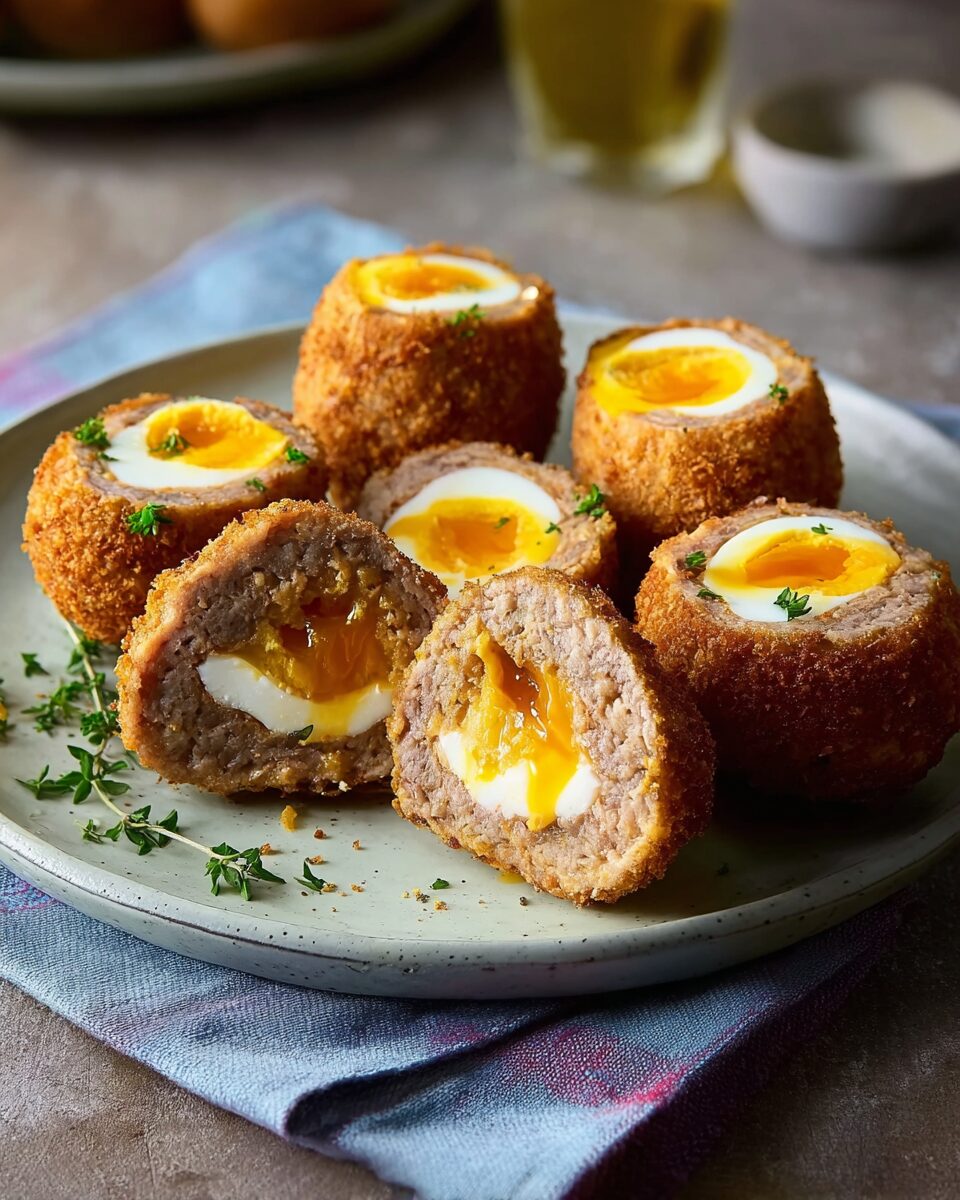
Few dishes capture the spirit of British comfort food quite like the Scotch Egg — a golden, crispy orb of savory sausage wrapped around a soft-boiled egg, coated in breadcrumbs, and fried or baked until perfectly crisp. At first glance, it looks indulgent, even decadent, but the magic of the Scotch Egg lies in its balance — the crunchy shell giving way to juicy sausage, the tender white, and finally, that golden yolk in the center that’s just the right amount of runny.
For anyone who’s ever bitten into one fresh out of the fryer or enjoyed it cold on a picnic blanket, the experience is unforgettable. It’s satisfying and portable, rustic yet refined, and it’s one of those dishes that feels deeply comforting — like a hug wrapped in breadcrumbs.
The origins of the Scotch Egg are a fascinating mix of history and mystery. Though many assume it hails from Scotland, the most popular theory traces its creation to London’s Fortnum & Mason in the 18th century. The high-end department store claims to have invented it as a portable snack for travelers heading out of the city — essentially, the original convenience food. Others argue that its roots go even deeper, possibly influenced by Mughlai cuisine in India, where “nargisi kofta” (spiced meatballs wrapped around eggs) predates the British version by centuries. Regardless of where it came from, it’s safe to say that the Scotch Egg has become a true culinary icon — a staple of pub menus, picnics, and brunch tables across the UK and beyond.
What makes the Scotch Egg truly special is its versatility. It can be eaten hot or cold, for breakfast, lunch, or dinner. It’s a showstopper for brunches, an easy finger food for gatherings, and a nostalgic picnic favorite. Every cook adds their own touch — some prefer the yolk jammy and rich, others like it firm and neat. Some coat it in panko for extra crunch, while others stay loyal to traditional breadcrumbs. And then there are the creative spins — from black pudding-infused sausage to vegetarian and even vegan versions.
My own first encounter with Scotch Eggs came during a trip to the English countryside. I remember walking into a small pub tucked in between rolling green hills, where the menu was written on a chalkboard behind the bar. The bartender smiled when I asked for a recommendation and said, “You can’t go wrong with the Scotch egg.” What arrived was a golden-brown beauty, perfectly crisp and served with a generous spoonful of mustardy relish. When I cut it open, the yolk glistened just right — soft but not runny, wrapped in aromatic sausage with hints of sage and black pepper. It was love at first bite.
Since then, I’ve made Scotch Eggs countless times, experimenting with seasonings, cooking times, and coatings to get that ideal texture — a delicate crunch, juicy meat, and an egg that holds its shape but melts on your tongue. The great thing about Scotch Eggs is that, once you learn the technique, they’re not difficult to make. They just require a little patience, attention to detail, and good-quality ingredients.
In this recipe, I’ll walk you through how to make traditional Scotch Eggs at home — with step-by-step instructions, helpful tips, and creative variations for every taste. Whether you’re serving them for brunch, packing them for a picnic, or simply indulging in some classic comfort food, this guide will help you create Scotch Eggs that are worthy of any British pub.
Full Recipe
Ingredients
For the Eggs:
- 6 large eggs (plus 1 for coating)
- Water, for boiling
- Ice water, for cooling
For the Sausage Layer:
- 1 lb (450 g) good-quality pork sausage meat (or sausages with casing removed)
- ½ teaspoon salt
- ½ teaspoon black pepper
- ½ teaspoon ground mustard or Dijon mustard
- ½ teaspoon smoked paprika (optional, for depth)
- 1 teaspoon fresh chopped parsley or thyme (optional)
- Pinch of nutmeg (optional, traditional in some versions)
For the Coating:
- ½ cup (60 g) all-purpose flour
- 1 large egg, beaten
- 1 cup (100 g) breadcrumbs (panko for extra crunch or classic for tradition)
For Frying:
- Neutral oil (such as vegetable or canola), enough for deep-frying (about 4 cups or 1 liter)
Directions
Step 1: Boil the Eggs
- Place 6 eggs in a saucepan and cover with cold water by about an inch.
- Bring to a gentle boil over medium heat. Once boiling, cook for 6 minutes for soft-boiled yolks or 8 minutes for firmer yolks.
- Immediately transfer the eggs to a bowl of ice water to stop the cooking process. Let them cool completely, about 10 minutes.
Why this step matters:
The boiling time determines the texture of your yolk — the signature element of a Scotch Egg. For a jammy, soft center, stick to 6 minutes. If you’re packing the eggs for travel or prefer a tidier slice, 8 minutes gives a fully set yolk that’s still tender.
Once cooled, gently peel the eggs under running water to make the process easier. Pat them dry with paper towels.
Step 2: Prepare the Sausage Mixture
In a medium bowl, combine the sausage meat, salt, pepper, mustard, paprika, and herbs (if using). Mix gently with your hands until evenly combined but not overworked — you want it to hold together without becoming tough.
Divide the sausage mixture into 6 equal portions. Each portion will be enough to wrap one egg.
Pro Tip: If your sausage meat is very soft or sticky, chill it for 15 minutes before shaping. This makes it easier to handle and wrap around the eggs.
Step 3: Wrap the Eggs in Sausage
This step is where the magic happens — turning simple eggs into something spectacular.
- Flatten one portion of sausage meat into a thin circle (about 4 inches in diameter) on a piece of plastic wrap or parchment paper.
- Place one boiled egg in the center.
- Gently mold the sausage around the egg, pressing and smoothing as you go until it’s evenly covered. Seal any cracks so the egg is fully enclosed.
Repeat with the remaining eggs.
Tip: Keep your hands slightly damp while shaping to prevent sticking. Aim for a uniform thickness of sausage — too thick, and it’ll overwhelm the egg; too thin, and it may split during frying.
Step 4: Coat the Eggs
Set up a breading station with three shallow bowls:
- Flour (seasoned lightly with salt and pepper)
- Beaten egg
- Breadcrumbs
Roll each sausage-wrapped egg in flour, shaking off the excess. Dip it into the beaten egg, then coat it thoroughly in breadcrumbs, pressing gently to ensure full coverage.
For an extra-crispy crust, you can double dip — repeat the egg and breadcrumb coating once more.
Why this step matters:
The coating seals in the sausage juices and creates that irresistible crunch that Scotch Eggs are famous for. Panko breadcrumbs will give you a light, shattering crisp, while traditional breadcrumbs create a denser, more classic shell.
Step 5: Fry the Scotch Eggs
- Heat oil in a deep, heavy-bottomed pot or fryer to 350°F (175°C). Use a thermometer to keep the temperature steady — if it’s too low, the eggs will absorb oil; too high, and the crust will burn before the inside cooks.
- Fry the eggs in batches, 2–3 at a time, for about 6–8 minutes, turning occasionally for even browning.
- When golden and crisp, transfer to a paper towel-lined plate to drain excess oil.
Pro Tip: If you want to ensure the sausage is fully cooked without over-frying, you can finish the Scotch Eggs in a 350°F (175°C) oven for 5 minutes after frying.
Step 6: Bake Option (Healthier Version)
If you prefer to skip frying:
- Preheat oven to 400°F (200°C).
- Line a baking tray with parchment paper and lightly brush the coated eggs with oil.
- Bake for 25–30 minutes, turning halfway through, until golden brown and the sausage is cooked through.
Baked Scotch Eggs are lighter but still wonderfully flavorful, with a crisp coating that’s just slightly less crunchy than fried ones.
Step 7: Cool and Serve
Let the Scotch Eggs cool for at least 5 minutes before slicing — this allows the sausage to firm up slightly and keeps the yolk from spilling out.
Serve warm or at room temperature, sliced in half to reveal that golden center. A dollop of mustard, Branston pickle, or aioli on the side completes the experience.
Serving Suggestions & Variations
Scotch Eggs are delicious in their classic form, but they also lend themselves to endless creativity. Here are a few ways to make them your own:
1. Traditional British Picnic Style
Serve your Scotch Eggs cold with mustard, pickles, and a simple salad of lettuce, cucumber, and tomatoes. It’s perfect for picnics, lunchboxes, or outdoor gatherings.
2. Breakfast Brunch Version
Pair warm Scotch Eggs with toast, roasted tomatoes, and sautéed mushrooms. A side of baked beans or grilled asparagus turns it into a full English-inspired breakfast.
3. Spicy Chorizo Twist
Replace half the sausage meat with Spanish chorizo (remove the casing) for a smoky, spicy variation. The paprika in the chorizo adds incredible depth and color.
4. Herb & Cheese Delight
Mix shredded cheddar or Gruyère and chopped herbs (chives, thyme, parsley) into the sausage before wrapping. The melted cheese adds richness and moisture.
5. Vegetarian Version
Replace sausage with a mixture of mashed chickpeas, sautéed onions, and breadcrumbs seasoned with smoked paprika and cumin. Coat and bake — you’ll get a hearty, satisfying meat-free Scotch Egg.
6. Keto/Low-Carb Option
Use crushed pork rinds or almond flour instead of breadcrumbs. It gives a similar crunch while keeping carbs minimal.
7. Scotch Eggs with Black Pudding
For a traditional Northern twist, mix black pudding into the sausage meat. The earthy flavor is beloved in British pubs and makes for a deeply savory version.
Tips & Tricks
- Perfect the Boil:
Don’t skip the ice bath! It stops the eggs from overcooking and ensures easy peeling. - Sausage Quality Matters:
Choose a well-seasoned sausage with good fat content (around 20%) — it keeps the meat juicy and flavorful. - Chill Before Frying:
After coating, chill the Scotch Eggs for 10–15 minutes. This helps them hold their shape during frying. - Oil Temperature Control:
Keep oil between 340–360°F (170–182°C). Fluctuations can lead to soggy or burnt coatings. - Storage:
Store cooked Scotch Eggs in the fridge for up to 4 days. Reheat in the oven at 350°F (175°C) for 10 minutes or enjoy cold. - Freezing Tip:
Wrap cooled Scotch Eggs tightly and freeze for up to 2 months. Reheat from frozen in a 375°F (190°C) oven for 20 minutes. - Make Ahead:
You can boil and peel the eggs a day ahead. Store them covered in the fridge until you’re ready to wrap and fry. - For a Runny Yolk:
Use slightly under-boiled eggs (5½ minutes), and handle gently during wrapping. The contrast of a crisp shell with a molten yolk is divine. - Flavor Enhancers:
A dash of Worcestershire sauce or English mustard in the sausage mix adds extra umami and authenticity. - Serving Style:
Slice them in half to show off that golden center — it’s irresistible and makes for a beautiful presentation.
Nutritional Info (Per Serving — 1 Scotch Egg)
- Calories: 410 kcal
- Protein: 25 g
- Fat: 30 g
- Carbohydrates: 8 g
- Fiber: 0.5 g
- Cholesterol: 230 mg
- Sodium: 600 mg
(Values vary based on sausage type and cooking method — baked versions have fewer calories and less fat.)
Scotch Eggs are naturally high in protein and very filling. Paired with a fresh salad, they make a complete and satisfying meal.
Additional Info
- Prep Time: 25 minutes
- Cooking Time: 15 minutes
- Total Time: 40 minutes
- Calories per serving: 410 kcal
- Servings: 6
Final Thoughts
The Scotch Egg is a timeless dish — the kind that feels both rustic and elegant, simple yet impressive. It’s a culinary symbol of British ingenuity and comfort, one that has crossed borders and found a home on breakfast tables and in lunchboxes around the world.
What I love most about making Scotch Eggs is how rewarding it feels. You start with basic ingredients — eggs, sausage, breadcrumbs — and end up with something that looks and tastes extraordinary. The crackle of the crust, the savory aroma, and that first slice through the golden yolk — it’s a small moment of perfection.
They’re also wonderfully adaptable. Once you’ve mastered the basic method, you can experiment endlessly — add spice, swap the meat, change the coating, or even make bite-sized versions for parties. And unlike many fried foods, Scotch Eggs taste just as good cold as they do warm, which makes them ideal for meal prep or picnics.
So whether you’re a nostalgic Brit longing for a taste of home, or simply a food lover looking for a new kitchen adventure, I invite you to roll up your sleeves and try this recipe. It might take a bit of practice to get that yolk just right, but once you do, you’ll understand why this humble pub snack has stood the test of time.