
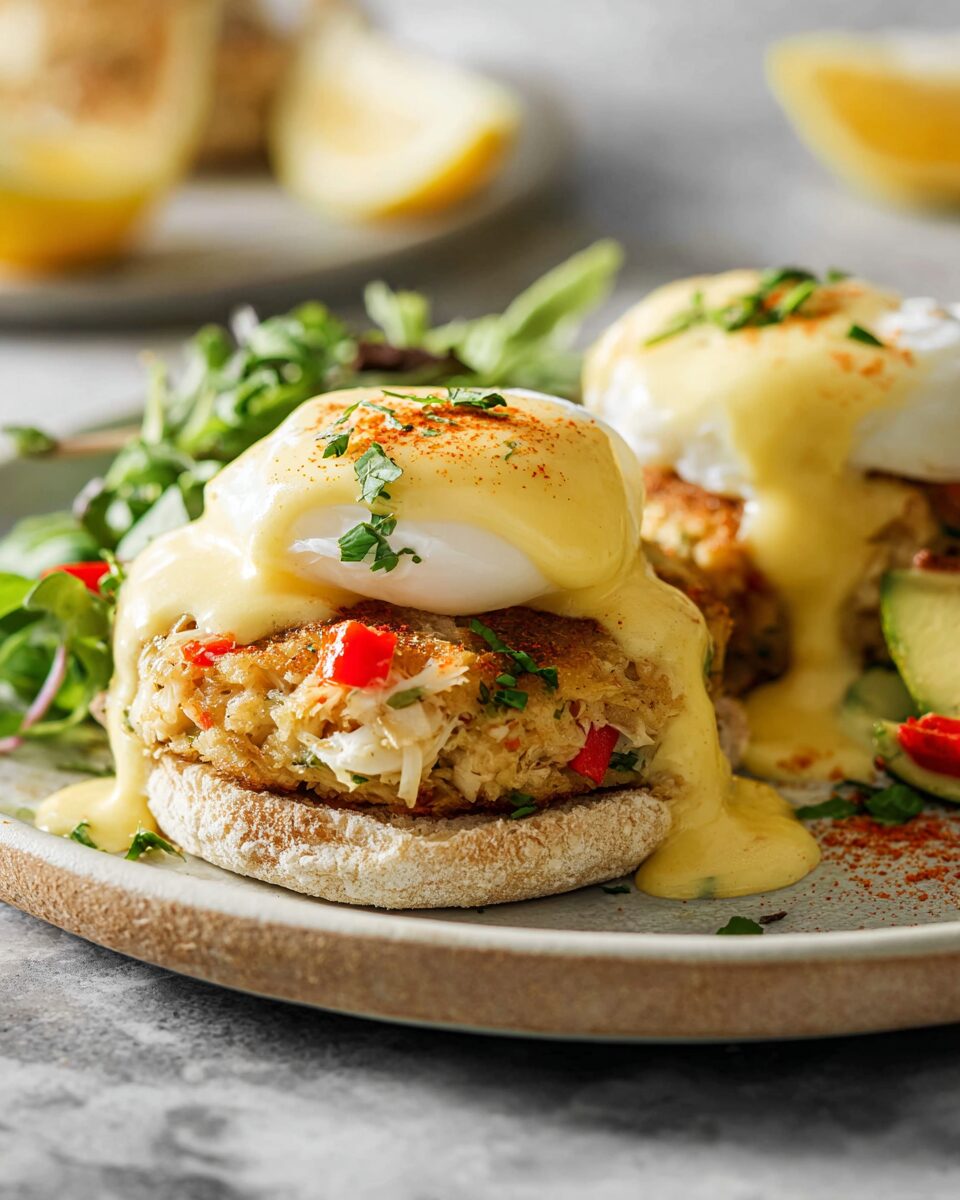
There are few dishes in the brunch world that can make hearts flutter quite like Crab Cake Benedict. It’s rich, elegant, and irresistibly indulgent — the kind of meal that transforms an ordinary morning into something special. Imagine crisp, golden crab cakes layered on toasted English muffins, topped with perfectly poached eggs, and blanketed in velvety hollandaise sauce. Every bite is a harmony of textures and flavors — tender crab, creamy yolk, buttery sauce, and just a hint of citrus brightness.
This dish is a decadent twist on the classic Eggs Benedict, which originated in New York in the late 19th century. According to culinary lore, it was first created at Delmonico’s Restaurant or possibly inspired by a hungover Wall Street broker named Lemuel Benedict who requested “buttered toast, poached eggs, crisp bacon, and a hooker of hollandaise.” Whichever story you believe, Eggs Benedict quickly became a symbol of refined brunch dining — luxurious yet comforting.
Crab Cake Benedict takes that sophistication and adds a taste of the coast. Originating from the culinary traditions of Maryland and the Chesapeake Bay region — where crab is king — this version swaps the traditional Canadian bacon for fresh crab cakes, elevating the dish into something unforgettable. It’s indulgent yet surprisingly fresh, with the sweet, delicate flavor of crab perfectly complementing the richness of the hollandaise.
A Coastal Classic
If you’ve ever strolled through a seaside town on a sunny weekend morning, chances are you’ve seen Crab Cake Benedict on a menu somewhere — often served on the patio of a waterfront café or in a bustling brunch spot filled with laughter and the smell of coffee and butter. It’s one of those dishes that captures the essence of coastal living: elegant yet approachable, hearty yet refined.
In Maryland, where blue crabs reign supreme, locals take their crab cakes seriously. They’re made with large chunks of lump crab meat, minimal fillers, and just enough seasoning to enhance the natural sweetness of the crab. When paired with poached eggs and hollandaise, it becomes something magical — a dish that feels celebratory, no matter the occasion.
What makes Crab Cake Benedict so special is the balance it achieves. You get the comfort of a classic breakfast (eggs, sauce, bread), the sophistication of seafood, and a burst of freshness that keeps it from feeling too heavy. It’s perfect for special occasions like Mother’s Day, anniversaries, or holiday brunches, but also worth making just because — because you deserve to spoil yourself a little.
My First Encounter with Crab Cake Benedict
The first time I had Crab Cake Benedict was at a small bistro overlooking the harbor in Annapolis. It was a breezy Sunday morning, and the scent of the ocean mixed with the aroma of butter and coffee wafting through the air. When the plate arrived, I remember thinking it looked almost too pretty to eat — two golden crab cakes, perfectly poached eggs perched on top, and a generous drizzle of golden hollandaise that glistened in the sunlight.
Then I took that first bite — the rich yolk breaking and cascading over the crab, the buttery sauce blending with it — and it was, quite simply, perfection. I remember thinking, this is what brunch was meant to be.
That experience stayed with me, and when I later tried making it at home, I discovered it wasn’t as intimidating as it seemed. Sure, it takes a few steps, but every single one is worth it. And once you master it, you’ll find yourself making it for every special occasion — or even to impress guests with a restaurant-worthy breakfast.
This recipe captures everything I love about Crab Cake Benedict: a crisp yet tender crab cake, a silky hollandaise that doesn’t break, and eggs poached to perfection. Whether you’re celebrating a milestone or simply craving an elevated brunch, this dish is a showstopper that always delivers.
Full Recipe
Ingredients
For the Crab Cakes (makes 4):
- 1 lb (450g) lump crab meat, picked over for shells
- ½ cup breadcrumbs (panko or plain)
- ¼ cup mayonnaise
- 1 large egg, lightly beaten
- 1 tablespoon Dijon mustard
- 1 tablespoon Worcestershire sauce
- 1 teaspoon Old Bay seasoning (or paprika + celery salt + cayenne mix)
- 1 tablespoon lemon juice
- 2 tablespoons chopped fresh parsley
- 1 tablespoon finely diced red bell pepper (optional, for color)
- Salt and pepper to taste
- 2 tablespoons unsalted butter or olive oil (for frying)
For the Hollandaise Sauce:
- 3 large egg yolks
- 1 tablespoon lemon juice (freshly squeezed)
- ½ cup (115g) unsalted butter, melted and warm
- Pinch of salt
- Pinch of cayenne pepper or paprika (optional)
For the Poached Eggs:
- 4 large eggs
- 1 tablespoon white vinegar (optional, helps the whites set)
- Water, for poaching
For Assembly:
- 2 English muffins, split and toasted
- Fresh parsley or chives, for garnish
- Lemon wedges (optional)
Directions
Step 1: Make the Crab Cakes
The crab cakes are the star of this dish, so it’s important to treat the crab meat gently and let its natural sweetness shine.
- Prepare the mixture:
- In a large bowl, combine mayonnaise, Dijon mustard, Worcestershire sauce, Old Bay seasoning, lemon juice, parsley, and a pinch of salt and pepper. Whisk until smooth.
- Gently fold in the crab meat and breadcrumbs. Stir lightly — overmixing will break up the delicate lumps of crab. The mixture should hold together when shaped but not feel dry.
- If the mixture feels too wet, add a small sprinkle of breadcrumbs. If too dry, add a teaspoon of mayo.
- Form the patties:
- Divide the mixture into 4 equal portions and gently shape into round cakes about ¾ inch thick. Place them on a baking sheet lined with parchment paper.
- Cover and refrigerate for at least 20–30 minutes. Chilling helps the cakes hold their shape during cooking.
- Cook the crab cakes:
- Heat butter or oil in a non-stick skillet over medium heat.
- Cook the crab cakes for about 3–4 minutes per side, until golden brown and crisp.
- Transfer to a plate and keep warm (you can cover them with foil or place in a 200°F oven).
Tip: Don’t press down on the crab cakes while cooking — you’ll squeeze out the moisture and make them dense. Let them sear undisturbed to form that gorgeous golden crust.
Step 2: Prepare the Hollandaise Sauce
Hollandaise can feel intimidating, but it’s easier than it looks. The key is gentle heat and slow emulsification.
- Set up a double boiler:
- Fill a small saucepan with 1–2 inches of water and bring to a gentle simmer.
- Place a heatproof bowl over the pan (the bottom shouldn’t touch the water).
- Whisk the yolks:
- Add the egg yolks and lemon juice to the bowl. Whisk vigorously until the mixture is pale, thick, and doubled in volume.
- Add butter slowly:
- Slowly drizzle in the melted butter while whisking constantly. The sauce will thicken and turn glossy.
- Continue whisking until all the butter is incorporated.
- Season:
- Add a pinch of salt and cayenne (or paprika) for flavor.
- Remove from heat and cover to keep warm.
Pro Tip: If the sauce gets too thick, whisk in a teaspoon of warm water to loosen it. If it separates, whisk in a splash of hot water or a teaspoon of lemon juice to bring it back together.
Step 3: Poach the Eggs
Perfect poached eggs are silky and soft, with golden, runny yolks.
- Bring water to a simmer:
- Fill a wide saucepan with about 2–3 inches of water and bring it to a gentle simmer (not boiling).
- Add vinegar (optional) to help the whites coagulate.
- Crack eggs into small bowls:
- Crack each egg into a ramekin or cup for easier transfer.
- Create a gentle whirlpool:
- Stir the water in a circular motion, then gently slide one egg into the center. The swirling motion helps wrap the egg white around the yolk.
- Cook for 3–4 minutes:
- Poach until the whites are set but the yolks are still soft.
- Remove with a slotted spoon:
- Drain on a paper towel. Trim any wispy edges for a cleaner presentation.
Tip: Poach one or two eggs at a time for better control.
Step 4: Assemble the Crab Cake Benedict
Now comes the fun part — putting it all together!
- Toast the English muffins:
- Split and lightly toast them until golden brown. You can butter them if desired.
- Layer the crab cakes:
- Place one crab cake on each muffin half.
- Top with poached eggs:
- Carefully place a poached egg on top of each crab cake.
- Drizzle with hollandaise:
- Spoon warm hollandaise sauce over each egg, letting it cascade down the sides.
- Garnish and serve:
- Sprinkle with fresh parsley or chives and a dash of paprika. Serve immediately with lemon wedges for brightness.
Serving Suggestions & Variations
1. Classic Maryland-Style
Stick to tradition with simple lump crab cakes, tangy hollandaise, and a squeeze of lemon. Pair it with roasted asparagus or a light arugula salad.
2. Southern-Style Crab Cake Benedict
Serve your crab cakes on buttermilk biscuits instead of English muffins, and add a drizzle of Cajun hollandaise (spiked with cayenne and paprika).
3. Avocado & Crab Benedict
Add a layer of sliced avocado between the muffin and crab cake for creamy texture and a healthy twist.
4. Smoked Salmon Crab Cake Benedict
Add thin slices of smoked salmon for extra richness. The combination of crab, salmon, and hollandaise feels utterly luxurious.
5. Gluten-Free Version
Use gluten-free breadcrumbs for the crab cakes and serve on gluten-free English muffins or hash brown patties.
6. Vegetable-Packed Version
Add finely diced bell peppers or scallions to the crab cake mix for color and flavor. Pair with a side of sautéed spinach or kale.
7. Lightened-Up Version
Use Greek yogurt in place of some mayonnaise in the crab cakes, and make hollandaise with less butter for a healthier take.
Tips & Tricks
- Use real crab meat: Fresh lump crab meat delivers the best texture and flavor. Avoid imitation crab.
- Don’t overmix: Gentle folding ensures you keep those delicious chunks of crab intact.
- Keep ingredients cold: Chilling the crab mixture helps the cakes hold their shape while cooking.
- Time the eggs and sauce: Poach the eggs last so they’re hot when served. Keep the hollandaise warm but not hot.
- Avoid breaking the sauce: If hollandaise sits too long, it can separate. A few drops of warm water whisked in will fix it.
- Make ahead: The crab cakes can be formed a day ahead and stored in the fridge.
- Serving idea: Garnish with microgreens or edible flowers for an elegant brunch presentation.
Nutritional Info (per serving – 1 Benedict)
- Calories: 520
- Protein: 28g
- Carbohydrates: 18g
- Fat: 36g
- Fiber: 2g
- Sugar: 3g
- Sodium: 760mg
(Values may vary depending on ingredients and portion size.)
Additional Info
- Prep Time: 20 minutes
- Cooking Time: 25 minutes
- Total Time: 45 minutes
- Calories per Serving: ~520
- Servings: 4
Final Thoughts
The Crab Cake Benedict is the kind of dish that reminds you why brunch is worth celebrating. It’s luxurious yet approachable, combining the best of land and sea with every bite. The sweet, delicate crab paired with rich hollandaise and creamy egg yolk creates a balance that’s simply divine.
Whether you’re serving it for a special holiday brunch, impressing guests, or treating yourself to a slow weekend morning, this dish always feels like an occasion. It’s proof that the most comforting meals are the ones that make you slow down, savor, and smile.
So next time you’re craving something extraordinary, don’t head to a fancy café — make Crab Cake Benedict at home. With this recipe, you’ll find that the process is just as rewarding as the first bite.