
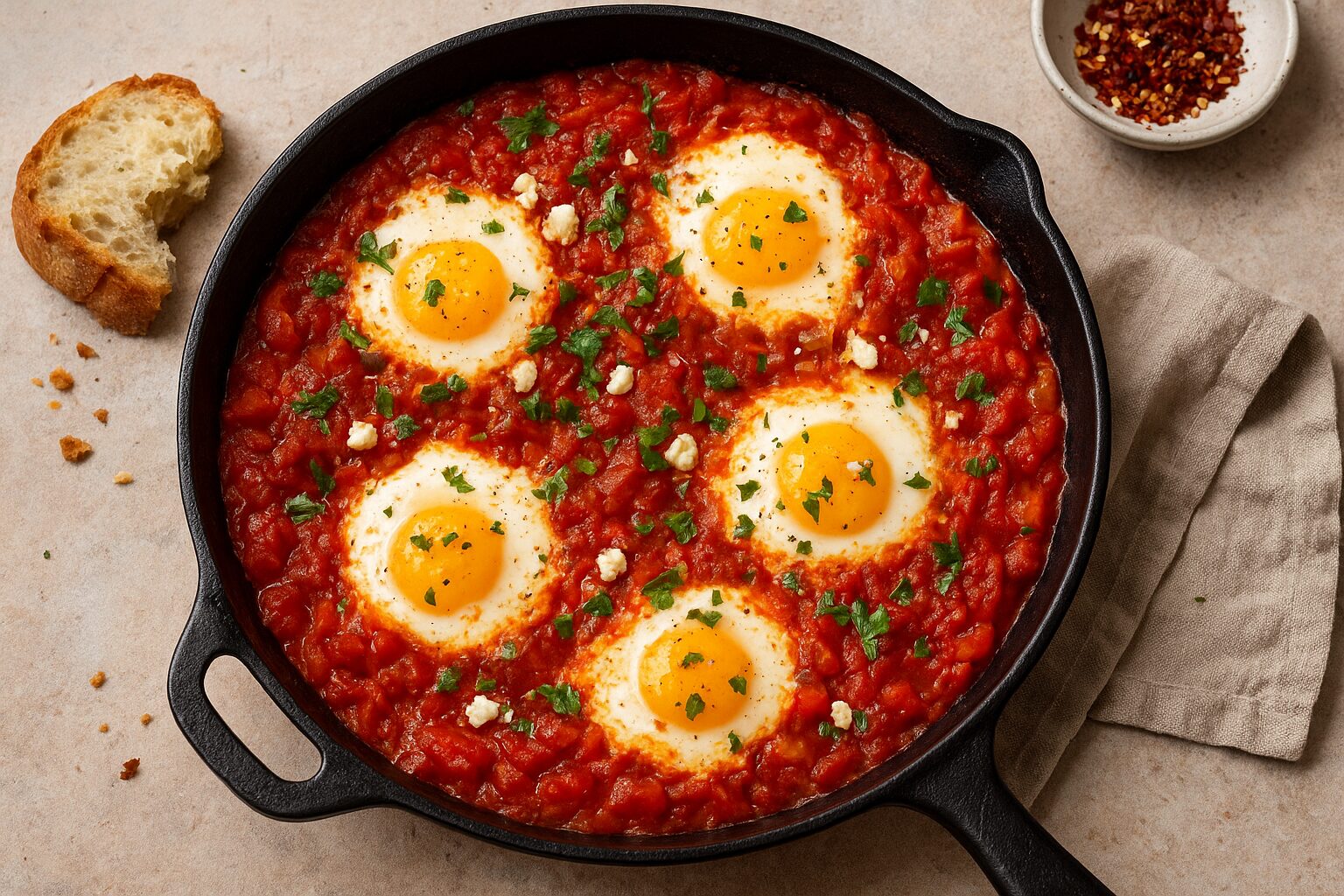
Few dishes capture the heart of Middle Eastern and North African cuisine like shakshuka. A rustic, one-pan recipe of poached eggs simmered in a spiced tomato and pepper sauce, shakshuka is both comforting and energizing. The name itself comes from the Arabic word for “a mixture,” and that is exactly what the dish embodies — a perfect combination of vegetables, spices, and eggs all cooked together until their flavors harmonize.
Traditionally eaten for breakfast, shakshuka has become a global sensation, showing up on brunch menus from Tel Aviv to New York City. Its bright, bold flavors and ease of preparation make it appealing both to seasoned cooks and beginners. Best of all, it requires very few ingredients: fresh eggs, tomatoes, onions, peppers, and a handful of spices. With these staples, you can create a meal that feels simultaneously exotic and familiar.
This post will take you through the origins of shakshuka, explore why the dish works so well nutritionally and flavor-wise, and provide a detailed recipe with tips to guarantee success every time. We’ll also dive into cultural variations, serving suggestions, and make-ahead options so you can enjoy shakshuka any time of day.
A Brief History of Shakshuka
The origins of shakshuka are debated, but most culinary historians trace it to North Africa, particularly Tunisia, Morocco, and Libya. In these regions, tomatoes, peppers, and spices such as cumin and paprika were cooked together with eggs to create hearty meals.
In the mid-20th century, Jewish immigrants from North Africa introduced shakshuka to Israel, where it quickly became a breakfast staple. Today, shakshuka is as common in Tel Aviv cafés as croissants are in Parisian bakeries. From there, it spread across the Middle East and Europe, eventually becoming a beloved dish worldwide.
Regional differences remain:
- In Tunisia, shakshuka often includes harissa paste for a spicy kick.
- In Morocco, you might find preserved lemons or additional spices like saffron.
- In Israel, crumbled feta or labneh is a common topping.
Wherever it’s made, shakshuka reflects the cultural practice of turning humble, affordable ingredients into a dish bursting with flavor.
Why Shakshuka Works So Well
Flavor Profile
The sauce balances sweetness from ripe tomatoes and bell peppers with the warmth of spices. The eggs provide richness, while herbs and optional toppings like feta add freshness and tang.
Nutrition
Shakshuka is nutrient-dense:
- Eggs: Provide protein, healthy fats, and vitamins A, D, and B12.
- Tomatoes & Peppers: Packed with antioxidants, vitamin C, and fiber.
- Olive Oil: A source of heart-healthy monounsaturated fats.
Together, these ingredients create a meal that fuels you without leaving you sluggish.
Simplicity
Shakshuka requires just one skillet and minimal prep. It’s ready in under 30 minutes, making it ideal for busy mornings or a quick dinner.
Customization
From vegan versions with chickpeas to meaty adaptations with sausage, shakshuka can be tailored to any dietary preference.
Ingredients for Classic Shakshuka
- 2 tablespoons olive oil
- 1 medium onion, finely chopped
- 1 red bell pepper, diced
- 3 garlic cloves, minced
- 1 teaspoon ground cumin
- 1 teaspoon smoked paprika
- ½ teaspoon ground coriander
- ¼ teaspoon chili flakes (adjust to taste)
- 1 can (28 oz) crushed tomatoes (or 5–6 ripe fresh tomatoes, chopped)
- Salt and freshly ground black pepper to taste
- 5–6 large eggs
- Fresh parsley or cilantro, chopped, for garnish
- Optional toppings: feta cheese crumbles, sliced avocado, olives, or fresh herbs
Step-by-Step Instructions
Step 1: Cook the Vegetables
In a large cast-iron skillet or sauté pan, heat olive oil over medium heat. Add chopped onions and bell peppers. Sauté until softened, about 5–7 minutes.
Step 2: Add Aromatics and Spices
Add minced garlic, cumin, smoked paprika, coriander, and chili flakes. Stir constantly for about 1 minute to bloom the spices.
Step 3: Build the Sauce
Pour in the crushed tomatoes, season with salt and pepper, and stir well. Lower heat and let the sauce simmer gently for 10–15 minutes. This allows the flavors to meld and the sauce to thicken.
Step 4: Poach the Eggs
Using a spoon, create small wells in the sauce. Crack eggs one by one into these wells. Cover with a lid and cook 5–7 minutes, until whites are set but yolks remain slightly runny.
Step 5: Garnish and Serve
Sprinkle with fresh herbs and any desired toppings such as feta. Serve immediately with crusty bread or pita.
Tips for Success
- Control the Heat: Use medium-low heat when simmering the sauce so it thickens without burning.
- Perfect Eggs: For runny yolks, check after 5 minutes. For firmer yolks, leave them a few minutes longer.
- Bread Pairing: Rustic sourdough, baguette, or pita bread all work beautifully.
- Batch Cooking: Make the tomato base ahead of time and store in the fridge for up to 3 days. Add fresh eggs when ready to eat.
Variations
- Spicy Tunisian Style: Stir in 1–2 tablespoons of harissa paste for bold heat.
- Green Shakshuka: Replace tomatoes with spinach, kale, and zucchini, seasoned with garlic and herbs.
- Israeli Style: Garnish with crumbled feta, labneh, or tahini sauce.
- Protein Boost: Add chickpeas or cooked lamb sausage for a more filling version.
- Vegan Option: Omit eggs and add white beans or tofu for protein.
Serving Ideas
- Traditional Breakfast: Serve straight from the skillet with warm pita.
- Brunch Spread: Pair shakshuka with hummus, olives, and a cucumber-tomato salad.
- Dinner: Serve over couscous, quinoa, or rice for a heartier meal.
- Side Dishes: Roasted potatoes, labneh, or pickled vegetables make excellent accompaniments.
Nutritional Information (per serving, with 2 eggs)
- Calories: 280–300
- Protein: 14 g
- Carbohydrates: 18–20 g
- Fat: 16 g
- Fiber: 5 g
Storing and Reheating
Shakshuka is best fresh, but leftovers can be stored in the refrigerator for up to 2 days. Reheat gently on the stove, being mindful not to overcook the eggs. For meal prep, make just the sauce in advance, then crack in fresh eggs when reheating.
Cultural Significance
Shakshuka is more than food — it’s a communal experience. In many Middle Eastern households, it is served in the skillet at the center of the table, inviting everyone to dip bread and share. It embodies the values of hospitality, simplicity, and gathering. For immigrants, it became a way of preserving heritage while adapting to new kitchens abroad.
Its rise in Western brunch culture also shows how food transcends borders. A dish once seen as humble “peasant food” is now celebrated globally for its rustic elegance.
Final Thoughts
Easy to prepare, rich in flavor, and deeply rooted in tradition, shakshuka is a dish that deserves a permanent place in your cooking rotation. Whether you’re trying it for the first time or looking to perfect your technique, you’ll find it endlessly adaptable.
Experiment with spices, add your favorite toppings, and make it your own. Serve it as breakfast, brunch, or dinner — it’s always a hit. Most importantly, shakshuka is meant to be shared, bringing people together around the table.
If you’re searching for a recipe that is simple yet sophisticated, comforting yet exciting, shakshuka is the answer.