
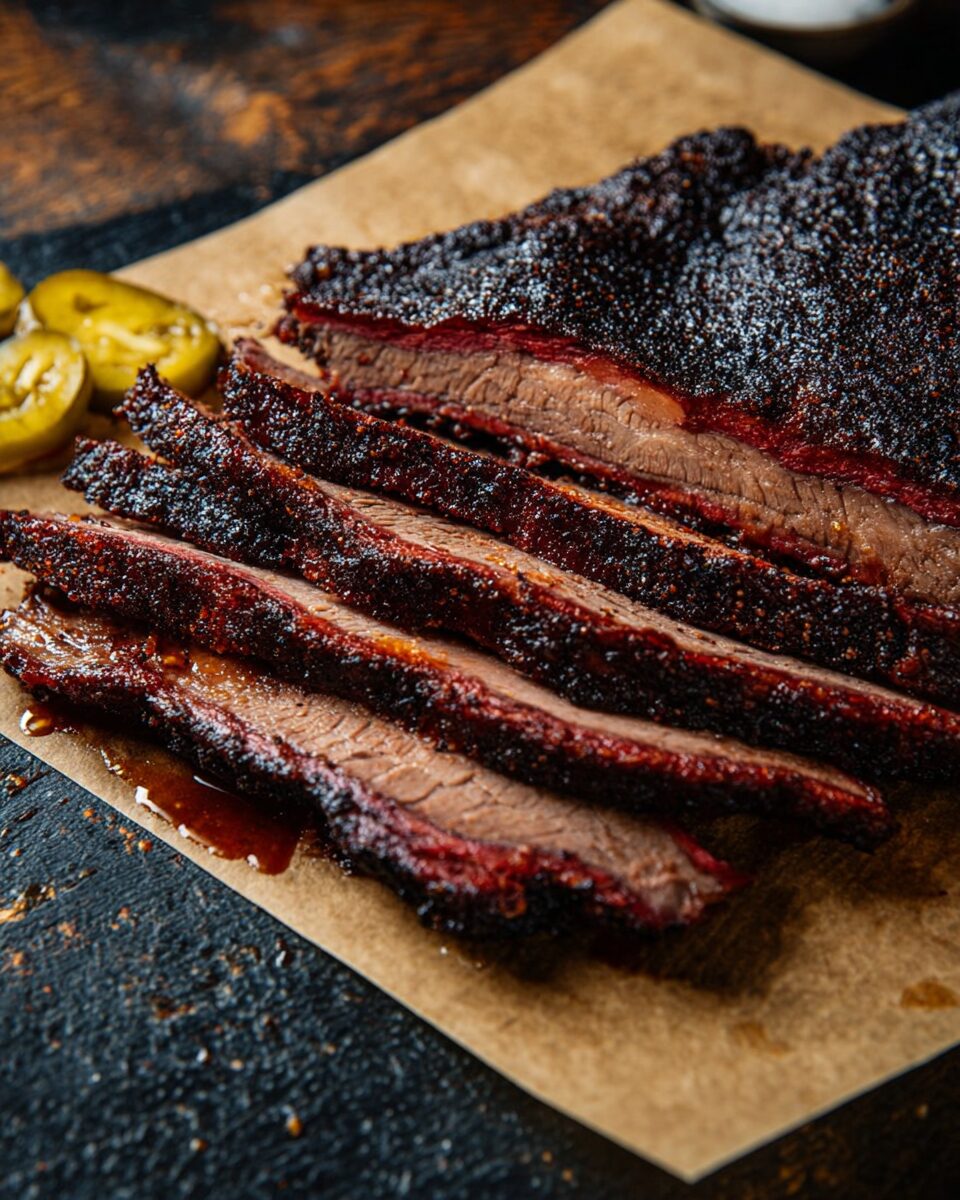
Few dishes embody the soul of slow cooking quite like Smoked Brisket. With its rich aroma, deep mahogany bark, and melt-in-your-mouth tenderness, brisket is more than just a meal — it’s a ritual, a craft, and, in many ways, an art form. It represents patience, precision, and passion, all coming together over hours of low, steady smoke.
In American barbecue culture, smoked brisket holds a sacred place — particularly in Texas, where pitmasters have elevated it to near-mythical status. It’s often said that you can judge a barbecue joint by its brisket, and for good reason. A well-smoked brisket is the ultimate test of skill. There are no shortcuts, no hiding behind sauces — just pure smoke, salt, pepper, and time.
Historically, brisket comes from one of the tougher cuts of the cow, located in the breast section just above the shank. Because this muscle supports much of the animal’s weight, it’s loaded with connective tissue. This makes it less tender than prime cuts like ribeye — but when cooked slowly and smoked properly, those same tough fibers transform into buttery, flavorful perfection.
What’s truly remarkable about brisket is how universal it has become. While Texas-style brisket is the most famous, variations exist around the world. In Jewish cuisine, for instance, brisket is often braised for holidays like Passover. In Korean cooking, brisket (known as chadolbaegi) is sliced thin and quickly grilled. The barbecue version, though — slow-smoked over wood for up to 12 hours — captures a primal, old-world connection to fire and time.
Making smoked brisket at home can feel intimidating, but it doesn’t have to be. Once you understand the process — trimming, seasoning, smoking, resting — you’ll realize that it’s mostly about patience and consistency. With a good rub, the right wood, and steady temperature control, you can create brisket worthy of any pitmaster.
This recipe captures the essence of Texas-style smoked brisket — simple ingredients, bold flavor, and an emphasis on technique. We’ll walk through every step, from selecting the perfect cut to slicing it just right. Whether you’re smoking on a pellet grill, offset smoker, or even a charcoal setup, you’ll end up with brisket that’s tender, juicy, and unforgettable.
So get ready to spend the day with your smoker humming, the scent of hickory and oak filling the air, and the anticipation of that first glorious slice. Because when you finally carve into your brisket — and that smoky bark gives way to glistening, juicy meat — you’ll understand why this dish is legendary.
Full Recipe
Ingredients
For the Brisket:
- 1 whole beef brisket (10–12 lbs / 4.5–5.5 kg), preferably USDA Choice or Prime grade
- 3 tablespoons kosher salt
- 3 tablespoons freshly ground black pepper
- 2 tablespoons paprika (optional, for color)
- 2 teaspoons garlic powder
- 2 teaspoons onion powder
- 1 teaspoon cayenne pepper (optional, for a mild kick)
For the Binder (optional):
- 2 tablespoons yellow mustard or olive oil (helps the rub adhere)
For Spritzing:
- 1 cup apple cider vinegar
- 1 cup water
(You can also use apple juice or beer for added sweetness.)
For Serving:
- Barbecue sauce (optional — traditional Texas-style brisket doesn’t need it)
- Sliced pickles, onions, and white bread or rolls
Directions
1. Choose the Right Brisket
Start with a whole packer brisket, which includes both the flat and the point.
- The flat is leaner and slices beautifully.
- The point is fattier and juicier, perfect for burnt ends or sandwiches.
Look for good marbling — those thin streaks of fat throughout the meat. Marbling means flavor and tenderness. If you can, choose a brisket with a flexible feel — when you pick it up, it should bend slightly in your hands. That’s a good sign of proper fat content.
Pro Tip: Prime-grade brisket has more marbling and will be more forgiving during the long smoke.
2. Trim the Brisket
Trimming might seem tedious, but it’s crucial for even cooking.
Use a sharp boning knife to remove:
- The silver skin from the underside (a tough membrane that won’t render).
- Excess fat, leaving about ¼ inch (6 mm) of fat on top to keep the meat moist during smoking.
- Any large hard fat deposits (they won’t render properly).
Round off any sharp edges or thin ends to prevent them from drying out during the cook.
3. Apply the Rub
Pat the brisket dry with paper towels. If you’re using a binder, rub a light layer of yellow mustard or olive oil all over — it won’t affect the taste but helps the seasoning stick.
In a small bowl, mix your salt, pepper, paprika, garlic powder, onion powder, and cayenne. This is your dry rub — simple, balanced, and classic.
Generously coat the brisket on all sides with the rub, massaging it into every crevice. Don’t be shy — brisket is a large cut of meat, so it can handle a heavy seasoning.
Let it rest at room temperature for about 30–45 minutes to allow the rub to adhere and begin forming a crust.
4. Prepare Your Smoker
Set up your smoker for indirect heat and preheat to 225°F (107°C).
Wood Choices:
- Oak – the traditional Texas choice, strong and steady.
- Hickory – adds a deep, bacon-like smokiness.
- Pecan or cherry wood – great for a slightly sweeter, milder flavor.
If you’re using a charcoal smoker, add wood chunks (not chips) to maintain consistent smoke. For pellet smokers, choose a robust blend — oak and hickory pellets work perfectly.
Keep a water pan inside the smoker to regulate humidity and prevent the brisket from drying out.
5. Smoke the Brisket (The First Stage)
Place the brisket on the smoker fat side up (so the fat renders down and bastes the meat). Position it with the point facing the heat source since it’s thicker and can handle higher heat.
Close the lid and let the smoke do its work. Maintain the temperature between 225–250°F (107–120°C) consistently.
Time estimate: About 1 to 1.25 hours per pound, but always cook to temperature, not time.
Every 90 minutes, spritz the brisket lightly with your vinegar-water mixture. This helps maintain moisture and enhances the smoke penetration, contributing to that gorgeous bark formation.
You’ll notice the color deepening to a rich mahogany brown around the 5–6 hour mark. That’s when you’ll start checking for internal temperature.
6. The Stall (and How to Beat It)
Around 155–165°F (68–74°C), the brisket will hit “the stall.” This is when moisture evaporating from the meat cools its surface, causing the temperature to plateau for hours. Don’t panic — it’s part of the process.
To push through the stall, you have two choices:
Option 1: Ride It Out (Traditional)
Stay patient. The stall will eventually break on its own as collagen melts and fat renders. This method maximizes bark development.
Option 2: Texas Crutch (Faster Method)
Wrap the brisket tightly in butcher paper or foil once it hits 165°F (74°C). The wrap traps heat and moisture, speeding up the cooking process and ensuring tenderness.
Butcher paper is preferred because it breathes slightly, preserving the bark’s texture, while foil creates a softer crust but juicier interior.
7. Continue Smoking (The Second Stage)
Return the wrapped brisket to the smoker. Continue cooking until it reaches an internal temperature of 195–203°F (90–95°C).
Use a meat probe or instant-read thermometer to check doneness. But more than numbers, rely on the “probe test” — when a thermometer slides in like butter, it’s done.
8. Resting the Brisket
Once fully cooked, resist the temptation to slice right away. Resting is non-negotiable.
Transfer the brisket (still wrapped) to a cooler or insulated container and let it rest for at least 1 hour, ideally 2–3 hours. This allows the juices to redistribute throughout the meat, ensuring every slice is moist and flavorful.
9. Slicing and Serving
When ready to serve, unwrap the brisket carefully, reserving any juices in the paper or foil.
Place it on a large cutting board. Identify the direction of the grain — you’ll see the muscle fibers running across the meat. Always slice against the grain for maximum tenderness.
Slice the flat section into ¼-inch (6 mm) thick slices. The point can be sliced thicker or cubed for burnt ends (which are caramelized chunks of smoky heaven).
Drizzle with the reserved juices or a touch of melted butter for extra gloss and richness.
Serving Suggestions & Variations
1. Classic Texas Style
Serve brisket slices on a tray lined with butcher paper. Pair with sliced pickles, onions, and plain white bread. Add a side of coleslaw or potato salad for a traditional barbecue spread.
2. Brisket Sandwiches
Layer slices or chopped brisket on soft brioche or potato rolls. Top with caramelized onions or slaw. A drizzle of barbecue sauce (if you dare) completes it.
3. Burnt Ends
Cube the point end of the brisket, toss it in a little barbecue sauce or glaze, and return it to the smoker for 30–45 minutes until caramelized. These sticky, smoky nuggets are pure gold.
4. Leftover Brisket Tacos
Shred leftover brisket and serve in corn tortillas with avocado, pickled onions, and cilantro. Add a squeeze of lime for a fresh contrast.
5. Keto/Low-Carb Option
Skip the bread and pair your brisket with roasted vegetables, cauliflower mash, or grilled asparagus.
6. International Twist
Brush the brisket with a soy-ginger glaze toward the end of smoking for an Asian-inspired flavor profile, or drizzle chimichurri over slices for a bright, herbaceous Argentinian touch.
Tips & Tricks
1. Temperature Control is Key
Brisket is all about low and slow. Keep your smoker steady between 225–250°F. Fluctuations can dry out the meat or cause uneven cooking.
2. Don’t Skip the Rest
Resting makes the difference between a dry brisket and one that oozes juices when sliced. Treat it like the most important step.
3. Choose the Right Wood
Oak for strength, hickory for smoke depth, fruit woods (like apple or cherry) for subtle sweetness. Avoid mesquite unless you love intense smoke flavor — it can overpower.
4. Bark Perfection
If you crave a thicker crust, don’t wrap too early. Let the bark set firmly before the wrap stage.
5. Keep the Lid Closed
Every time you peek, you lose heat and smoke. Patience is the name of the game.
6. Fat Side Up or Down?
If your smoker has direct heat below, cook fat side down to protect the meat. For offset smokers where heat comes from the side, fat side up helps baste the brisket.
7. Practice Makes Perfect
Brisket isn’t just a recipe — it’s a craft. Each cook teaches you something new about your smoker, wood, and timing.
Nutritional Info (per serving)
(Based on 10 servings, 10 oz / 280 g each)
- Calories: 440
- Protein: 38g
- Fat: 28g
- Carbohydrates: 3g
- Fiber: 0g
- Sugar: 1g
- Sodium: 780mg
Brisket is rich in protein and flavor but also high in fat, especially if you indulge in the point cut — moderation and balance are key.
Additional Info
- Prep Time: 30 minutes (plus 1 hour for trimming and seasoning)
- Cooking Time: 10–12 hours
- Resting Time: 1–3 hours
- Total Time: 12–16 hours
- Calories per serving: ~440
- Servings: 10
Final Thoughts
Few culinary experiences are as rewarding as making your own Smoked Brisket. It’s not just about the end result — it’s about the process: the crackle of the fire, the rhythm of the smoke, the patience it teaches, and the joy of finally slicing into something you’ve tended all day.
Brisket is more than a recipe; it’s a story told through time, wood, and flame. It reminds us that great food doesn’t rush — it unfolds slowly, layer by layer, like the smoke curling up from the pit.
Whether you’re a first-time smoker or a seasoned pitmaster, each brisket you make adds to your understanding — of your grill, your wood, and yourself as a cook. And when you gather friends or family around the table, passing slices of perfectly smoked meat that glisten in the light, you’ll realize you’ve created more than a meal — you’ve created a memory.
So fire up that smoker, take a deep breath, and let the aroma of oak and pepper fill the air. Because once you master brisket, you’ve joined the ranks of those who know one of life’s most satisfying secrets: that patience, smoke, and love make the best food of all.